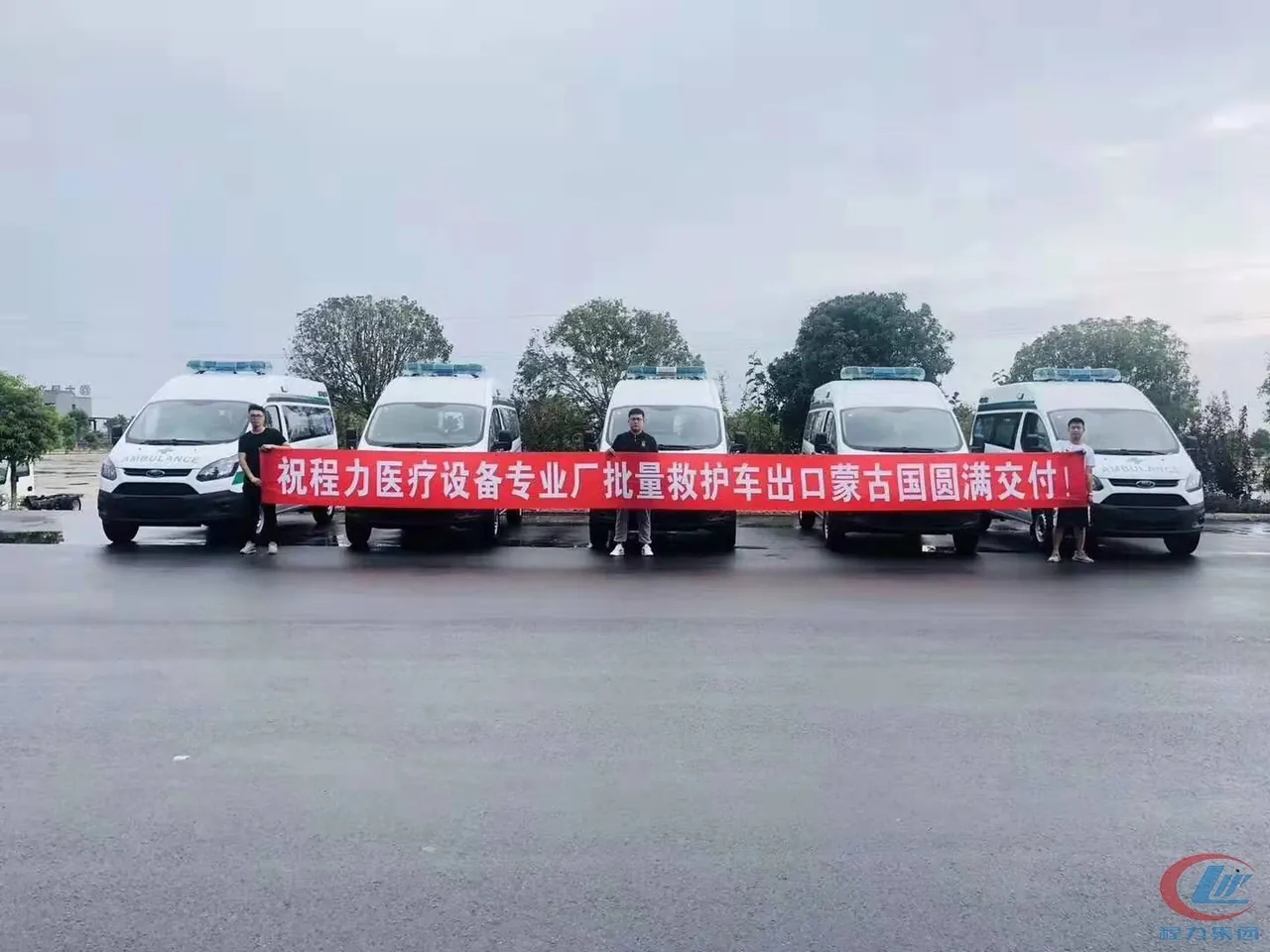
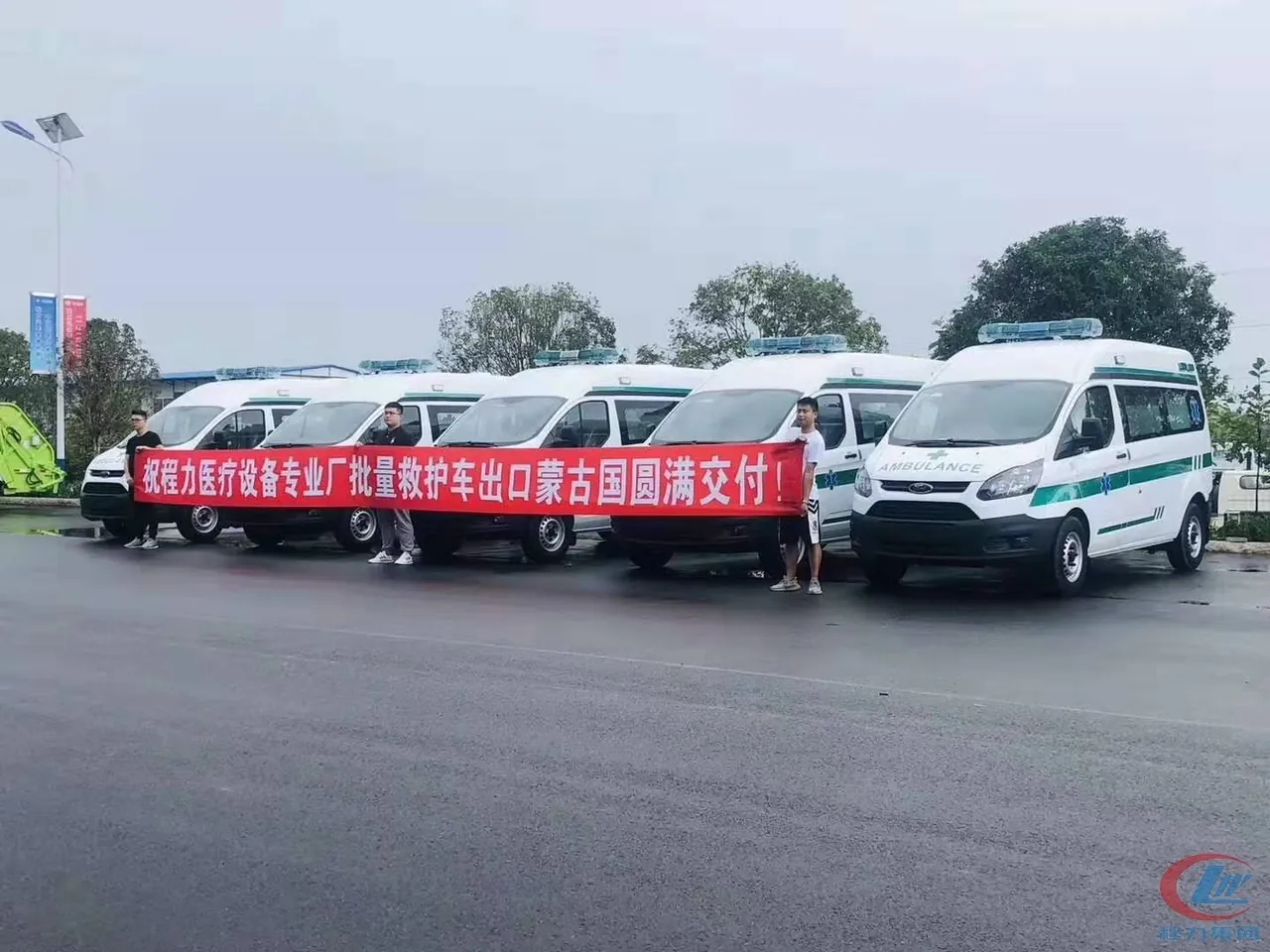
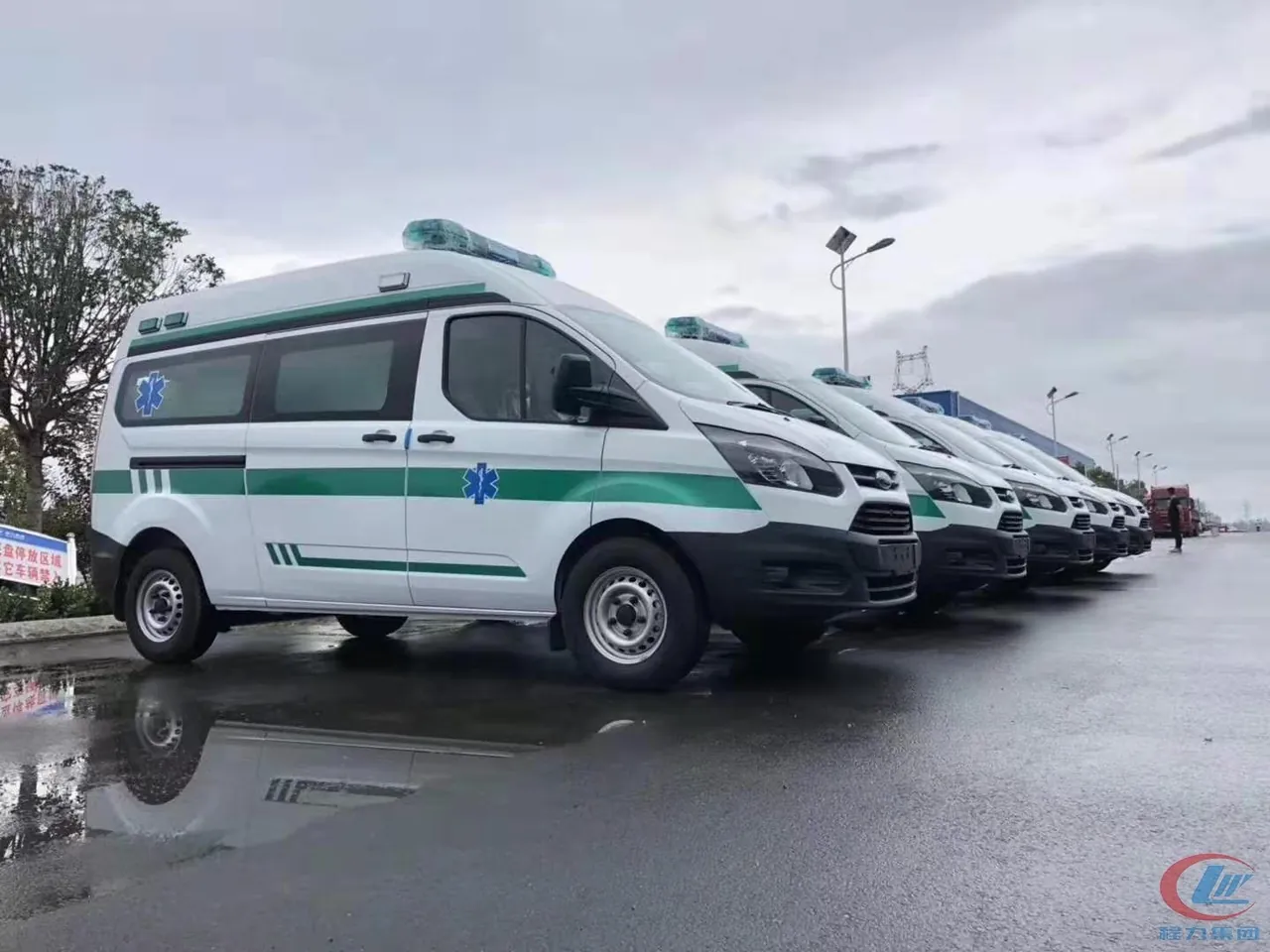
Chengli Group exported a batch of ambulances to Mongolia. A banner in the photos, written in Chinese, says the batch was delivered successfully.
What was supplied
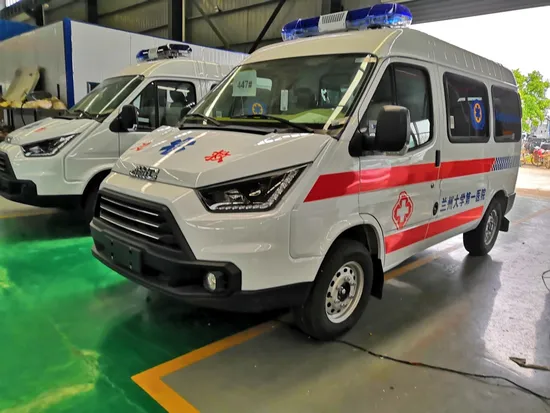
The vehicles are white panel-van ambulances with a green stripe along the sides and a blue star of life symbol. Each has a roof light bar and the word "AMBULANCE" on the front. The vans have a raised roof to give more room in the patient area.
About this vehicle type
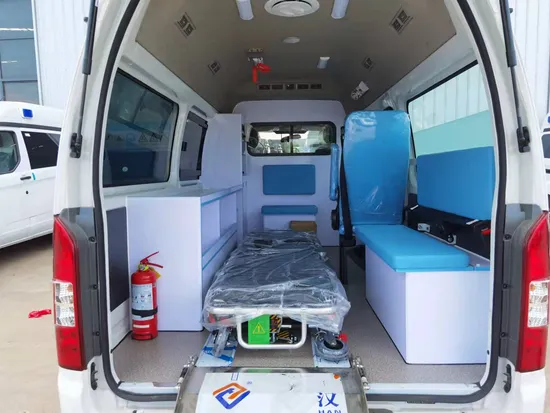
An ambulance is a van fitted out to carry patients and medical staff. Typical fittings include a stretcher, seats for crew, lighting and warning lights. The exact equipment depends on the order.
How an ambulance is put together
Most ambulances start as a van or a similar vehicle. The body is then converted: the patient area is lined with easy-to-clean surfaces, a stretcher system is fixed to the floor, and seats, cabinets and lighting are added. The aim is to move a patient safely and quickly while giving the crew room to work.
A typical call follows a simple cycle. The crew receives the call and drives to the scene using warning lights and a siren. They load the patient on the stretcher, give basic care on board and transport the patient to a hospital. After the handover the crew cleans the patient area, restocks supplies and returns to standby. Our guides on types of ambulance and the equipment inside an ambulance explain the options in more detail.
Main components
- Chassis and engine: the base vehicle must be reliable and easy to service, because an ambulance has to start every time.
- Patient compartment: the converted body gives space for the stretcher, the patient and the attending staff.
- Stretcher and fixing system: it holds the patient securely and allows quick loading and unloading.
- Seats and storage: crew seats and cabinets keep equipment and medicines in reach and secured during driving.
- Lighting and warning system: roof light bars, a siren and work lights make the vehicle visible and the interior usable at night.
- Electrical system: wiring, a second battery or an inverter can power medical devices and lights.
- Ventilation and climate control: heating, cooling and fresh air keep patients and crew comfortable.
What to check when you order a similar ambulance
- Role: patient transport, emergency care and intensive care units need different equipment, so decide the role first.
- Chassis and engine class: choose a brand with parts and service near you, and an emission class that your fuel supports.
- Body size and roof height: check the space around the stretcher and the headroom for the crew.
- Drive side: left-hand drive is standard, and right-hand drive is available on request.
- Climate and road conditions: cold winters, hot summers and rough or snowy roads may call for heating, cooling or four-wheel drive.
- Medical equipment: decide which items are fitted by us and which your health authority supplies, and list them separately.
- Documents and spare parts: ask for the handover papers your country needs and a list of wear parts and bulbs.
For layout planning, see what must fit around the stretcher. Our full range of ambulances is on the product pages.
Similar models you can order
You can specify chassis, roof height and interior equipment for a similar unit. Left-hand drive is standard and right-hand drive is available on request. Related models include Ford Short Wheelbase Ambulance 122HP Euro 5, Foton G7 Ambulance 160HP Euro 6 and Ford Transit ICU Ambulance with First-Aid Equipment.
To ask for a quotation, please contact us.