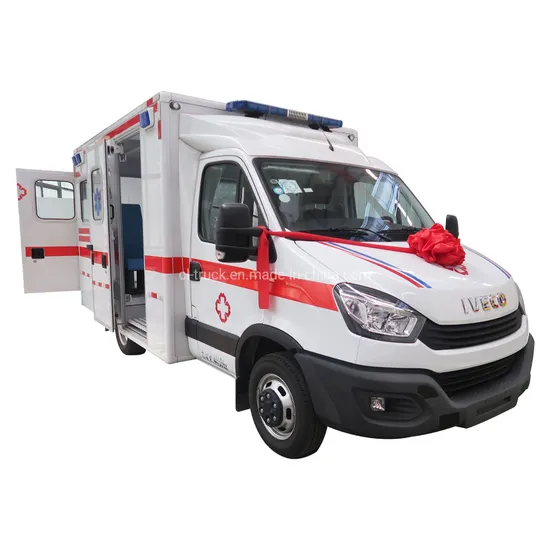
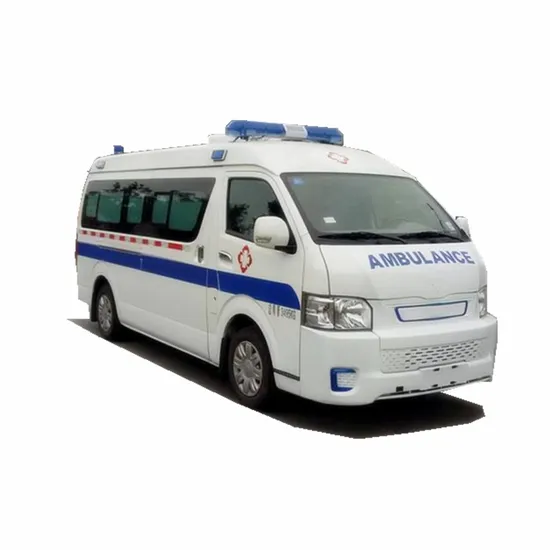
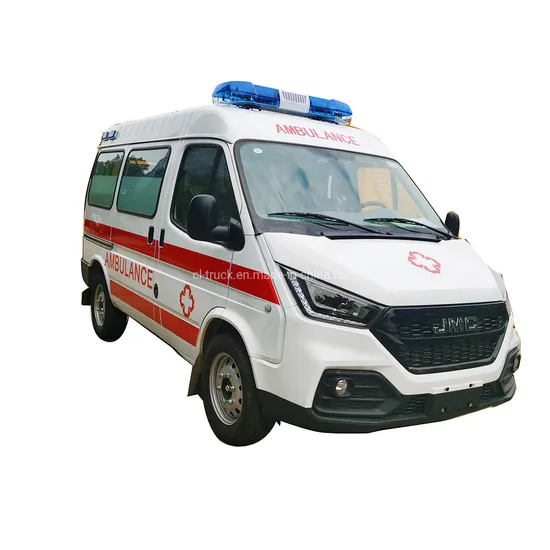
An ambulance carries a stretcher with a loading system, an oxygen supply, suction, a patient monitor, and dressings and splints for first aid. Higher-level units add a defibrillator, ventilator and infusion pumps. The exact list depends on the ambulance type and on the rules where it will operate.
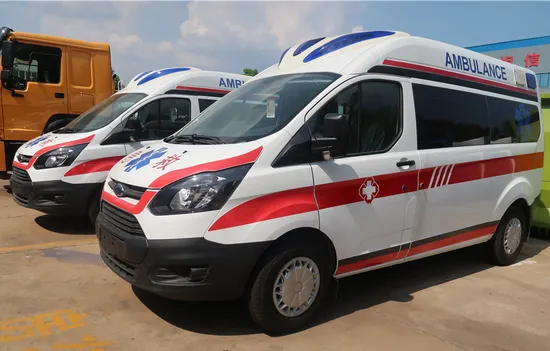
Equipment grouped by what it does
- Moving the patient: a wheeled stretcher with a locking mount, a patient seat or carry chair, and straps or restraints.
- Breathing support: oxygen cylinders with regulators and masks, a suction unit and airway adjuncts. ICU builds add a ventilator.
- Monitoring: a monitor for heart rate, oxygen saturation and blood pressure. A defibrillator is carried on units crewed for advanced care.
- Treatment and first aid: dressings, splints, immobilisation boards, infusion supplies and a locked drug cabinet.
- Hygiene: a sharps container, waste bags, disinfectant and washable surfaces.
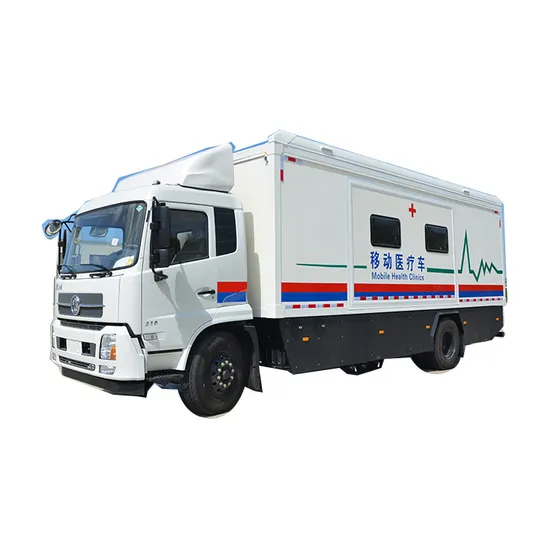
The vehicle systems behind the kit
Medical devices depend on the vehicle. The body needs reliable electrical power, either from the engine, a battery bank or an external supply, plus sockets and lighting that suit work around a patient. Warning lights, a siren and a radio let the crew move through traffic and stay in contact. Air conditioning or heating keeps the patient compartment comfortable, and sealed, easy-to-clean flooring and walls make cleaning quicker between calls.
Some bodies add an expandable side compartment for more room, and a cable reel so equipment can run from a fixed supply while parked.
What changes between ambulance types
| Type | Equipment emphasis |
|---|---|
| Patient transport | Stretcher, seat, oxygen, basic first-aid kit |
| Emergency | Added suction, monitor, immobilisation and treatment supplies |
| ICU / negative pressure | Ventilator, infusion pumps, more power, and airflow control for infectious cases |
Check before you order
Ask which items are fitted by the body builder and which you supply yourself. Many medical devices are bought separately, and your health authority may require specific approvals, so confirm the list against the rules that apply where the ambulance will run. Check that the compartment has mounting points and power for every device you plan to carry.
Our ambulances range includes the Chengliwei ICU Transit Ambulance Euro 5 202HP, a left-hand-drive model on a 3300 mm wheelbase. The Large Space First Aid Ambulance Truck lists an expansion compartment and a 50 m cable reel, and the Iveco Ford Transit ICU Negative Pressure Ambulance is the infectious-disease option. The Geely E6 New Energy Electric Ambulance lists a 50 kWh battery. For models and options, see our ambulances for sale.
Frequently asked questions
What is the most important item in an ambulance?
No single item stands out. Oxygen, suction, the stretcher system and a monitor all support basic care, and the crew's training matters as much as the kit. Equipment must also be secured so it does not move in transit.
Is medical equipment included when I buy an ambulance?
It varies by model and agreement. Some bodies are supplied with fittings only, while devices are bought separately. Ask for the exact equipment list in the quotation so you know what is and is not included.
Does an ambulance need its own power supply?
Yes. Monitors, suction and lighting need dependable power. Vehicles usually draw from the chassis electrical system, a battery bank, or an external connection while parked, and the design should match your equipment load.