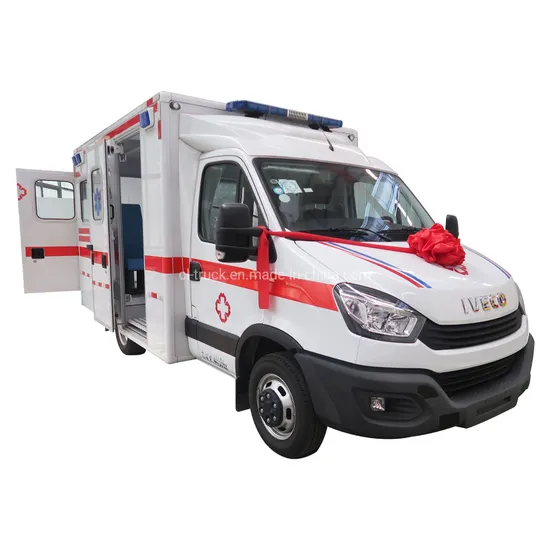
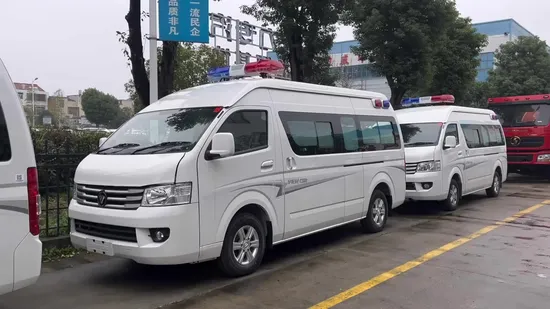
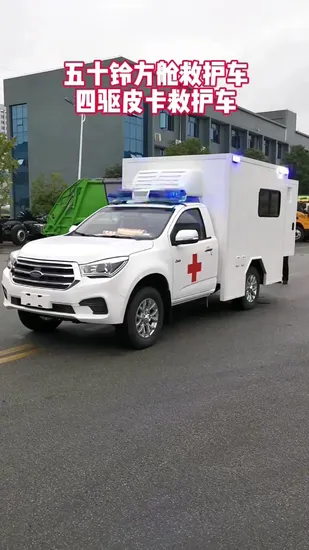
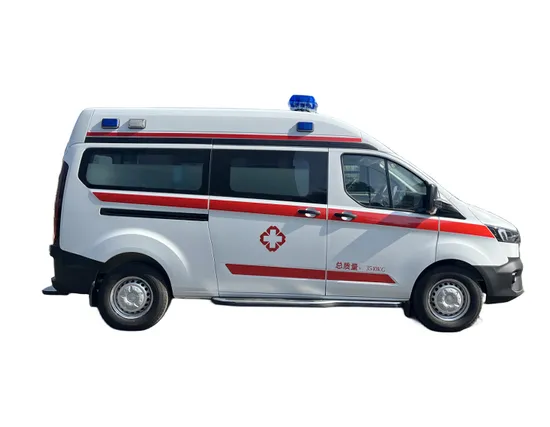
The Iveco Ford Transit ICU Negative Pressure Ambulance is a large van ambulance designed to carry patients with infectious diseases while protecting the crew and the outside air. The chassis is Iveco, the transmission is a five-speed manual, the engine is a three-litre diesel with the code F1CE8481K, and the vehicle is left-hand drive.
It suits infectious disease hospitals, public health authorities and isolation transfer teams that need to move a patient without exposing the people around them.
How negative pressure transport works
In a negative pressure ambulance, a fan draws air out of the patient compartment through a filter and keeps the pressure inside slightly lower than the pressure outside. Air then leaks inward through gaps rather than outward, so contaminated air does not drift into the driver's cab or the street. A properly designed system also separates the cab from the patient area and provides a way to disinfect the interior.
This vehicle is supplied without medical equipment. The negative pressure system and the intensive-care equipment must therefore be defined in the quotation, with a written specification of the fans, the filters, the pressure gauge and the monitoring and treatment devices you require.
Chassis, engine and drivetrain
The overall dimensions are 5980 × 2430 × 2760 mm with a wheelbase of 3300 mm, which makes it a large van. The gross vehicle mass is 4490 kg and the kerb weight is 3250 kg. The displacement is 2980 cc. The gearbox has five forward gears and a reverse.
The tyre size is 195/75R16LT and the tyre quantity is 6+1, meaning six tyres plus a spare. Power steering and air conditioning are fitted in the cab. The drive layout is 4X2 or 4X4.
The vehicle's weight deserves attention. The difference between gross vehicle mass and kerb weight is the load the chassis can carry, and an isolation fit-out with filters, fans, partitions and ICU devices uses much of it. Ask for a weight estimate for the finished vehicle, including crew and patient, so that you can see how much margin remains for equipment you may add later.
Matching the truck to your job
This type of vehicle takes up considerable space with equipment, so check what you need to carry. A single critically ill patient with a ventilator and monitors requires a different arrangement from a vehicle that may carry two patients. Think too about how the crew will enter and leave: a contaminated-zone entry and a clean-zone exit with room to change protective clothing keep staff safe.
The height of 2760 mm should be compared with the lowest barrier along your usual routes, including hospital entrances and any covered areas.
Maintenance and daily checks
Isolation vehicles need a routine that standard ambulances do not. Filters have to be replaced on schedule and disposed of safely, the pressure monitor should be checked at the start of each shift, door seals need inspection, and interior surfaces must be cleaned and disinfected after each patient. Agree a written procedure with your infection control staff, and ask our team what service parts the system uses.
What to confirm before ordering
The engine power rating, and the scope of the ICU equipment that comes with the vehicle, depend on the configuration and are confirmed in the quotation. Ask for the power figure for the engine fitted to your build, and for a written list of what the isolation system includes.
Please also confirm the emission standard, the choice of 4X2 or 4X4, the number of patient places, the filter specification, the power supply for the fans and equipment, and the dimensions of the clean and contaminated areas.
Request a current quotation for your selected configuration, quantity and delivery terms.