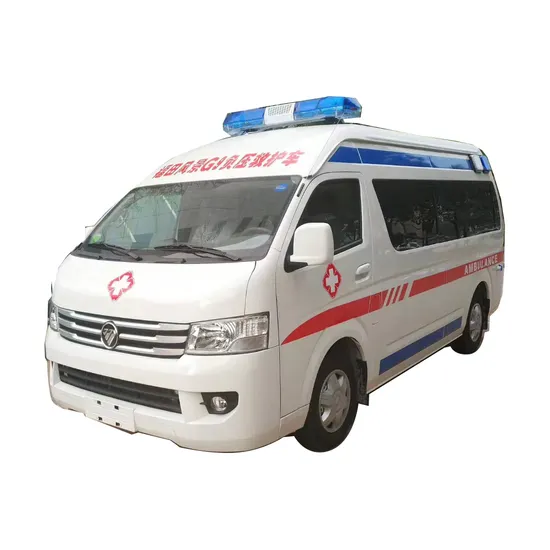
Ambulances fall into three working groups. Patient transport vehicles move stable patients between sites, emergency ambulances carry first-aid and life-support gear to a scene, and ICU ambulances carry monitoring and support equipment for critically ill patients. Category names and requirements differ between countries, so check the rules where the vehicle will operate.
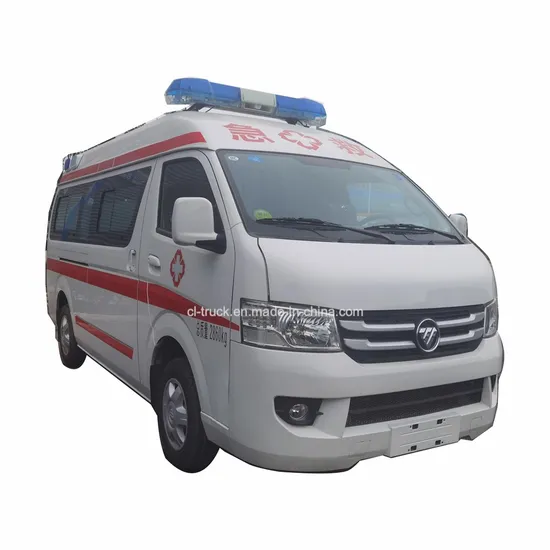
The three main types at a glance
| Type | Typical job | What sets it apart |
|---|---|---|
| Patient transport | Scheduled moves, hospital transfers, dialysis or check-up trips | Space for a stretcher and an attendant, with simpler medical fit-out |
| Emergency (first aid) | Responding to accidents and sudden illness | Fuller treatment kit, warning lights and siren, quick access to the patient |
| ICU (mobile intensive care) | Moving patients who need continuous monitoring | Higher ceiling, more power and more equipment space |
How the base vehicle changes the job
Most ambulances start as a van or a light truck chassis. A short van suits narrow streets and quick response. A longer, taller body gives the crew room to work around the patient, which matters more as the equipment list grows. Rough ground calls for four-wheel drive. Where fuel supply is uncertain or routes are short, an electric chassis is a realistic option.
Special-purpose variants
- Negative-pressure ambulances are built to carry patients with infectious disease, using airflow control inside the patient compartment.
- Paediatric or neonatal units add fittings suited to very small patients.
- Mobile clinics are not used for emergency transport. They bring consultation or screening to a site, so they belong in a separate group.
How to pick the right type
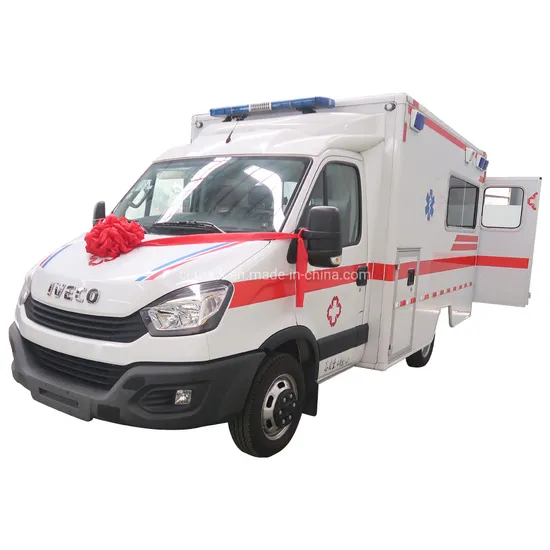
Start with the patients you actually move. If most trips are scheduled and the patients are stable, a transport vehicle avoids paying for equipment you will not use. If crews respond to calls, choose the emergency version. Choose an ICU build only if you have trained staff and procedures to operate the equipment. Then confirm the drive side, emission standard and any approval your health authority requires before you order.
All of these are available in our ambulance range. The Foton G7 G9 Guardianship Transport Ambulance is listed with 4x2 or 4x4 drive and either hand of steering. The Iveco Emergency Ambulance Euro 6 170HP and the Chengliwei ICU Transit Ambulance Euro 5 202HP cover the emergency and ICU groups, while the Foton ICU Mobile Negative Pressure Ambulance covers the infectious-disease case. See current options under ambulances for sale, or look at mobile clinic vehicles for sale if you need a clinic rather than a transport unit.
Frequently asked questions
What is the difference between an emergency and an ICU ambulance?
An emergency ambulance carries first-aid and basic life-support equipment for response calls. An ICU ambulance adds continuous patient monitoring and more advanced support equipment, and it is staffed and used for critically ill patients.
Can one ambulance serve as both transport and emergency vehicle?
Often it can, if it is fitted for the higher need and the crew is trained for it. Many buyers equip one fleet vehicle for emergency work and keep simpler vehicles for scheduled transport.
Which type is cheapest to run?
A patient transport vehicle usually costs least to equip and maintain because it carries less medical equipment. Running cost also depends on the chassis, the fuel or battery type and how many kilometres you drive.