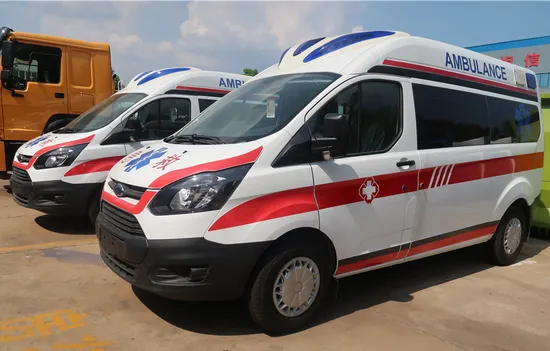
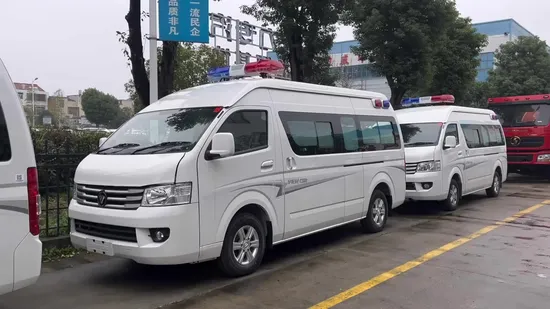
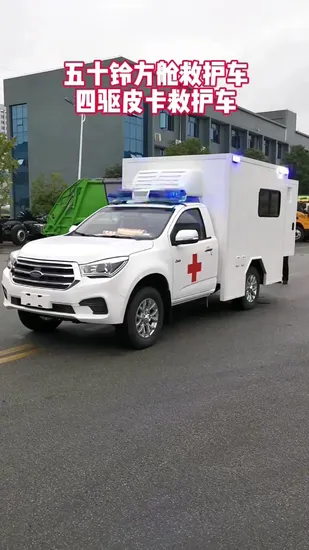
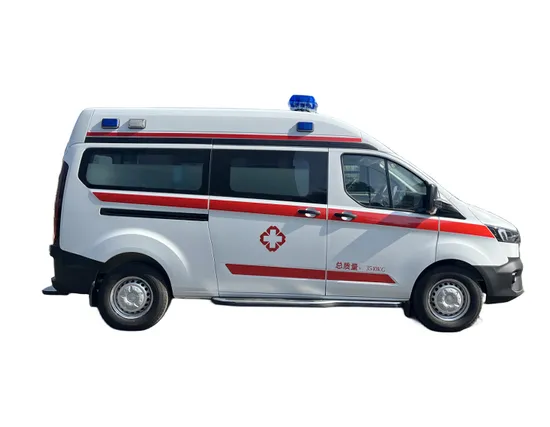
The Chengliwei ICU Transit Ambulance Euro 5 202HP is an intensive-care transfer ambulance, model CLW5030XJHJ5, finished in white and listed with a medical equipment fit-out. The engine is the ECOBOOST4G20B5L, rated at 149 kW (202HP), and the gearbox is a five-speed manual.
It suits hospitals, clinics and emergency services that move patients who need monitoring and care on the way, for example between wards, hospitals or a patient's home and a treatment centre. The cab has air conditioning and power steering, which helps the driver on long runs and in city traffic.
Chassis, engine and gearbox
The overall dimensions are 5341×2032×2407 mm on a wheelbase of 3300 mm. Gross vehicle mass is listed as 3300 kg and kerb weight as 2150 kg. These figures help you compare the vehicle with garage doors, hospital ramps and lift-entry canopies before you decide where it will be parked.
The engine displaces 1.997 L and the emission level is Euro 5, matched to a five-speed manual gearbox with five forward gears and one reverse. Tyres are 215/75R16LT, four fitted plus one spare. Which fuel the engine uses should be confirmed in the quotation together with the final output figures.
Patient compartment and medical fit-out
An ICU transit ambulance is built around the patient compartment. It normally needs a stretcher position, secure mounting for monitors and equipment, good lighting and enough space for medical staff to work. The detailed layout and equipment list are not fixed by the vehicle model and are confirmed in the quotation.
Think about the patients you carry. Ask which equipment is installed, where the power for it comes from, how the stretcher is secured, and how much room is left beside the patient. A clear fit-out list also lets your clinical team check that the vehicle matches the care they intend to deliver during transfers.
Cab and driving
The cab is fitted with air conditioning and power steering. Left-hand drive is the standard listing, and right-hand drive is available on request. A short-wheelbase van-type body like this one is easier to place in narrow hospital grounds and city streets than a long vehicle, though turning and parking should still be checked on site.
Daily checks matter for an emergency vehicle. Drivers should inspect tyres, fluid levels, lights, warning devices, the stretcher fixings and the equipment mounts at the start of each shift, and record any fault so it can be repaired before the next call, not after it.
What to confirm before ordering
Confirm the drive side, the fuel type, the exact engine output and the emission standard that applies to your registration. Ask for the list of medical equipment, the interior layout, the lighting and warning equipment, and any extra power supply for monitors. Colour and markings should also be agreed.
Tell the quotation team what kind of patients you transport, how many staff travel with them, and the distances involved. This lets the factory match the compartment arrangement to your clinical needs, and it avoids surprises about equipment that you assumed was included but is not on the final specification.
Request a current quotation for your selected configuration, quantity and delivery terms.