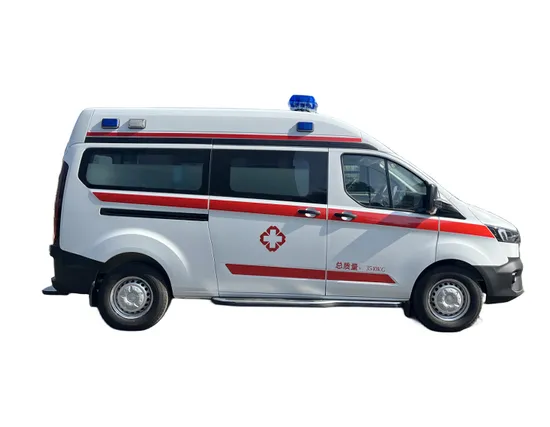
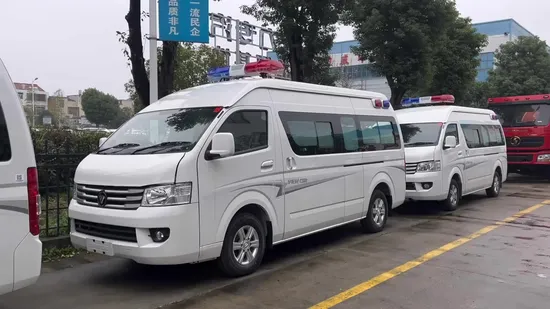
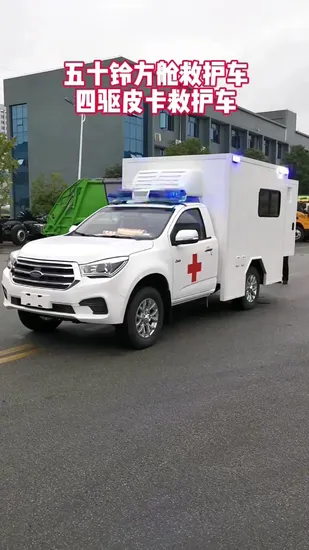
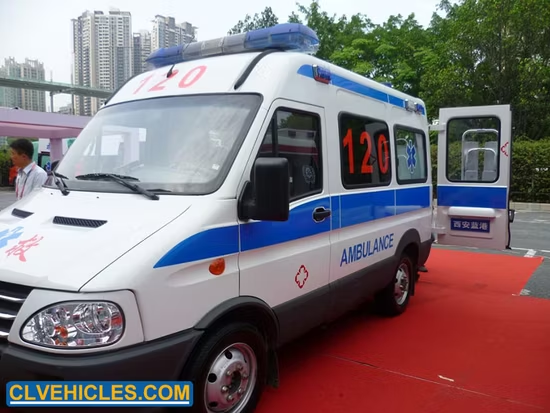
The CLW5032XJHCDP is a negative pressure ambulance built by Chengliwei on a Ford van chassis. It is designed for transferring patients with infectious or airborne diseases while protecting the crew and the public. Air pressure inside the medical cabin is kept below outside pressure, so air can only flow inward; cabin air is treated before it is discharged. The vehicle measures 5520 × 2040 × 2460 mm on a 3300 mm wheelbase and also serves as a monitoring-type ambulance for critical patient transport.
Chassis and engine
The base vehicle is a single-rear-axle van on 215/65R16C tyres, with a 4x2 layout as standard. Gasoline and diesel engines are both offered, with power quoted in the 150–250 hp range depending on the engine chosen, manual or automatic transmission, and Euro 3 to Euro 6 emission versions. Standard cab features include ABS brakes, central locking, electric windows and cab air conditioning for heating and cooling.
Body and working equipment
The medical cabin is lined with compression-moulded medical-grade panels with a seamless finish and rounded corners. Furniture includes an L-shaped medicine cabinet, a long overhead cabinet with roller-shutter door, double oxygen cabinets, a storage cabinet, a two-tier equipment rack, a roof-mounted multifunction module, a concealed hand-wash sink and a one-piece U-shaped non-slip floor. Medical fit-out covers two oxygen cylinders with automatic changeover, a pneumatic negative pressure suction system, a UV germicidal lamp, an automatic loading stretcher, a scoop stretcher, first-aid kits, a folding doctor's seat, a three-seat bench and two infusion holders. Life-support devices such as a ventilator, defibrillator and ECG monitor can be specified. Power comes from a 1000 W inverter with its own battery pack giving 220 V and 12 V, and eight adjustable roof air outlets serve the front and rear cabins independently. Warning equipment includes four LED roof beacons, eight side LED lights, two grille lights and a 100 W siren system, plus a reversing camera, intercom, pneumatic side step and reflective strips.
Typical uses
The ambulance suits hospitals, disease-control centres and emergency services that transfer infectious patients, and sites such as border ports, airports, docks and stations where suspected cases must be isolated quickly. It also works as a general critical-care transport for cardiac emergencies, post-operative patients and long-distance transfers.
What to confirm in the quotation
Confirm the chassis version and engine (gasoline or diesel), transmission, emission level, the negative pressure and filtration specification, and the exact list of medical devices to be installed. Also agree livery, lettering, and the registration and export documents required.
Left-hand drive is standard and right-hand drive is available on request.
Request a current quotation for your selected configuration, quantity and delivery terms.