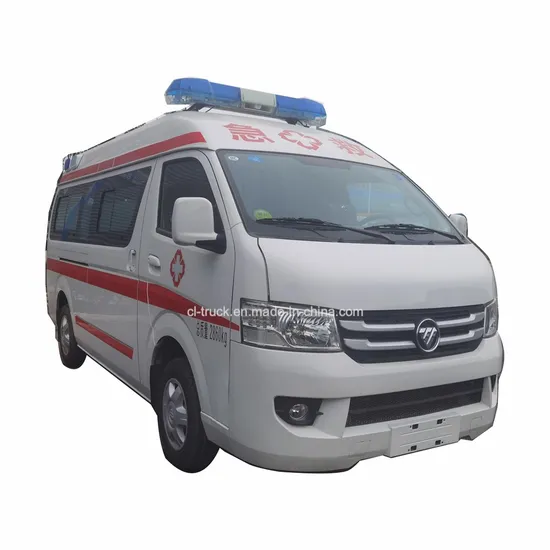
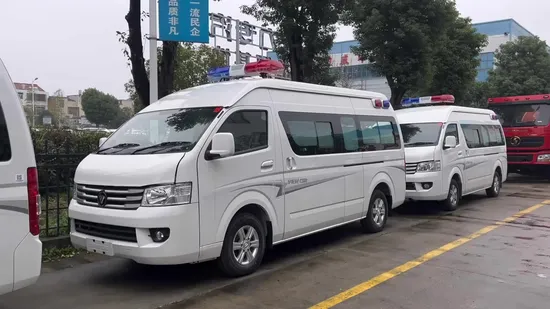
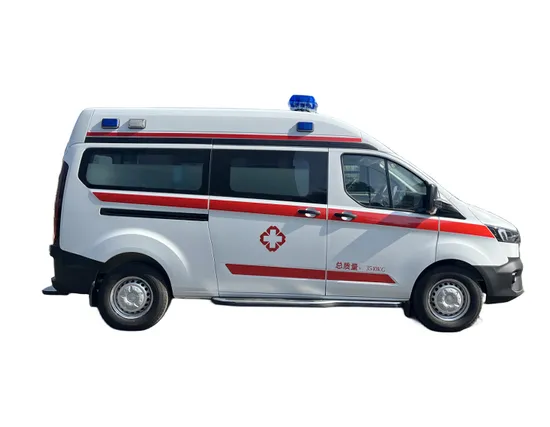
The Foton G7 G9 Guardianship Transport Ambulance Euro 2 is a diesel van ambulance for patient escort and guardianship duties, built on a Foton chassis with a 4J28TC3 engine and a manual gearbox. Left-hand drive is standard and right-hand drive is available on request, and the vehicle is supplied without medical equipment.
Guardianship transport means moving people who need supervision or monitored care rather than urgent treatment: patients under observation, people who must be accompanied between facilities, and those who need a calm, supervised journey. The vehicle suits hospitals, care providers and public health teams that need a flexible rear compartment.
Where this truck is used
Unlike a front-line emergency unit, a guardianship vehicle is judged by how well it carries people and supervisors. The back area can be arranged with seats, restraints, a stretcher or a combination, depending on whom you carry. Typical tasks are inter-hospital transfers, moving patients to and from specialist units, escort of patients who need staff alongside them, and general medical staff movement.
Overall dimensions are 5380 × 1920 × 2480 mm, with a wheelbase of 3110 mm. That makes it a larger van with a wide body, which gives room for an arrangement of seats along both sides of the compartment.
Chassis, engine and drivetrain
Under the bonnet is the 4J28TC3 diesel, rated at 110HP (81 kW), with a displacement of 2771 cc. A five-speed manual gearbox with one reverse transmits the power, and power steering is fitted. Gross vehicle mass is 3400 kg and kerb weight 2160 kg, so the load margin should be checked as seats, cabinets and equipment are added.
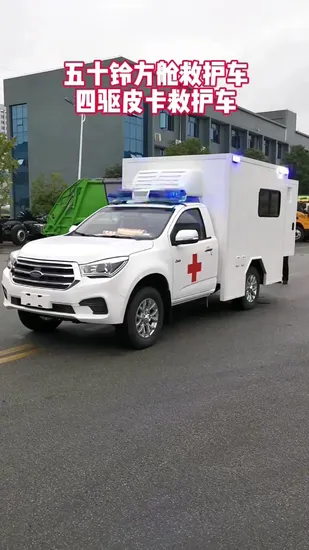
Tyres are 215/75R16LT, four fitted and one spare. Two-wheel or four-wheel drive is available as an option. If your vehicle will travel mostly on paved roads, two-wheel drive is the simpler layout. If it must reach isolated sites on unsealed roads, discuss four-wheel drive.
Cab and operator features
The cab is air conditioned and has power steering. In guardianship work the driver often waits for long periods with the engine off, so ask how ventilation is handled when the vehicle is parked. The body is white.
It is also worth planning how the cab and rear compartment will be cleaned. A vehicle that carries different people every day needs surfaces that wipe down quickly, seat covers that can be washed or replaced, and a floor without gaps where dirt collects. Mention these needs early, because they affect the choice of upholstery and flooring during the fit-out.
Matching the truck to your job
Start with the people, not the vehicle. How many patients and how many escorts will travel together? Are patients seated, or on a stretcher? Is a lockable partition needed between the cab and the rear compartment? Do the rear doors need child locks or internal handles that only the crew can operate? Answers to these questions determine the interior, and the platform can be adjusted around them.
A fit-out for escort duties may include grab handles, seatbelts for each seat, a washable floor and wall surfaces, and good interior lighting. A stretcher position with floor locks can be combined with a row of seats for accompanying staff. Ask also whether seats can be folded or removed, so the same vehicle can carry a stretcher on one day and several seated passengers on the next.
What to confirm before ordering
The exact emission standard and the choice between the G7 and G9 versions depend on the configuration and are confirmed in the quotation. The model name covers both versions, so state clearly which one you need.
Please also confirm two-wheel or four-wheel drive, seat count and layout, restraint equipment, partitions, and the final dimensions of the rear compartment.
Request a current quotation for your selected configuration, quantity and delivery terms.