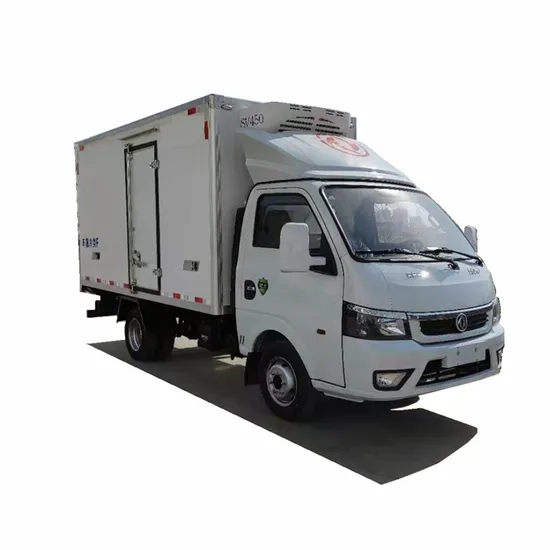
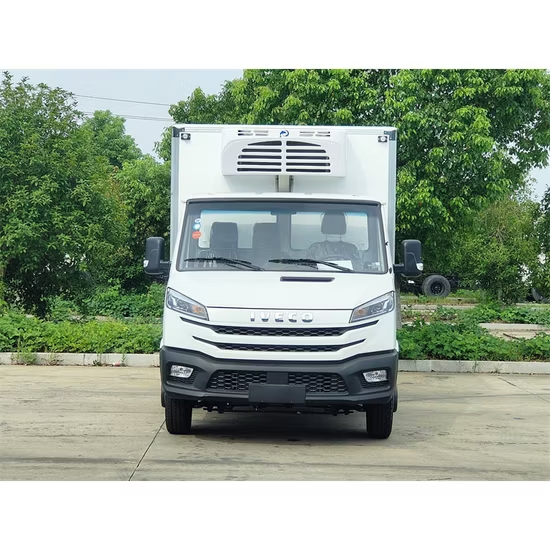
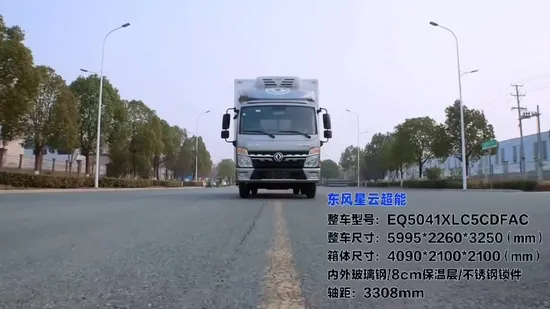
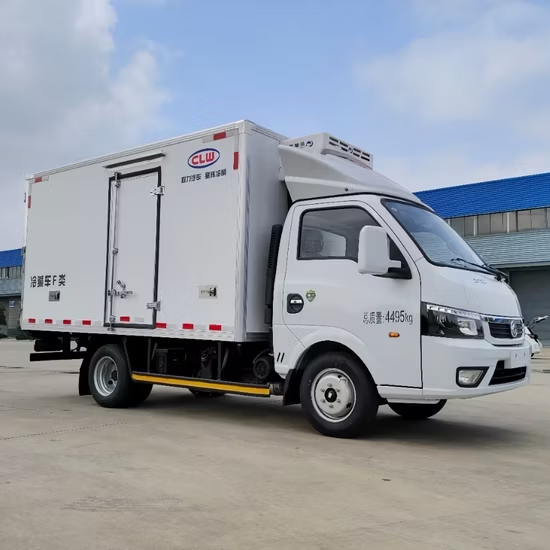
The Dongfeng Compact Refrigerated Food Delivery Truck 115HP is a light 4x2 insulated van, model CLW5040XLCE6, on a Dongfeng chassis with a 115 hp Dongfeng Yunei diesel engine and a manual gearbox. The cargo box measures 4,100 × 1,840 × 1,820 mm, with temperature choices of -18°C, -5°C and 5°C according to your requirement.
It suits urban food distribution, such as ice cream, dairy and catering supply, where a full-size refrigerated truck would be too large for the streets and loads involved.
The insulated body
The van is built from bonded polyurethane insulation panels in a fully enclosed structure. The panels have a thermal conductivity of 0.028 W/mK or less, compression resistance of 150 kPa or more, and a density of 30-45 kg/m³. Low thermal conductivity slows heat entering the box, and a bonded structure helps keep the shell tight and free of leaks. The outer surface can be glass fibre reinforced plastic, stainless steel, aluminium alloy or colour steel plate.
Chassis and drivetrain
The chassis is a Dongfeng YCY24140-60 with 4x2 drive and two axles. The engine is the Q23-115E60 of 2,300 ml, driving a gearbox with six forward gears and one reverse. Maximum speed is 110 km/h and the cab seats three. Approach and departure angles are 28° and 12°. Wheelbase options of 2,700, 2,950 or 3,308 mm are available, and tyres are 6.50R16 or 7.00R16, six including one spare.
Refrigeration unit and daily use
The refrigeration unit brand and model depend on the temperature you need, and different brands are available. A unit of this type maintains temperature; it is not designed to pull warm cargo down to -18°C, so pre-cool the van before loading and load product that is already at temperature. Keep door openings short on multi-stop rounds, and load in reverse order of delivery so the first drop is nearest the door.
Check the door seals, the drain and the unit's condensate outlet regularly, and wash the interior after each food shift to prevent odour and residue.
Planning a delivery round
A compact refrigerated van works best when the round is planned around the cold chain. Decide which goods share a temperature setting, because a single box holds one setting at a time, and group those deliveries on the same run. Pack crates so that air can move around them, and keep heavier items low and close to the front of the box so they stay stable on turns and stops.
Before each shift, run the unit until the box reaches its set temperature, then load quickly and close the doors. Between stops, avoid leaving the doors open while paperwork is completed. A driver who follows the same routine every day keeps the goods in better condition and puts less strain on the refrigeration unit.
What to confirm before ordering
The emission standard, payload, overall dimensions, weight figures, wheelbase and tyre size depend on the configuration and are confirmed in the quotation. Also confirm the temperature setting, the refrigeration unit, the usable payload once equipment is fitted, and the drive side.
Request a current quotation for your selected configuration, quantity and delivery terms.