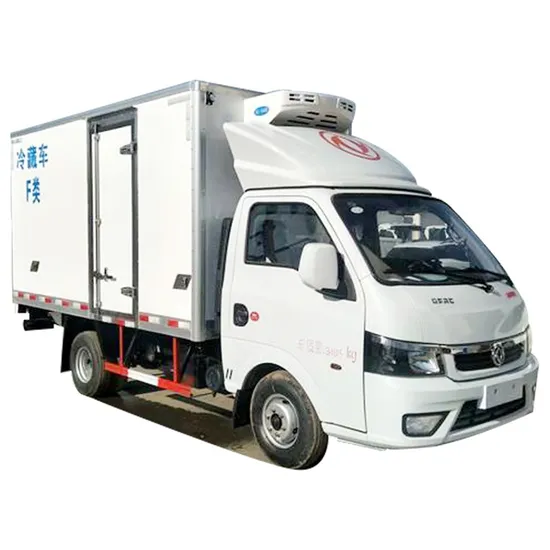
A multi stop refrigerated delivery truck needs a brief that describes the delivery day, not only the cargo and desired temperature. Frequent stops change the amount of cargo remaining in the body and repeatedly open the load space to the outside. The supplier needs to understand those events when discussing body layout, access and refrigeration selection.
Describe loading order and package handling
List the delivery sequence and identify which packages leave at each stop. State whether goods are handled as cartons, crates or another defined unit. Show the intended access path so the body arrangement can be discussed around retrieving the right consignment without unnecessary handling of other deliveries.
The Dongfeng mini refrigerated truck detailed table lists a van size of 4100 × 1840 × 1820 mm. That is a useful body-space reference for a loading discussion, but the supplier also needs package dimensions and the selected refrigeration arrangement to assess the usable layout.
Record what happens at each stop
Identify the available parking position, customer receiving hours and distance between the truck and receiving point. Distinguish a quick handover beside the vehicle from a delivery requiring repeated movement between the truck and a building. Record observed waiting time separately from unloading time.
The Dongfeng intercity refrigerated delivery truck lists overall dimensions of 5520 × 1820 × 2590 mm and a van size of 3490 × 1737 × 1750 mm. These dimensions help discuss access and packaging for a smaller delivery configuration; the route still determines how it will be used.
Include door-open duration and frequency
Provide the number of planned stops and any measured door-event records from an existing route. Note which door is used and whether unloading involves one continuous opening or several openings. Where times are estimates, label them as planning estimates rather than measured results.
A listed refrigeration capability does not prove that a unit will offset every door-opening pattern. Give the supplier the route conditions and the cargo's specified requirements so the selected cooling system can be discussed against the intended work.
Describe the cargo remaining after each delivery
The truck's load changes throughout the day. Identify the remaining consignments and any particular handling or access needs as deliveries progress. Ask how the planned body layout accommodates those changes while retaining the equipment manufacturer's required airflow arrangement.
The Dongfeng short-haul refrigerated box truck describes refrigeration selection according to temperature needs. It provides another compact delivery example, but the final specification should connect that selection to the actual route and loading plan rather than a general “short-haul” label.
Provide a one-day route description
| Route field | Example entry format |
|---|---|
| Loading point | Location, loading window and package arrangement |
| Stop sequence | Customer or site reference in delivery order |
| Consignment | Package type, dimensions and measured quantity |
| Access | Parking position and receiving-point distance |
| Door event | Door used, openings and observed duration |
| Remaining load | Consignments retained after the stop |
| Operating requirement | Specified cargo conditions and available journey records |
For urban distributors, this route description gives the supplier a concrete basis for proposing a body and refrigeration configuration. Keep the selected equipment and the route assumptions together so the purchase reflects the delivery pattern the truck is expected to serve.