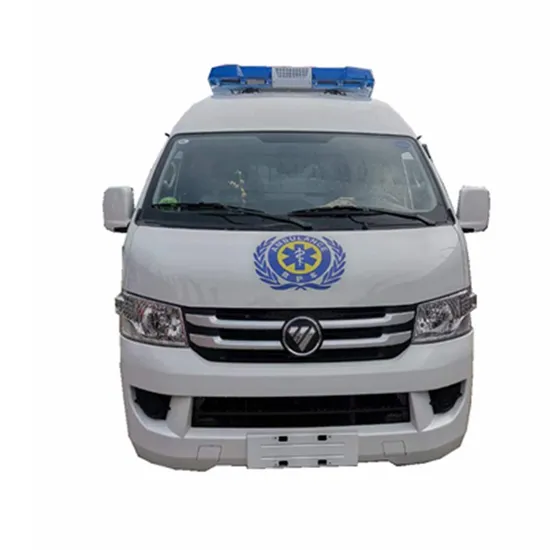
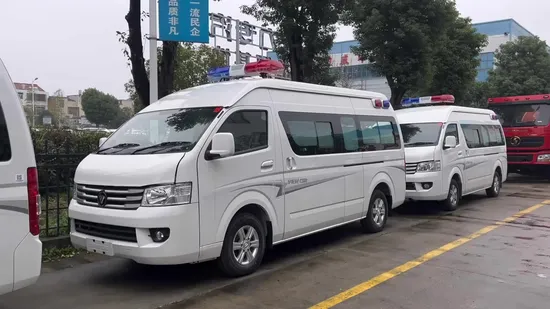
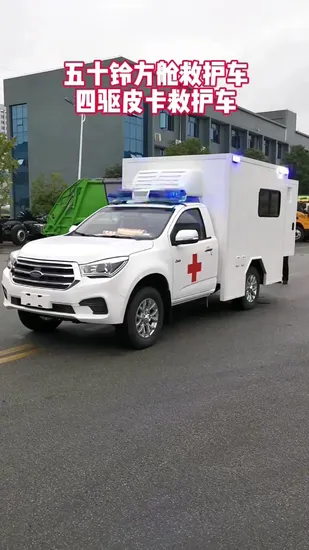
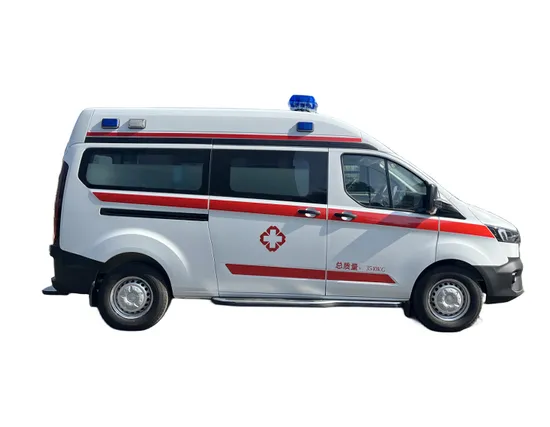
Model CLW5030XJH is our Transit ICU Monitoring Ambulance with Defibrillator, a compact petrol-engined ambulance for patients who need monitoring during transport. It carries stretchers, flexible seating, a defibrillator and an electrocardiograph, and it runs on a 2570 mm wheelbase with a five-speed manual gearbox.
Clinics, hospitals, emergency teams and private ambulance companies choose a vehicle of this size when streets are narrow or when most transfers are short and urban. The compact body makes it easier to reach buildings that larger ambulances cannot approach, and the final equipment list is agreed in the quotation.
Where this ambulance is used
This ambulance suits patient transfers inside a city, journeys between a clinic and a hospital, and emergency response where a medic needs to start monitoring and treatment on the way. Its overall size of 4840 × 1695 × 2435 mm is much shorter than a large van-based ambulance, so it handles confined parking and tight turns.
The seating range of two to six places allows the vehicle to carry a driver, a medic and an accompanying relative, or more staff on training and mixed-use runs. Because seating is flexible, operators can match the cabin to the way the vehicle is used most often during the week.
Engine, drivetrain and brakes
The 1998 ml petrol engine has multipoint injection and produces 95 kW and 186 Nm. A manual gearbox with five forward gears and one reverse sends the power to the road. Top speed is 156 km/h and the fuel tank holds 65 L, giving a practical range between fuel stops.
The front uses McPherson independent suspension and the rear uses leaf springs. Brakes are hydraulic, dual-circuit discs, which means one circuit still works if the other develops a fault. Kerb weight is 1855 kg and gross vehicle weight is 3020 kg, which defines how much equipment and crew the vehicle can carry.
Using the monitoring and defibrillation equipment
An electrocardiograph records the electrical activity of the heart, and a defibrillator delivers a controlled shock when a dangerous rhythm needs correction. Crews should practise using both with the vehicle moving and stopped, and should make sure each unit is firmly secured so it cannot shift during braking or cornering.
Batteries and consumables need a daily check. Confirm that the defibrillator is charged, that electrode pads are in date and that the electrocardiograph is working before each shift. We can discuss mounting positions and power supply for these items when we prepare the quotation for your configuration.
What to confirm before ordering
Please confirm the drive side, left-hand or right-hand, and the emission standard your registration requires, since the figure that applies to the finished vehicle is set in the quotation. Tell us how many seats you want and which stretcher arrangement suits your crews.
Also list the medical equipment that must be installed, the lights and sirens you need, and any colour or marking requirements. Customisation is available. Our team reviews your roads, typical patients and hospital rules, then writes one clear specification so that you know exactly what the finished ambulance will contain.
Request a current quotation for your selected configuration, quantity and delivery terms.