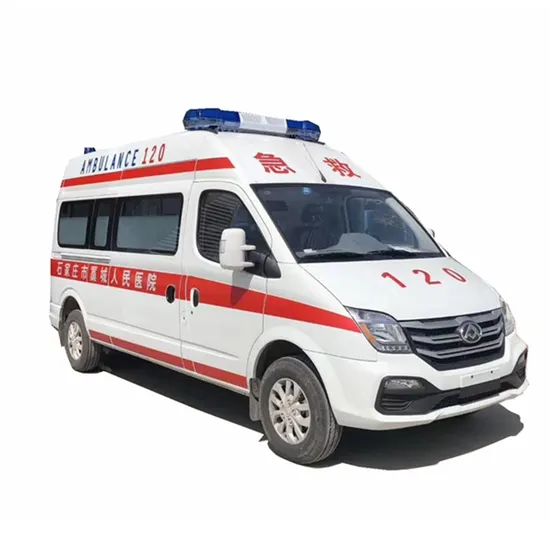
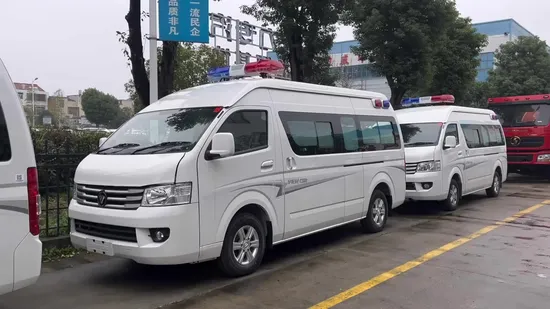
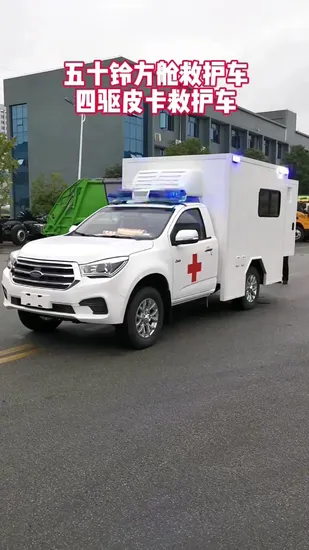
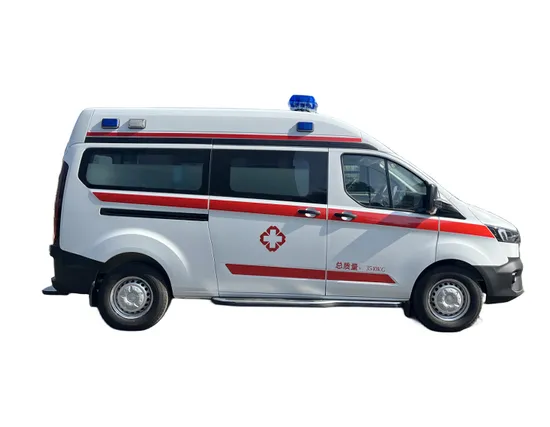
Model CLW5041XJHSH6 is our Saic Maxus V80 ICU Monitoring Ambulance, a diesel van-based emergency vehicle prepared for transporting patients who need continuous monitoring on the way. It uses a 2499 ml four-cylinder diesel engine that meets Euro V and a six-speed manual gearbox, and it is built on a 3850 mm wheelbase.
Hospitals, emergency centres, private ambulance operators and clinics use this type of vehicle for inter-hospital transfers and for patients who must be observed during the journey. The crew compartment seats between three and nine people depending on the configuration, and the medical fit-out is agreed with you in the quotation.
Where this ambulance is used
An ICU monitoring ambulance is normally assigned to transfers where the patient is stable enough to travel but needs vital signs watched throughout. Typical jobs include moving a patient between hospitals, taking a patient to a specialist centre, or bringing someone home after intensive treatment while medical staff stay beside the stretcher.
The overall size of 5700 × 1998 × 2740 mm is compact enough for city streets and hospital entrances, yet it leaves useful room in the patient area. Many operators choose this class of vehicle because it handles like a large van and parks more easily than a heavier ambulance.
Engine, drivetrain and ride
The in-line four-cylinder engine is water-cooled, intercooled and uses direct injection. It produces 100 kW at 3800 rpm and 330 Nm of torque between 1800 and 2400 rpm. The six-speed manual gearbox gives the driver a wide choice of gears for city traffic and for longer transfers.
The front axle uses McPherson independent suspension and the rear uses leaf springs. All four wheels have disc brakes. Top speed is 150 km/h and the fuel tank holds 80 L. Kerb weight is 2800 kg and gross vehicle weight is 3800 kg, which defines the weight available for medical equipment and crew.
Planning the patient area
The way an ambulance is laid out decides how comfortable the journey is for both patient and crew. Think about where the stretcher sits, where monitoring equipment is secured, how oxygen and consumables are stored and how easily a medic can reach the patient from the seat beside the stretcher.
We discuss these points with you when preparing the quotation. A hospital that moves critically ill patients will list different needs from an operator that mainly carries patients between wards and clinics. Giving us an idea of your case mix lets our team propose a layout that fits real use.
What to confirm before ordering
Please confirm the drive side you need, left-hand or right-hand, and the emission standard required for registration. Tell us how many seats you want in the crew area, within the available range, and list the monitoring and medical equipment that must be installed. The equipment list is written into the quotation.
Also tell us about the roads and conditions the ambulance will face, since suspension, ground clearance and tyres matter on rough surfaces. Customisation is available, including colour and markings. With these details settled, our team prepares one clear specification, and you can compare it against the standards your health authority expects.
Request a current quotation for your selected configuration, quantity and delivery terms.