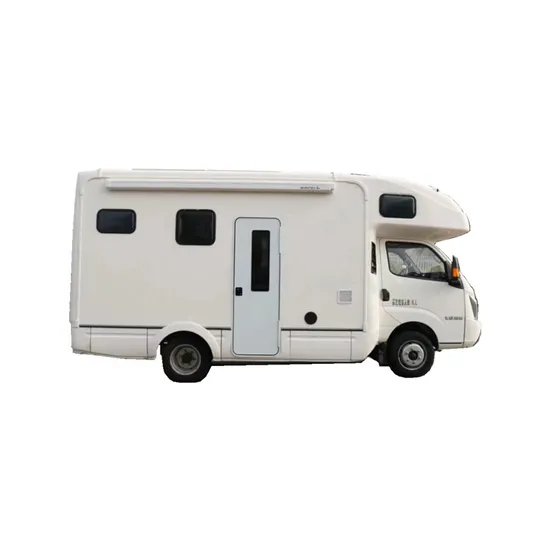
The Mini Mobile Service Vehicle Type C 93kW is a compact box-bodied vehicle in the Type C format, built as a mobile service vehicle in the caravan style. It is powered by engine D20TCIF1 rated at 93 kW (126.48 PS) and has a 3100 mm wheelbase. Its small size makes it a fit for organisations that want a self-contained room on wheels, such as mobile clinics, outreach teams, inspection crews and service providers who work at many sites.
Where this vehicle is used
A vehicle like this is chosen when the work has to be done at the customer's or the community's location, not at a fixed building. Examples include health screening, vaccination or advice sessions, equipment inspection, repair and testing services, and information or sales work at events. The vehicle is not tied to a single purpose, which is why the interior is the key part of the order. The same chassis and body shell can be arranged very differently depending on the job.
Think also about where the vehicle will stand while it is working. Consider which side the entrance should face, how visitors or staff will approach it, and whether power or water connections will be available at the site. These points shape the door layout and the services you ask for.
Chassis and weights
Curb weight is about 3700 kg, with a front overhang of 1200 mm and a rear overhang of 1695 mm. The engine is model D20TCIF1 with an output of 93 kW, and any further engine details are confirmed in the quotation. A compact wheelbase makes turning and parking easier on narrow streets and in small car parks.
Total mass and front and rear axle loads are confirmed in the quotation.
Planning the interior
Start with the activity and work backwards. List what the team does inside the vehicle, how many people work there at one time, and what must be stored. Then decide on the services: electrical sockets, lighting, ventilation or air conditioning, heating, fresh and waste water, and an external power connection. Remember that every item adds weight, so a lean layout helps to stay inside the permitted loading. Ask for a floor plan and review it with the people who will use the vehicle every day.
Think about how people move through the space. Keep a clear path between the entrance and the working area, place storage within reach of where items are used, and arrange seating and work surfaces so that staff and visitors do not block each other. If the vehicle will serve people with limited mobility, raise the entrance arrangement early, because it affects the whole floor layout.
What to confirm before ordering
The final overall dimensions are confirmed in the quotation, so ask for them before checking garage height, width limits and parking spaces. Confirm the drive side, fuel type, emission standard, total mass and axle loads, the number of seats in the cab, the equipment list and the exterior colour. Describe your intended use in plain terms so that the quotation covers the right fit-out.
Request a current quotation for your selected configuration, quantity and delivery terms.