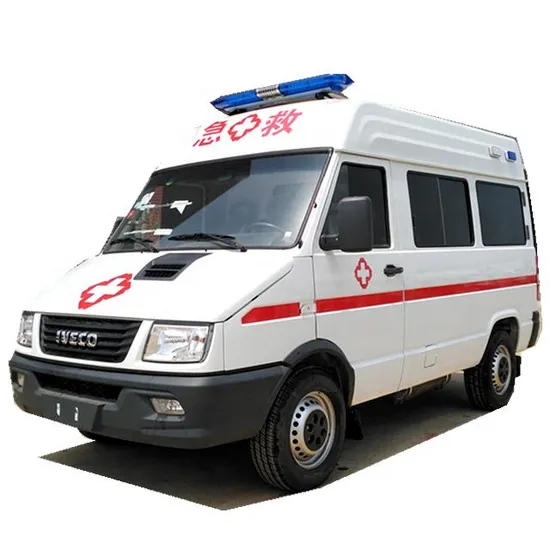
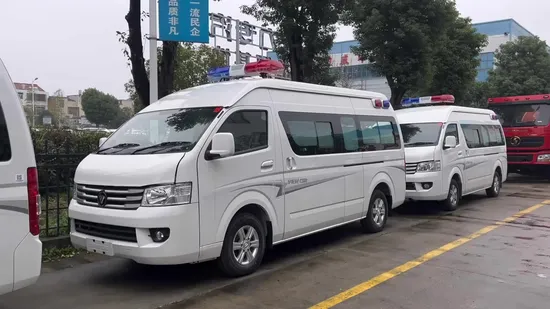
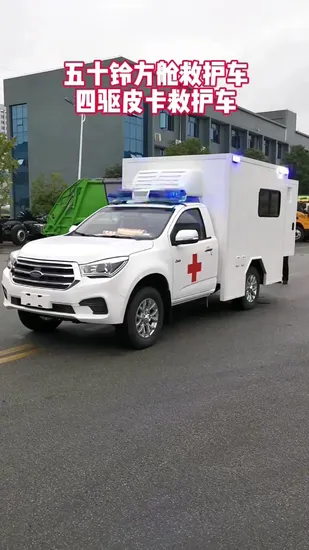
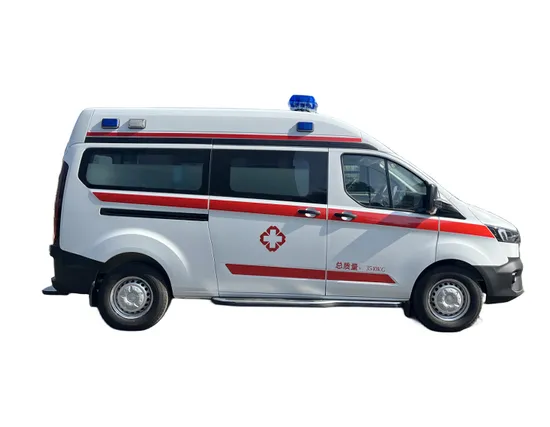
The Iveco Negative Pressure Ambulance with Medical Equipment is a patient transport vehicle built on an Iveco chassis for moving patients who need to be isolated from the crew and the surrounding air. It is a left-hand drive vehicle with a separate patient compartment and a compact body of 4970 × 2000 × 2880 mm.
It suits hospitals, infectious disease units, public health teams and ambulance services that transfer patients with contagious conditions. A smaller body helps the vehicle reach clinics and wards through ordinary streets, while the sealed patient area is the part that matters most for infection control during the journey.
How a negative pressure ambulance works
In a negative pressure ambulance, air pressure inside the patient compartment is kept slightly lower than outside, so air tends to flow into the compartment rather than out of it. Air leaving the compartment passes through filtration before release. This reduces the chance that infectious particles reach the driver and the surrounding road.
The crew in the patient area still need protective equipment, because the system lowers the risk but does not remove it. Good practice includes cleaning the compartment after each transfer, checking filters on the schedule given by the equipment maker, and training everyone who rides in the back in the correct entry and exit routine.
Chassis and weights
The chassis is Iveco, with an engine from the Nanjing Iveco engine company. The wheelbase is 2800 mm, with front and rear tracks of 1460 mm and 1440 mm. Total weight is 3550 kg, curb weight is 2405 kg, and the front and rear axle loads are 1400 kg and 2150 kg.
The approach angle is 14 degrees and the departure angle is 12 degrees, which describes how steep a ramp or kerb the ambulance can clear. The difference between total weight and curb weight shows the load available for crew, patient and equipment, and it is worth keeping in mind when planning the fit-out.
Cab and equipment
The cab is left-hand drive and comes with air conditioning, a CD and MP3 player, a radio and a reversing radar. These make long shifts more comfortable for the driver, and the radar helps when manoeuvring close to hospital doors, where staff and patients are often moving around the vehicle.
The medical equipment package is part of the product name, and the exact items depend on the configuration agreed with our team. Please tell us which monitors, ventilation devices and storage you expect to carry, so the interior can be arranged to give the crew a clear working area around the stretcher.
What to confirm before ordering
Please confirm with us the drive side, the emission standard needed for registration, the engine power and the full list of medical equipment included with the vehicle. For a negative pressure unit, also ask about the air extraction and filtration arrangement, as the details are agreed with the quotation.
Other useful points are the electrical supply for the equipment, the colour and markings, the warning lights and siren, and the interior surfaces that will need regular disinfection. Giving us your clinical and cleaning procedures at the start helps us prepare a vehicle that fits the way your team actually works.
Request a current quotation for your selected configuration, quantity and delivery terms.