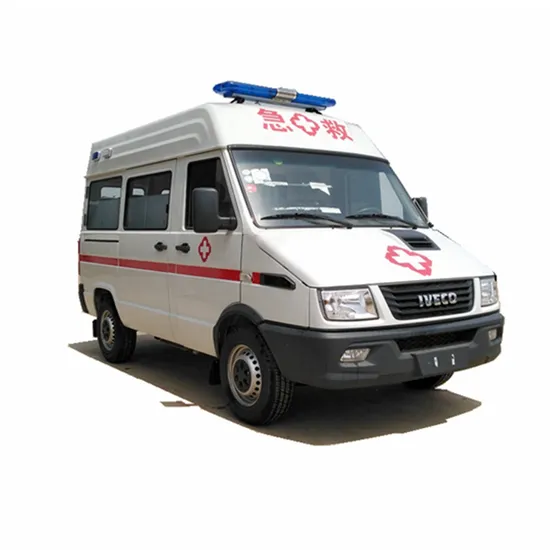
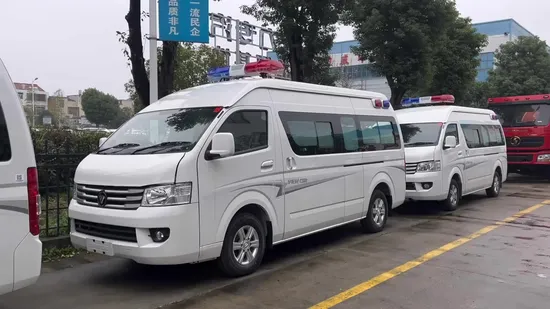
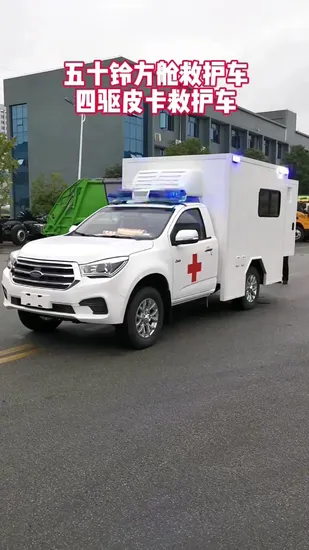
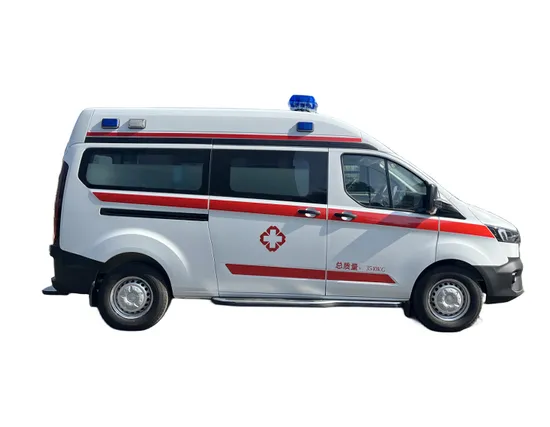
The Iveco ICU Emergency Rescue Ambulance Euro 6 is a compact, single-axle diesel ambulance on an Iveco chassis, built for emergency rescue and intensive care transport. It combines a manual gearbox, left-hand drive and a separate patient compartment, and it meets the Euro 6 emission level in its standard configuration.
This model suits hospitals, ambulance services and rescue organisations that want a smaller vehicle able to move through busy streets and still carry a stretcher with the crew. Its modest overall size makes it a practical choice where parking space, narrow access roads or ambulance bay dimensions limit what can be used.
Typical working routines
A day for this kind of ambulance usually mixes emergency callouts with scheduled transfers between wards, clinics and hospitals. The patient compartment is a dedicated area behind the cab, so the crew can attend to the patient without being cut off from the driver, and the vehicle can be turned around quickly after each job.
Because the body is light, with a curb weight of 2405 kg and a total weight of 3550 kg, it is easy to handle in stop-start urban traffic. Drivers used to a manual gearbox will find the controls familiar, and the single-axle layout keeps the vehicle simple to service on a regular schedule.
Chassis, engine and drivetrain
The chassis carries an Iveco engine from the Nanjing Iveco engine company, burning diesel and meeting Euro 6. The wheelbase is 2800 mm, the front and rear track are 1460 mm and 1440 mm, and the front and rear axle loads are 1400 kg and 2150 kg. The approach and departure angles are 14 and 12 degrees.
These figures matter for everyday use. The axle loads show how the weight is shared when the vehicle is loaded, and the approach and departure angles tell you how steep a driveway, ramp or kerb the ambulance can clear without scraping. Exact engine output for your order is confirmed in the quotation.
Cab and body features
The overall dimensions are 4970 × 2000 × 2880 mm. In the cab, the equipment includes air conditioning, a CD and MP3 player, a radio and a reversing radar. The radar is particularly helpful when backing into a hospital bay or a tight street with people close to the vehicle.
The patient compartment is arranged as its own section of the body. Interior fit-out, such as the stretcher fixing, medical cabinets and any monitoring devices, can be discussed with our team, and customisation is available so the layout follows your clinical routines and the number of staff who ride in the back.
What to confirm before ordering
Please confirm with us the drive side, which is left-hand drive on the standard version, and the emission standard your operation requires. We also recommend confirming the exact engine power and the medical equipment that should be installed in the patient compartment, since the quotation is prepared for the specification you choose.
Other points worth settling early are the colour, markings, warning lights and siren, and the electrical supply for medical devices. If you already operate a fleet, tell us about the equipment you use now, so the new ambulance can match your crew training and your existing maintenance routines.
Request a current quotation for your selected configuration, quantity and delivery terms.