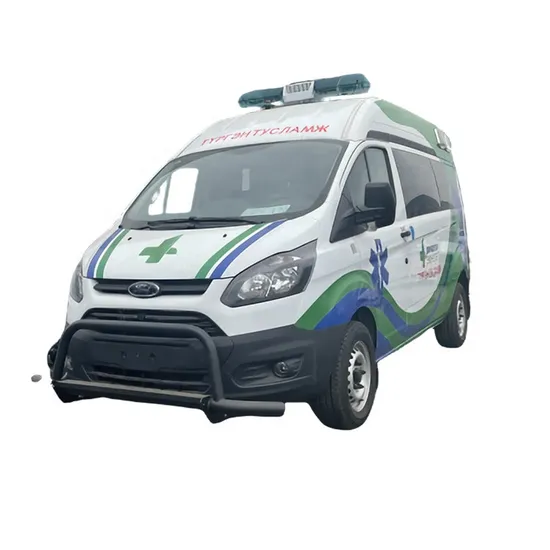
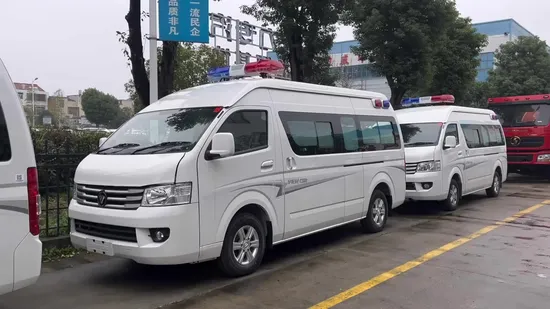
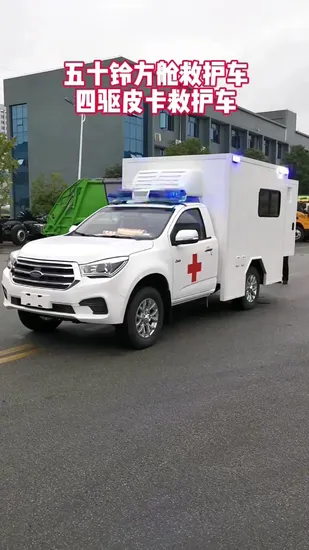
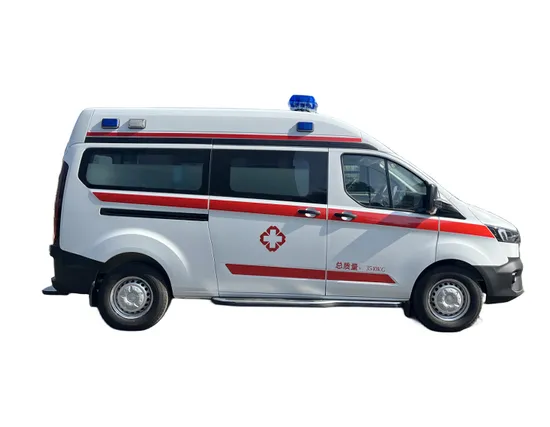
The ICU Negative Pressure Hospital Ambulance Euro 6 149kW is built for transporting patients who need intensive care and whose condition calls for controlled air flow in the patient compartment. It uses a 149 kW petrol engine of 1,997 ml displacement that meets Euro 6, with 215/75R16LT tyres and a wheelbase of 3,300 mm.
It suits hospitals, infectious disease centres and emergency medical services that transfer patients between wards, hospitals and treatment sites. The rated capacity is 3 to 8 persons, so the crew and the patient can be carried together and the seating adapted to the service you run.
How negative pressure helps
In a negative pressure ambulance, the air pressure in the patient compartment is kept slightly lower than the pressure outside. Air then tends to flow into the compartment instead of out of it, which helps keep airborne contamination from drifting into the driver area and the surroundings.
This is why such vehicles are used for infectious patients. The way air is moved and treated before it leaves the vehicle is part of the design, and the exact system fitted to your ambulance is described in the quotation, so that your infection control team can review it before production.
Chassis, engine and tyres
The engine is a petrol unit producing 149 kW from 1,997 ml, built to the Euro 6 emission standard. The vehicle stands on four 215/75R16LT tyres, and the wheelbase is 3,300 mm, which provides a stable base for a stretcher and the crew working around it.
A steady chassis matters in an ambulance because medical staff work on the move. A smooth ride lowers vibration in the compartment, helps keep monitoring equipment steady and makes procedures easier for the crew, particularly on longer transfers between facilities.
Planning the interior
The interior is usually arranged around one stretcher with seating for the medical team and fixed places for equipment. With a rated capacity of 3 to 8 persons, you can choose between a layout that favours crew seating and one that leaves more room for devices and supplies.
Tell us which devices you plan to carry, how staff will enter and leave the compartment, and how the vehicle will be cleaned after each patient. Cleaning routines affect which surfaces and fittings we recommend, and we write the agreed arrangement into the quotation.
What to confirm before ordering
Please confirm with our team: the drive side, the emission standard, the negative pressure system and its operating controls, the interior layout, the number of seats, and the medical equipment to be fitted. These items depend on the configuration and are stated in the quotation.
Also describe the standards your hospital or authority applies to ambulances and infection control, along with the typical journey length. Knowing these in advance lets us prepare a configuration that your inspectors can approve with fewer changes after the vehicle is finished.
Request a current quotation for your selected configuration, quantity and delivery terms.