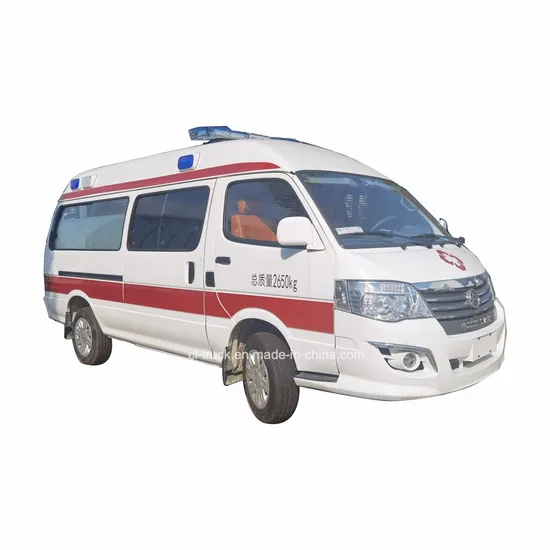
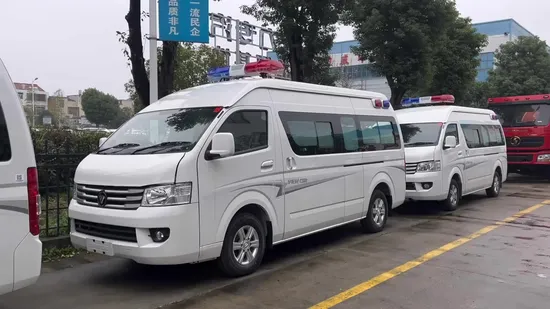
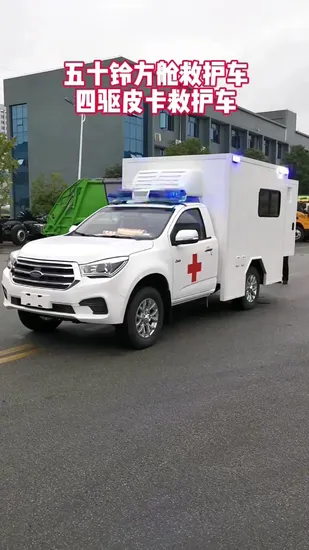
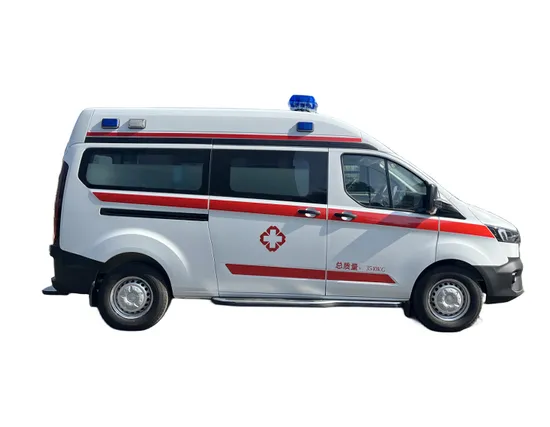
The ICU Hospital Patient Transport Rescue Ambulance 202HP is a white, left-hand drive ambulance powered by a 1.997 L gasoline engine rated at 149 kW (202 HP). Its overall dimensions are 5341 × 2032 × 2407 mm on a 3300 mm wheelbase, which places it in the compact class of patient transport vehicles. Right-hand drive is available on request.
We build this model for hospitals, clinics, emergency services and medical transfer operators who need an ambulance that can move through narrow streets and busy hospital grounds. It is a practical choice where a full-size van would be hard to place at entrances, and where crews still need room for a patient and equipment.
Where this truck is used
Typical work includes moving patients between hospitals, taking people home after treatment when they cannot travel in an ordinary car, and responding to sudden illness or accidents. The ICU name tells you the vehicle is intended for patients who need monitoring during the journey, so the interior layout matters as much as the engine.
A compact body helps in dense districts, older hospital sites and community health centres where ramps, gates and parking bays are tight. Crews can bring the vehicle close to a doorway or loading bay, which shortens the time a patient waits outdoors and makes handover between teams quicker and calmer.
Chassis, engine and drivetrain
Power comes from the ECOBOOST4G20B5L gasoline engine with a displacement of 1.997 L and an output of 149 kW, equal to 202 HP. It meets the Euro 5 emission standard. The gearbox has five forward gears and one reverse gear, and power steering reduces the effort needed at the wheel during frequent turns in town.
Gross vehicle mass is 3300 kg and kerb weight is 2150 kg. The difference between the two is the margin available for crew, patient and fitted medical equipment, so heavy additions to the interior should be discussed with us early. The vehicle runs on 215/75R16LT tyres, four in use plus one spare.
Cab and crew comfort
The cabin is fitted with air conditioning, which keeps the driver and attendant comfortable during long transfers and in hot weather. Ambulance work often means long shifts, so cabin comfort has a direct effect on how alert the crew stays during a night call or a long journey between hospitals.
We suggest checking seat position, control reach and the route from the cab to the patient area before you finalise the order. Our team can talk through the interior arrangement for a stretcher, seats for attendants and storage for everyday medical supplies, so that crews can work without crowding the patient.
What to confirm before ordering
Before we prepare a quotation, please confirm the drive side, since left-hand drive is standard and right-hand drive is available on request. Confirm the emission standard you need, the colour or markings you want, and how many crew members and patients the vehicle must carry on a typical call.
Please also list the medical equipment you expect in the patient compartment, such as the stretcher type, lighting and warning devices. These choices change the final configuration and the loaded weight, and the figures that depend on them are confirmed in the quotation before production starts.
Request a current quotation for your selected configuration, quantity and delivery terms.