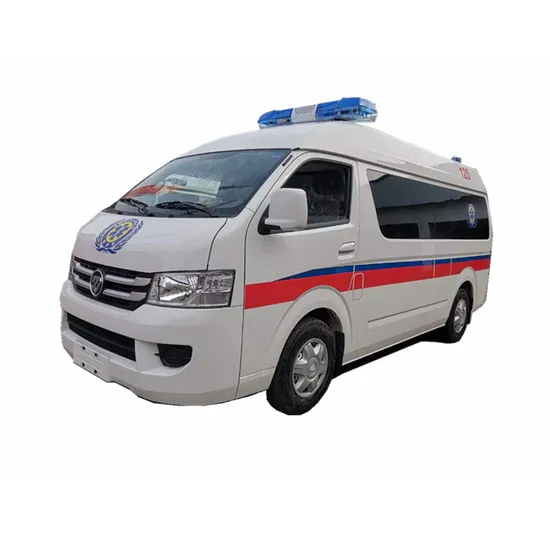
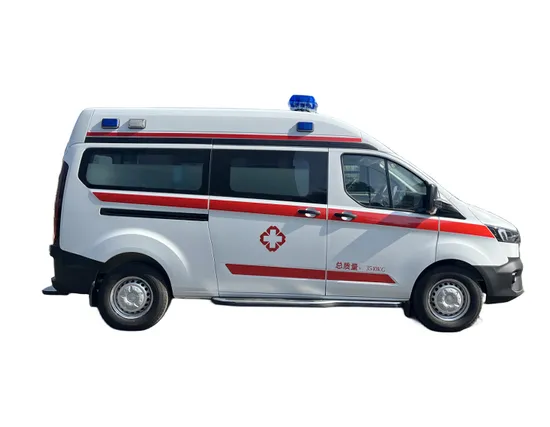
The Gasoline ICU First Aid Ambulance with Defibrillator, model CLW5030XJH, is an intensive care style ambulance equipped with a defibrillator and an electrocardiograph. It runs on a 1998 ml gasoline engine with multipoint injection and a five speed manual gearbox, and it seats between two and six people depending on the layout.
We build it for hospitals, emergency centres and ambulance services that want a compact vehicle able to monitor and treat a patient in transit. The smaller body helps it move through busy streets and enter hospital grounds, while the equipment on board allows crews to begin treatment before arrival.
Chassis, engine and drivetrain
The engine produces a maximum of 95 kW and a maximum torque of 186 Nm, for a vehicle with a gross weight of 3020 kg and a curb weight of 1855 kg. The gearbox has five forward gears and one reverse, shifted manually. Top speed is 156 km/h, and the fuel tank holds 65 L.
The front uses independent McPherson suspension, while the rear uses non independent leaf springs. Braking is a hydraulic double circuit disc brake system. The vehicle measures 4840 × 1695 × 2435 mm on a 2570 mm wheelbase, so it stays easy to park and to handle on tight hospital approaches.
Medical equipment on board
The defibrillator delivers a controlled shock to help restore a normal heart rhythm, and the electrocardiograph records the heart activity of the patient. Together they let the crew assess a cardiac emergency and act quickly. Their positions and power supply are planned with the interior layout so they can be reached from the attendant seat.
An ICU ambulance depends on practical details such as secure mounting, enough lighting and a clear path to the patient. Tell us which monitoring and treatment devices your service uses, and we will check how they can be arranged in the patient area without crowding the stretcher or the attendant.
Matching the vehicle to your service
This compact size suits urban emergency calls and transfers between hospitals in the same city. For longer routes, consider the fuel tank, the comfort of the seats and the storage space, because crews spend many hours inside. A short wheelbase gives a lively response in traffic but calls for careful layout planning.
Choose the number of seats according to how many medical staff travel with each patient. The seat count ranges from two to six, and a lower count leaves more space for equipment. Share your normal crew size and we can recommend a layout that balances staff comfort and equipment access.
What to confirm before ordering
Please confirm the drive side, the emission standard, the exact medical equipment package and the seat count with our team in the quotation. The emission level depends on the configuration, and the quotation states it clearly alongside the engine specification for the vehicle you order.
Also confirm lighting, siren, communication equipment, stretcher type and colour scheme. Tell us the requirements that apply to ambulances in your service, and our team will compare each item against the configuration before the quotation is prepared, so the finished vehicle is ready for the work it will do.
Request a current quotation for your selected configuration, quantity and delivery terms.