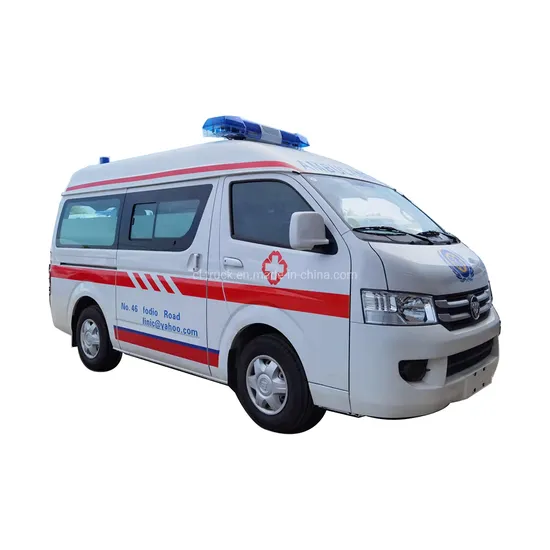
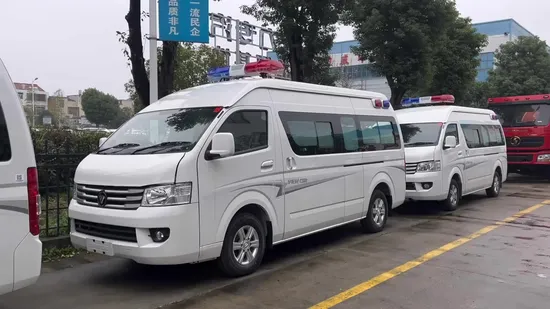
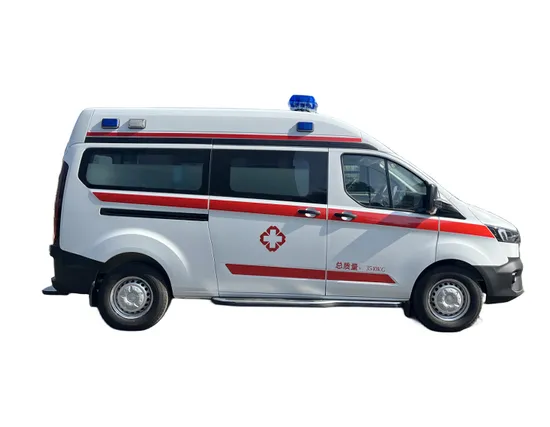
The Foton G7 G9 Ambulance 160HP Euro 6 is a van-based patient transport ambulance supplied with medical equipment. It uses an engine coded 4K22D4M, a five-speed manual gearbox and a wide-body, high-ceiling cab, and its colour is white.
It suits hospitals, clinics, community health services and private rescue companies that need a compact ambulance for city streets and main roads. The van format is easier to park, to turn and to run through congested areas than a large truck-based unit, yet the high roof leaves room for crew to work beside the patient.
Where this truck is used
A van ambulance of this size handles the bulk of routine medical work. That means transfers between hospitals, discharges to home or care facilities, scheduled dialysis and treatment trips, and first-response calls in areas with narrow streets. Its overall dimensions are approximately 4840 × 1695 × 2440 mm, so it can pass through most hospital gates, underground car parks and older town lanes without difficulty.
The wide body and raised roof matter in daily use. A paramedic who can stand or crouch comfortably beside the stretcher can monitor a patient and work with equipment more easily than one who has to stay seated and bent over. If your service carries a patient plus one or two attendants most of the time, this layout is a sensible fit.
Chassis, engine and drivetrain
The engine model is 4K22D4M, paired with a manual gearbox that has five forward gears and one reverse. Power steering is fitted, which reduces driver effort when manoeuvring in tight spaces. The tyres are 195R15C, with four fitted, a size that is common on light commercial vans and generally easy to source and replace.
The approximate kerb weight is 2080 kg. Because the ambulance carries a stretcher, oxygen cylinders, and equipment cases on top of the vehicle weight, the spare capacity between the kerb weight and the gross vehicle weight shapes how much extra equipment you can add. That limit should be agreed with our team before you finalise the equipment list.
Cab and operator features
The cab has air conditioning, which is the first thing a crew notices on a long transfer in hot or humid conditions, and it also helps keep the patient comfortable. The vehicle colour is white, a conventional choice for ambulances because it reflects heat and makes warning stripes and markings easy to see.
Power steering, a wide cab and a raised ceiling contribute to a less tiring working day. Ask how the seats are arranged in the front and rear compartments, and whether a rear-facing attendant seat and seatbelts for the crew are included.
Equipment and operating system
This model comes with medical equipment, and the itemised list and the medical compartment dimensions are confirmed in the quotation. A typical transport ambulance fit-out includes a stretcher with locking floor fixings, an oxygen supply with a flow regulator, interior lighting, storage cabinets, an attendant seat, and warning lights and siren on the outside.
Treat the equipment list as something to be agreed rather than assumed. Request a written equipment list so you can compare it with the standards your health authority expects.
What to confirm before ordering
This model is offered in more than one configuration. The engine power, fuel type, emission level, gross vehicle weight, wheelbase, steering side and number of seats in the cab depend on the configuration and are confirmed in the quotation.
When you ask for a quotation, state the steering side you need, the emission standard you need, the fuel you plan to use, and the number of people the ambulance must carry. Ask for the equipment list in writing, the final dimensions, and a note of what happens to the vehicle weight once all equipment is installed.
Request a current quotation for your selected configuration, quantity and delivery terms.