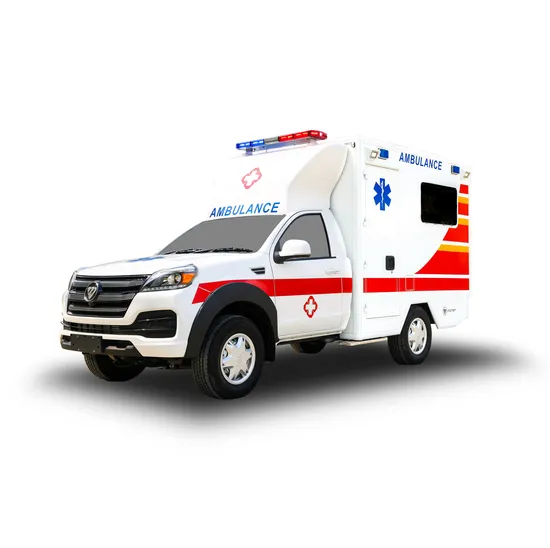
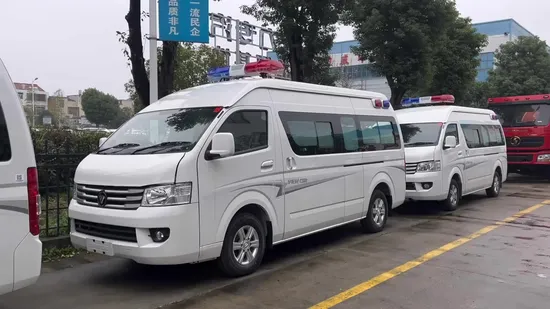
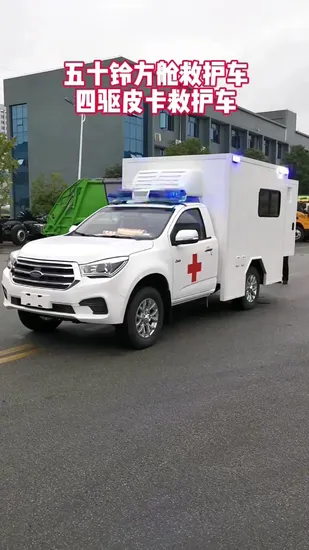
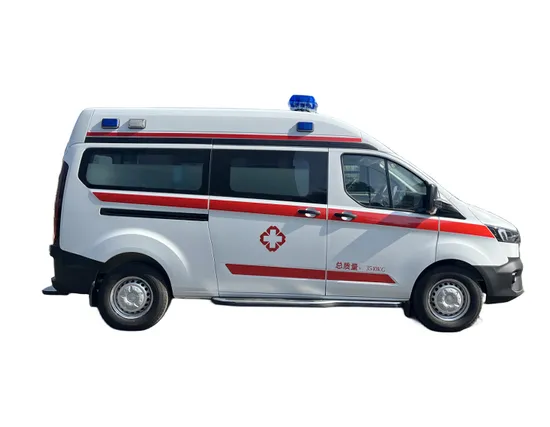
The Foton 4x4 Emergency Monitoring Ambulance Euro 4 is a four-wheel-drive ambulance on a Foton chassis, designed for patient transport and emergency monitoring work on roads where a standard two-wheel-drive van would struggle. It has a diesel engine, a five-speed manual gearbox and seats for two in the cab.
We offer it to hospitals, rescue services and clinics that serve rough access roads, rural routes or sites with poor surfaces. The vehicle is 5445 mm long, 1830 mm wide and 2600 mm high, so it remains compact enough for narrow streets while giving the medical team a usable patient compartment.
Where this ambulance is used
Four-wheel drive matters when the route to a patient includes gravel tracks, mud, snow or steep approaches. An ambulance that stops at the end of a paved road adds minutes to every call, and this layout is chosen to remove that problem for rural clinics, mining sites and remote communities.
The monitoring version is meant for patient observation during transfer between a site and a hospital. The medical equipment fit is agreed with each buyer, so the interior can be planned around the monitors, stretcher and storage you expect. We confirm the final medical equipment list in the quotation.
Chassis, engine and drivetrain
The engine is the ISF2.8s2161P diesel with a displacement of 2776 ml, a maximum power of 120 kW and a maximum torque of 360 N.m. It is paired with a 5-speed manual gearbox. Curb weight is 1700 kg and gross vehicle weight is 2910 kg, with a 3150 mm wheelbase.
Suspension at the front is a double wishbone coil spring design with a stabilizer bar, while the rear uses a leaf spring suspension. This combination helps ride comfort for patients on the front axle side and load capacity at the rear. Drivers should still reduce speed on rough ground to protect the patient.
Cab and operator features
The cab has two seats, and the drive configuration is 4×4. Crews work long shifts, so seat comfort, visibility and straightforward controls matter as much as engine output. Because this ambulance uses a manual gearbox, drivers should be trained on the five-speed shift pattern before they take the vehicle on emergency runs.
Day-to-day care is simple: check tyres, fluids, brakes and lights before each shift, and clean the patient area after each transfer. Our team can discuss spare-part needs and routine service intervals so that the ambulance is always ready for the next call when it is needed most.
What to confirm before ordering
Please confirm the emission standard you need, the drive side, and the medical equipment you want fitted. We also need to know the colour scheme, siren and lighting requirements, and whether you want one stretcher or additional seats for attendants in the patient area.
Tell us about the roads and loads you expect, such as the steepest slope, typical journey length and number of crew. This lets our team match the configuration to your use and record the agreed points in the quotation, which avoids misunderstandings once the vehicle is in production.
Request a current quotation for your selected configuration, quantity and delivery terms.