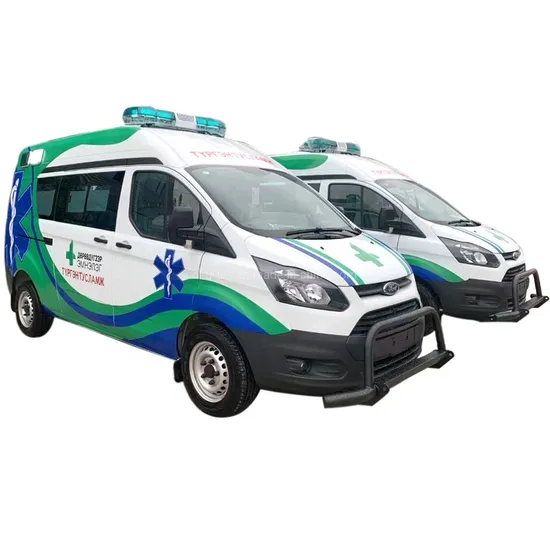
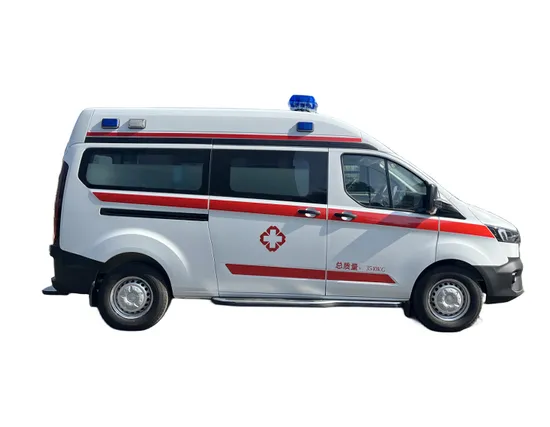
The Ford Mobile Children Ambulance Euro 5 122HP is a van-based ambulance intended for the transport of young patients, supplied with medical equipment. It runs on a Duratorq 4D206H engine rated at 90 kW (122HP), with a manual five-speed gearbox and a white body. Left-hand drive is standard, and right-hand drive is available on request.
It suits children's hospitals, paediatric departments, maternity units and health services that regularly move infants and young children between sites. A vehicle built around smaller patients needs a calmer ride, careful temperature control and securing arrangements that differ from those used for adults.
Where this truck is used
Children are moved for reasons that include specialist consultations, scans, surgery at a larger centre and return to the referring hospital after treatment. The journey is often shorter than an adult ICU run, but the demands on the vehicle are high: a smooth ride, warm and quiet surroundings, and space for a parent or carer to travel alongside.
Overall size is approximately 5341 × 2032 mm in length and width, with a height of 2460 or 2590 mm. The wheelbase is 3300 mm. This gives enough interior volume to carry a stretcher or cot, equipment and two or three staff or relatives, without being too large for hospital grounds.
Parents are usually anxious and want to stay close. A seat that lets a parent see and touch the child, with a seatbelt that does not obstruct the crew, makes the journey calmer for everyone. Planning for this when the interior is designed is easier than adding it afterwards.
Chassis, engine and drivetrain
The diesel engine is an in-line four-cylinder, supercharged and intercooled, of 1.998 litres. It is paired with a manual gearbox that has five forward speeds and one reverse. The tyres are 215/75R16LT, four fitted. ABS and EBD are fitted, and the steering is power assisted.
The gross vehicle mass is 3510 kg and the approximate kerb weight is 2560 kg. Neonatal and paediatric equipment can be heavy, particularly when it includes a transport incubator, gas cylinders and a power supply, so keep a running total as you build the specification.
Cab and operator features
The cab is fitted with air conditioning, a USB socket and a radio sound system. Climate control is useful for both driver and patient. Small children, and newborns in particular, lose heat quickly, so the ability to hold a stable temperature in both cab and patient compartment is worth discussing with our team. The driver also benefits from a cab that stays comfortable on a long run, because gentle acceleration and braking matter more with a child on board than with most adult patients.
Patient compartment layout
The important item here is the patient compartment. The vehicle has medical equipment, and the exact list and the cabin dimensions are confirmed in the quotation. For paediatric work, ask how the following are arranged: a cot or incubator mounting with crash-rated fixings, child restraint options, a seat for a parent, oxygen outlets with suitable flow controls, suction, and storage that keeps small supplies within reach of the attendant.
Low noise and low vibration deserve attention. Ask about floor insulation, suspension setup and how equipment is isolated from vibration.
What to confirm before ordering
The emission standard and the fuel type depend on the configuration and are confirmed in the quotation. This vehicle is Euro 5 with a diesel engine, so confirm that the version you are quoted matches the rules where the vehicle will be registered.
Also confirm the roof height, the equipment list, the number of seats for family members, the power supply for devices when the engine is off, and the steering side.
Request a current quotation for your selected configuration, quantity and delivery terms.