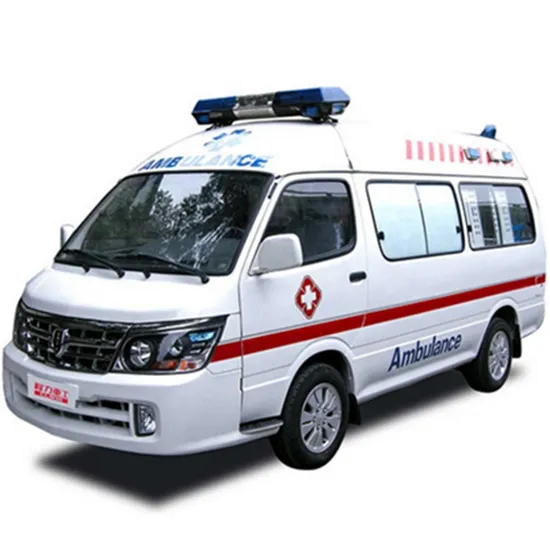
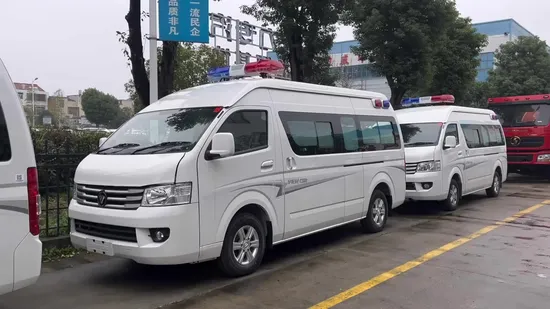
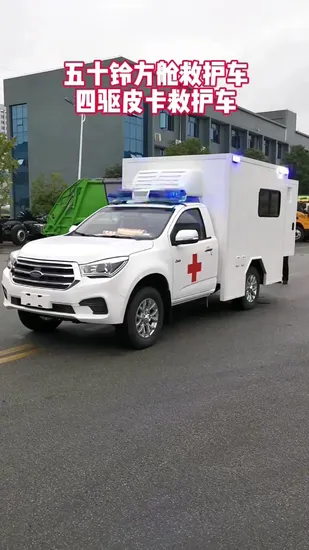
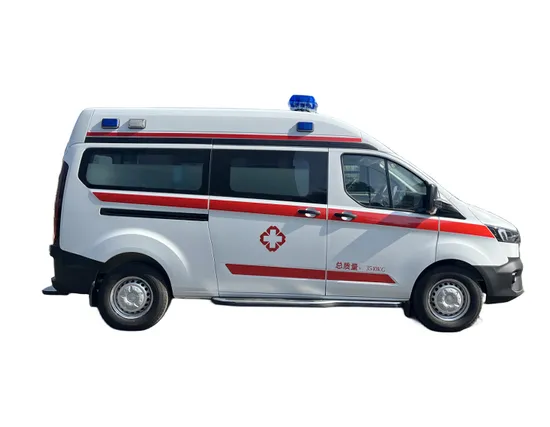
The First Aid ICU Intensive Care Ambulance 4850mm is an emergency medical vehicle for patients who need continuous care while they are being moved. The 4850 mm in the name refers to its body length. It is intended for hospitals, emergency centres and medical transport providers that handle critical cases and need an intensive care environment on wheels.
The idea behind an ICU ambulance is simple: treatment does not stop when the patient leaves the ward or the scene. The vehicle becomes a small mobile care unit, so monitoring and support can continue on the road. Our team prepares each unit according to the equipment and layout that you specify.
Where this truck is used
An intensive care ambulance is normally used for transfers between hospitals, for moving critically ill patients to specialist departments, and for responding to serious emergencies. The crew usually includes a driver and medical staff who stay with the patient in the rear compartment throughout the journey.
A body length of 4850 mm keeps the vehicle manageable in urban traffic and at hospital entrances, while still giving a working space behind the cab. Operators who need frequent, short-distance transfers often prefer this kind of size, because it is easier to park and turn than a larger vehicle.
How the compartment is organised
In an ICU ambulance the rear compartment is arranged around the stretcher. Medical staff need access to the patient from the sides and the head end, so equipment is usually placed within reach but out of the way. The exact layout depends on the devices you plan to use and the number of staff on board.
Securing equipment is as important as choosing it. Items must be fixed so they stay in place during braking and cornering, and the stretcher must lock firmly into position. We suggest you send us the list of devices you intend to carry so we can plan the layout together and record it in the quotation.
Matching the truck to your job
Think about the journeys the vehicle will make. Short city transfers call for easy handling, while longer transfers call for crew comfort and a stable ride. Consider how many staff will ride in the rear, how much equipment you will carry and how often the vehicle will be on duty each day.
It is also wise to think about the driver. A smooth ride matters for critically ill patients, so a driver who is trained in careful acceleration, braking and cornering is part of the system. A short familiarisation drive helps new drivers learn the vehicle before it enters regular service.
What to confirm before ordering
Please confirm the drive side, the emission standard required on your roads, the engine and gearbox specification, the colour and the livery. Each of these is agreed with our team and written into the quotation, because several details depend on the chassis that suits your needs.
Tell us which medical equipment you want installed, how the rear compartment should be laid out and whether you need any optional items such as extra lighting or storage. The more clearly you describe the work the ambulance must do, the more accurately we can prepare the quotation for you.
Request a current quotation for your selected configuration, quantity and delivery terms.