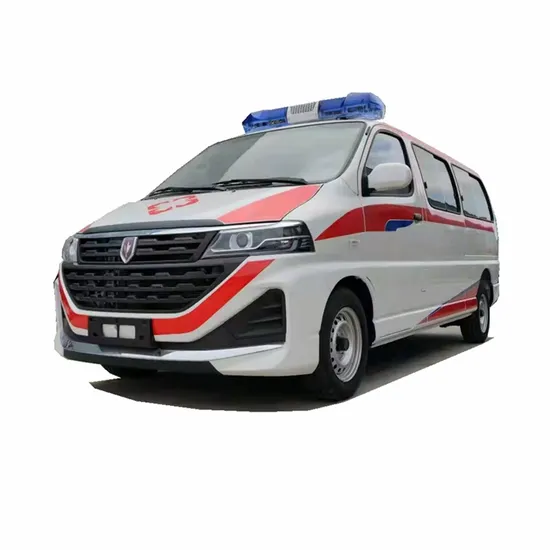
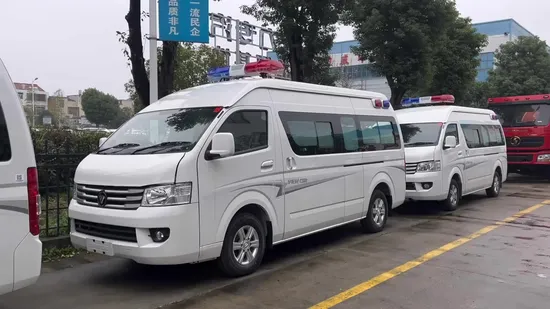
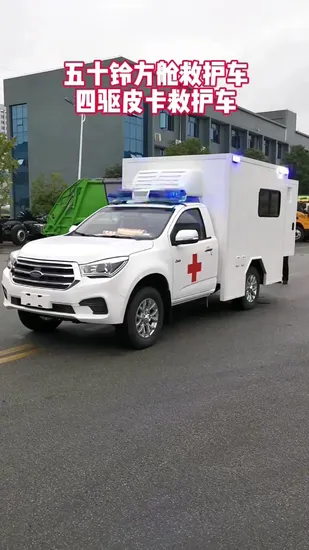
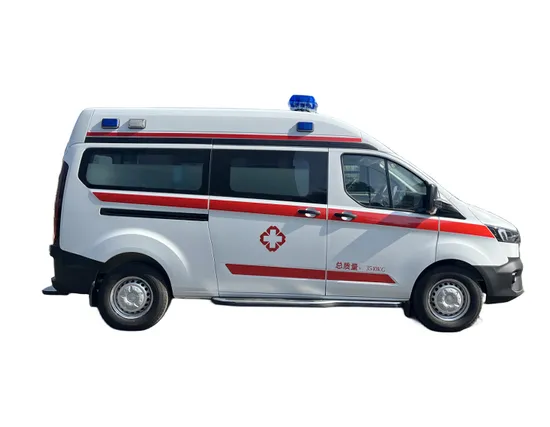
The First Aid Ambulance Vehicle 100-160hp Manual Gearbox is a gasoline-powered ambulance with a manual gearbox and a single axle. Overall dimensions are 4850 × 2000 × 2640 mm, which keeps the vehicle short enough for busy streets. It is offered in the basic configuration without medical equipment, so the cabin can be fitted out to your own medical requirements.
It suits clinics, community health centres, private emergency providers and hospitals that need a practical first aid vehicle for patient transport and routine calls. A gasoline engine with a manual gearbox is familiar to most drivers, and this makes training and day-to-day handling easier for staff who change shifts often.
Where this truck is used
A first aid ambulance carries a patient and a medical attendant from the scene or home to a treatment centre, and it also moves patients between facilities. Its main job is to get there quickly and give the crew a stable, clean space to work in while the vehicle is moving.
Compact ambulances are especially useful where roads are narrow, where parking at the patient's door is limited, or where a larger vehicle would be slow in traffic. Because this model has no medical equipment fitted as standard, it also works well as a base vehicle for operators who prefer to supply their own stretchers and devices.
Chassis, engine and drivetrain
The engine runs on gasoline and falls in the 100-160hp range, with the exact output confirmed in the quotation for the configuration you choose. The gearbox is manual. The vehicle uses a single axle layout and is sold as a new vehicle. The trademark on the vehicle is CLW.
For an ambulance, smooth driving matters as much as speed. A manual gearbox gives the driver direct control on hills and in stop-start traffic, and a driver who knows the vehicle well can limit jolts for the patient in the back. We suggest a short handover drive for new drivers so they learn the clutch and braking feel.
Fitting out the patient compartment
Since the standard vehicle is supplied without medical equipment, the buyer decides what goes in the patient area. Typical decisions include stretcher type, seating for attendants, storage for supplies, lighting and the layout of the medical devices. Planning these points early avoids rework after the vehicle has been built.
Equipment weight and position affect balance, so keep heavy items low and secured. Check that the stretcher can be loaded and unloaded easily through the rear opening, and that attendants can reach the patient and the equipment while seated. Our team can discuss layout options and record them in the quotation.
What to confirm before ordering
Please confirm the drive side, the emission standard required by your regulations, the exact engine output, the colour and the body length for your configuration. Customisation is available, so say whether you want lights, sirens, graphics or an interior layout different from the standard offer.
Tell us how the vehicle will be used, how many people it must carry and what equipment you plan to install. We will then check the choices against the 4850 × 2000 × 2640 mm body and the single axle layout, and confirm every item in the quotation so you know what is included.
Request a current quotation for your selected configuration, quantity and delivery terms.