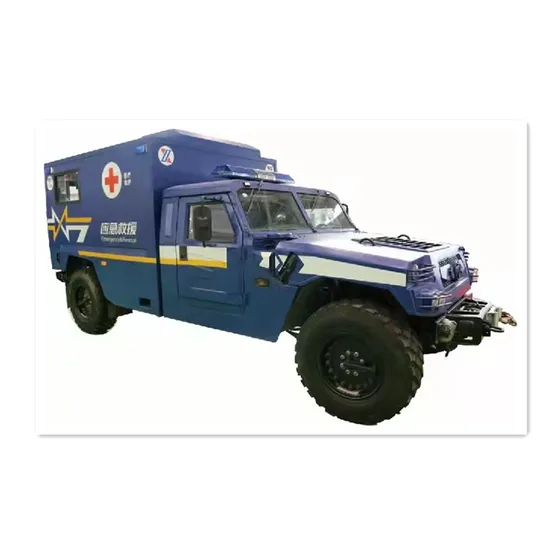
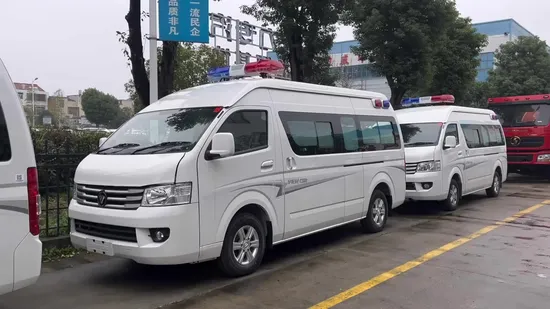
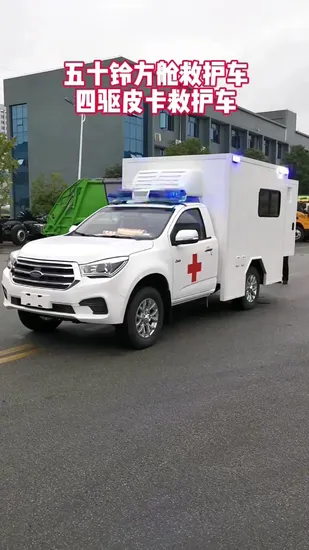
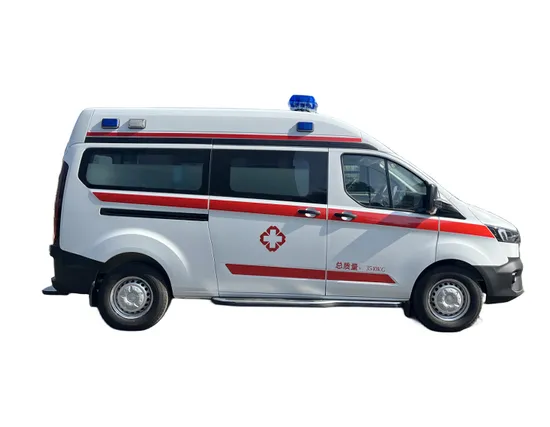
The Dongfeng 4x4 Cross-Country Ambulance 1.2m Wading Depth is a box-type ambulance on a Dongfeng four-wheel-drive chassis, intended for rough terrain and water crossings. It has a maximum wading depth of 1.2 m and is painted white with red reflective tape.
We recommend it to emergency services, hospitals and project teams whose routes include unmade roads, river fords, flooded streets and soft ground. In those conditions the ability to keep driving through water and mud can decide whether a patient is reached in time or not.
Understanding the 1.2 m wading depth
Wading depth is the depth of water the vehicle can drive through without water reaching parts that must stay dry, such as the air intake and key electrical components. A figure of 1.2 m means the vehicle is designed for crossings that would stop a normal road ambulance, such as seasonal streams or standing flood water.
Crossing water still requires care. Drivers should check the depth and the bottom before entering, keep a slow and steady speed to avoid a bow wave, and avoid stopping in the middle. After a crossing, brakes should be tested gently, and the vehicle should be inspected for water and debris.
Cross-country driving
The four-wheel-drive layout sends power to both axles, which improves traction on mud, sand, gravel and loose slopes. Together with the box-type body, it makes the vehicle suitable for remote clinics, field camps, plantation sites and flood response work where roads are poor or temporarily blocked.
Because patients are carried in the rear, a smooth driving style matters as much as capability. Crews should select a speed that keeps the ride comfortable, particularly over ruts and ditches. Training drivers on rough-ground technique pays off, as correct gear selection and steady steering reduce wear and protect the patient.
Body and medical compartment
The box-type body forms an enclosed patient compartment behind the cab. White paint and red reflective tape make the vehicle easy to see in dust, rain and darkness. Its interior can be arranged according to the service, including stretcher, seats for attendants, cabinets, lighting and the medical devices you plan to carry.
We agree the interior layout and equipment with each buyer and write it into the quotation. If the ambulance will cross water often, tell us so; the placement of electrical connections and the finish of the compartment floor are worth discussing at the planning stage.
What to confirm before ordering
Please confirm the drive side, engine output, emission standard, gearbox type and the medical equipment to be fitted. Also ask our team to confirm in the quotation how the 1.2 m wading depth applies to the final configuration, since added equipment and accessories can affect how the vehicle is used in water.
It also helps to describe your typical route: road surface, river crossings, steepest slope and how far the ambulance travels per call. With this information we can check that the configuration matches the job and record any extra items you need, such as lights, a snorkel option or a communication unit.
Request a current quotation for your selected configuration, quantity and delivery terms.