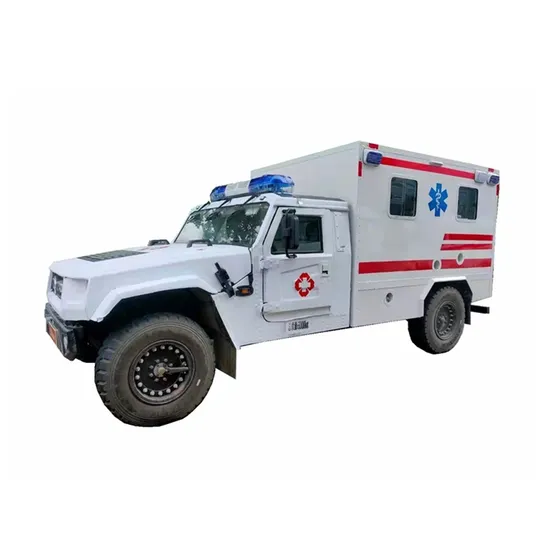
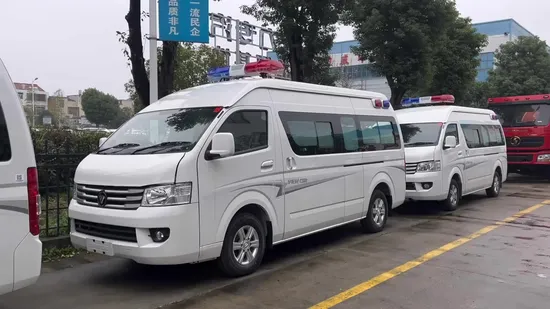
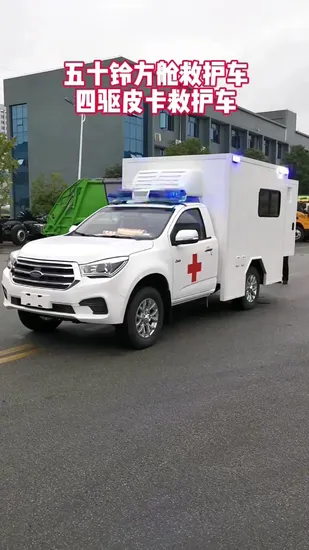
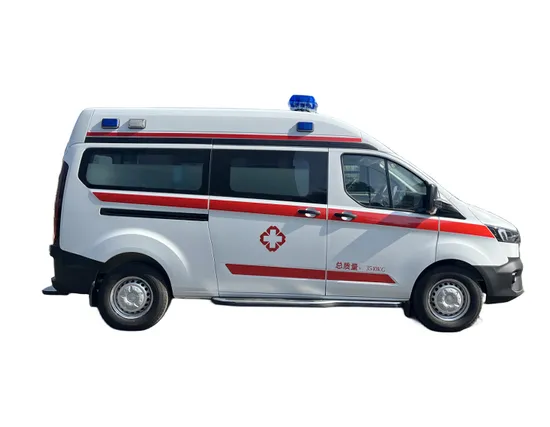
The Dongfeng 4x4 Box Type Ambulance White Body Red Tape is an ambulance with a box-type patient compartment mounted on a Dongfeng four-wheel-drive chassis. The body is painted white and carries red reflective tape and a first aid emblem, so that other road users can recognise it quickly by day and by night.
We supply it to hospitals, clinics, rescue organisations and project sites that need patient transport beyond paved roads. A box body gives the medical team a separate, enclosed working space behind the cab, which is easier to organise and to keep clean than the cargo area of a converted van.
What a box-type body offers
In a box-type ambulance the patient compartment is built as a single enclosed unit. Its height and width allow attendants to stand or move around the stretcher, reach cabinets and handle equipment while the vehicle is travelling. This is a major difference from van conversions, where space is limited by the original roof line.
The enclosed box also separates the cab from the medical area, so the driver can concentrate on the road while the crew works behind. The final interior layout is agreed with each buyer, because services differ in the number of stretchers, seats and cabinets they require and in how they arrange them.
Four-wheel drive in daily use
A 4x4 drive layout sends power to both axles, which gives the vehicle better grip on mud, sand, gravel and wet slopes. For an ambulance this is a practical benefit: the route to a patient may include farm tracks, unpaved village roads or flooded sections where a two-wheel-drive vehicle can lose traction.
Drivers should still plan their route sensibly and keep speed steady on rough ground, since a smooth ride is important to the patient inside. Regular checks of tyres, brakes and drive components before each shift help to keep a four-wheel-drive ambulance ready for calls at any hour.
Visibility and markings
The white body with red tape is chosen for visibility. Red reflective strips pick up headlights from a distance, and the first aid emblem tells bystanders and traffic officers what the vehicle is. If your service uses a particular colour scheme, lettering or logo, tell us so the paint and markings can be matched.
Warning lights, sirens and other signalling devices are not fixed by the body description, so we discuss them with each buyer. Choosing them early avoids rework later, because roof-mounted lights and wiring need to be planned together with the body structure and the electrical system.
What to confirm before ordering
Please confirm with our team the drive side, the engine output, the emission standard, the gearbox type and the medical equipment you want inside. These points differ between customers and are written into the quotation, so they should be stated clearly when you request it.
It is also useful to tell us the roads and terrain the ambulance will drive on, how many patients and attendants it should carry, and whether you need extra items such as additional lighting, a stretcher loading aid or a communication unit. With that information the configuration can be set precisely.
Request a current quotation for your selected configuration, quantity and delivery terms.