Buyers often start with the question "which trailer should I buy?" before they have written down what they will carry. The answer comes from the cargo: its weight, its shape, how it is loaded and how it is unloaded. This guide compares the five trailer and body types we are asked about most: the flatbed, the drop side, the skeleton container trailer, the lowbed and the tipper trailer. It then shows how to match each one to your cargo and your tractor head.
Quick comparison table
| Type | Best for | Loading method | Main limit |
|---|---|---|---|
| Flatbed semi-trailer | Steel, pipes, machinery parts, pallets, containers, general heavy freight | Crane, forklift or loading dock; open deck so load can overhang within limits | Cargo needs straps or chains and may need a tarpaulin |
| Drop side truck or trailer | Bagged goods, bricks, timber, farm produce, mixed loads | Sides fold down so pallets and bags can be loaded from the side | Sides add weight and cannot hold loose bulk like a tipper body |
| Skeleton container trailer | 20 ft and 40 ft shipping containers | Container lifted on by a crane or reach stacker and held by twist locks | Carries containers only |
| Lowbed trailer | Excavators, loaders, graders and other tall or heavy machines | Ramps, ladder or hydraulic gooseneck | Built for density, not volume, and often needs route checks |
| Tipper trailer | Sand, stone, soil, grain, coal and other loose material | Loaded from above, discharged by a hydraulic tipping body | Heavier body, needs a stable tipping site |
Use the table as a first filter and then check the details with the rest of this guide.
Flatbed and skeleton: the container question
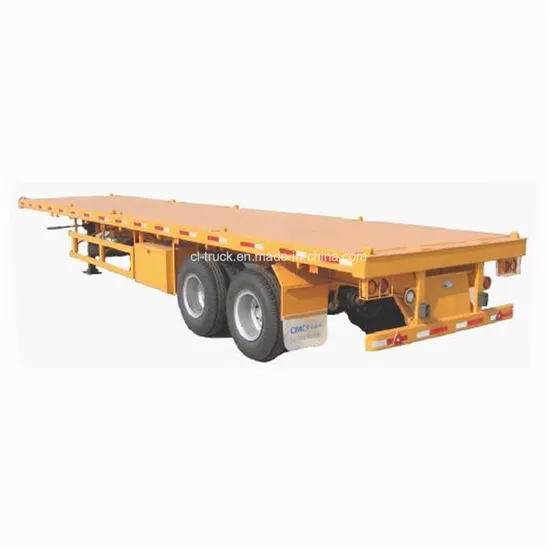
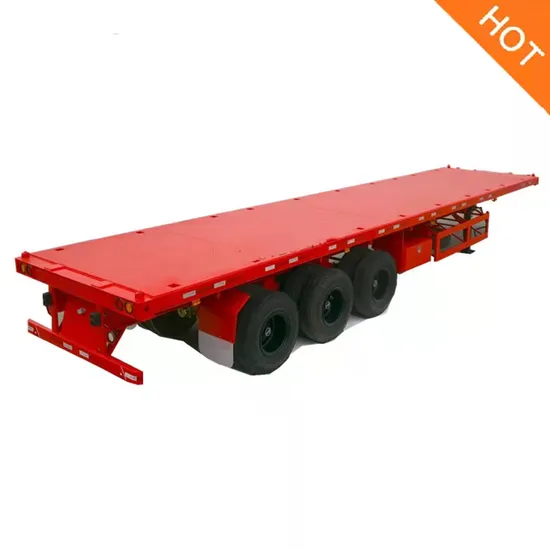
A flatbed has a full deck, while a skeleton trailer is a frame with twist locks and no deck. If you only ever carry containers, a skeleton is lighter and so gives more payload. If you also carry steel, machinery or pallets, the full flatbed is more flexible. Our 3-Axle 40ft Flat Bed Container Trailer 50t shows a 50 t load capacity, 12 container twist locks and a 12,500 mm length, and the 2-Axle 20ft Container Flat Bed Trailer 30t is the shorter 30 t version. For general freight, the Chengliwei 3-Axle Flat Bed Semi-Trailer 50t is a straightforward starting point. Whichever you choose, ask for the axle count and rating, the tyre size, the kingpin size and the landing gear rating.
Drop side trucks: easy loading of bags and pallets
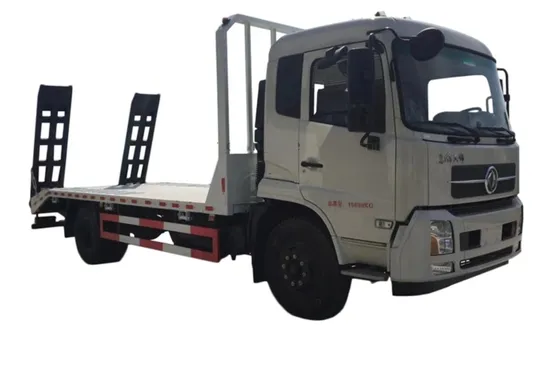
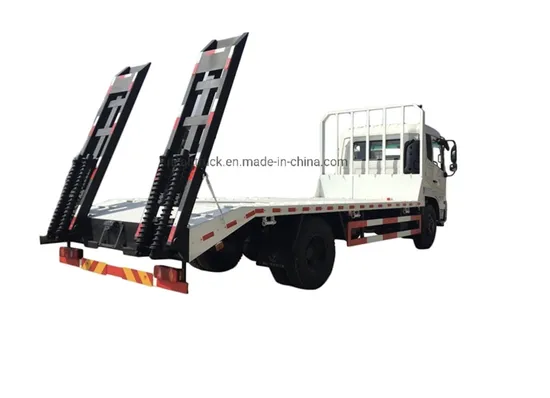
A drop side body has hinged sides on a flat deck. Fold them down and it works like a flatbed, raise them and it holds bags, bricks and mixed cargo in place. It is popular for farm produce, building materials and distribution because it is quick to load from the side. A drop side is usually built on a rigid truck chassis rather than a semi-trailer. We do not carry a standard drop side model in this range, but we can quote a drop side body on a suitable flatbed chassis such as the Dongfeng 8x4 Flat Bed Truck 7.5m, which shows a 7.5 m deck and a 30,000 kg rated payload. Tell us the height of side you want and whether the side boards should be steel or aluminium.
Lowbed and tipper trailers: heavy and loose loads
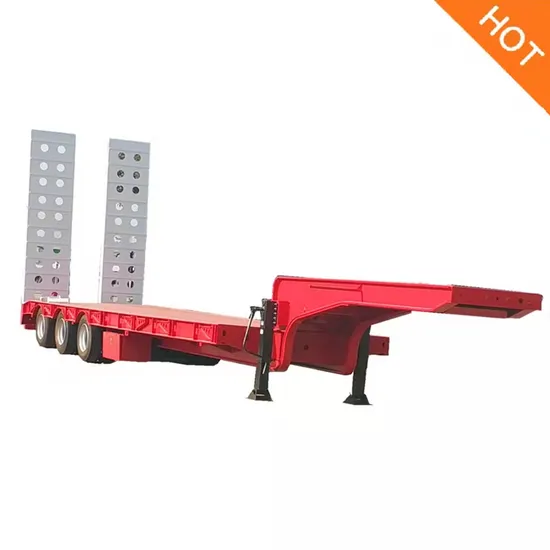
If your cargo is a machine that is too tall for a flatbed, the lowbed is the right trailer; read our lowbed trailer guide for axles, ramps and route checks. The 3-Axle Low Flatbed Semi-Trailer for Excavator 50t is an example. If your cargo is loose material, you need a tipper. Many buyers choose a tipper truck rather than a tipper semi-trailer, because it is simpler to manoeuvre on site; see the tipper lorry buying guide and the dump and tipper truck range. If you want a tipper trailer on a tractor head, tell us the material and the volume and we will confirm what we can build.
Trailer or rigid truck?
A semi-trailer is cheaper per tonne carried and lets you swap trailers behind one tractor head, but it needs space to reverse and a tractor head with a fifth wheel. Check how the fifth wheel coupling works and look at our tractor heads. A rigid truck is easier in town and on small sites, and the body is part of the truck. Decide this before choosing the body type.
Securing the load and checking the limits
Open decks put the responsibility for the load on the operator. Whatever trailer you pick, plan how the cargo will be tied down: the number and rating of straps or chains, the lashing rings along the deck edge, and corner protectors for steel and pipes. Ask the maker for the axle ratings and the gross weight, and compare them with the axle limits on your roads, because a trailer that is fine on paper can still put too much weight on one axle if the load is placed badly. Load heavy items over the axles, not at the ends. For wide, tall or heavy loads, check permit and route requirements with your clearing agent and the road authority, as the rules differ by country and change over time.
Questions to answer before you order
- What is the heaviest single piece, and the total load per trip?
- What is the cargo's length, width and height?
- How is it loaded: crane, forklift, ramp, dock or by hand?
- Will you tow with a tractor head, and what coupling does it have?
- What are the axle and gross weight limits on your roads?
- Do you need left-hand or right-hand drive on a rigid truck? Left-hand drive is standard and right-hand drive is available on request.
For more models, browse the flatbed trucks and trailers category and the lowbed trailers and flatbed trucks for sale page, or send us your requirements.