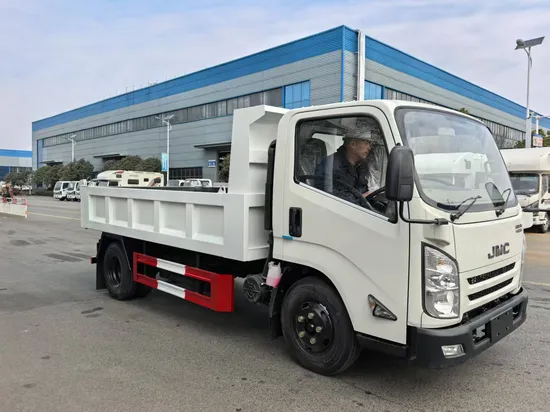
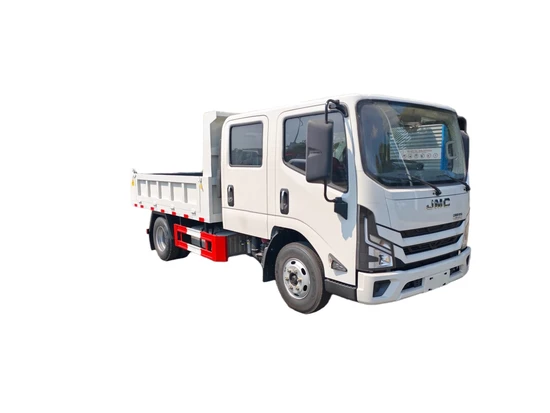
A tipper lorry is a dump truck: a chassis with an open steel body that is raised by a hydraulic cylinder to discharge loose material such as sand, stone, soil, coal or demolition waste. "Tipper" is the usual word in many markets and "dump truck" the usual word in others. The buying questions are the same, and the answers depend on what you carry, over what road, and how heavy a load your roads allow.
Axle layouts: 4x2, 6x4 and 8x4
The first number is the number of wheel positions and the second is the number of driven ones. In general terms:
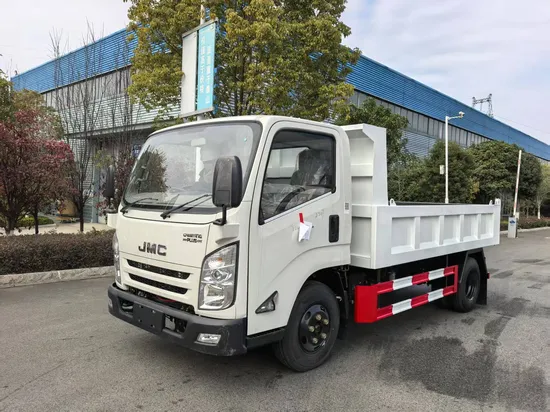
- 4x2: two axles. Small and light tippers for town work, light sand and soil, and tight sites. Examples are the JMC 4x2 Dump Truck with Middle Lifting System and the JMC 4x2 Double Row Cab Dump Truck 92HP Euro 2.
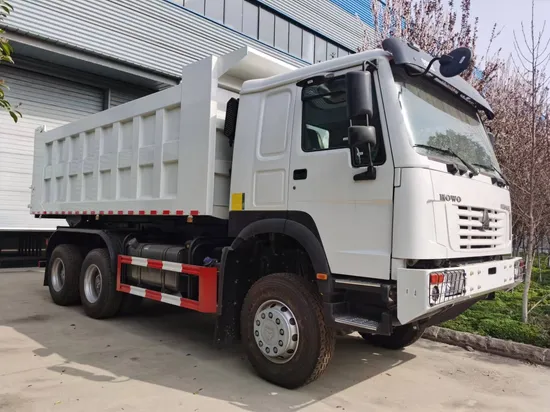
- 6x4: three axles with two driven. This is the standard "10-tyre" or "10-wheeler" tipper for construction, aggregate and general haulage. See our 10 wheeler dump truck guide.
- 8x4: four axles with two driven. A longer, heavier tipper for larger bodies and heavier loads, used on quarry and mining haulage.
- 6x6 and 8x8: all-wheel-drive versions for soft ground and rough sites, such as the HOWO 6x6 Heavy-Duty Construction Dump Truck 31-40t.
Our guides on dump trucks for mining and quarries and HOWO dump truck specifications compare these layouts in more detail.
Body volume and payload
Body volume is quoted in cubic metres and payload in tonnes. The two must match the material. Sand and wet soil are heavy, so a tipper filled to the top of a large body may be over its payload limit, whereas light material such as coal or woodchip fills the volume before it reaches the weight limit. Typical size bands are:
- Small 4x2: a few cubic metres and a few tonnes.
- 6x4: commonly in the range of 12 to 20 m³ bodies.
- 8x4: commonly 18 to 25 m³ bodies or more.
Treat these as typical ranges, and ask for the exact body volume, floor thickness and permitted payload for the truck you are quoted. Check axle limits for your roads with your clearing agent and the road authority, because a truck that is legal on paper in one country may be limited by another.
Typical size ranges at a glance
| Layout | Typical body volume | Typical work |
|---|---|---|
| 4x2 | A few cubic metres | Town work, light sand and soil, tight sites |
| 6x4 | 12 to 20 m³ | Construction, aggregate, general haulage |
| 8x4 | 18 to 25 m³ or more | Quarry and mining haulage, heavy loads |
| All-wheel drive | Depends on the chassis | Soft ground and rough sites |
The product pages show the range in practice. The JMC 4x2 model has a rear body of 3,000 to 3,800 mm by 1,900 mm by 500 mm, a gross vehicle weight of 5,000 kg, a 92 HP Euro 2 engine and 7.00R16 tyres. The HOWO page for the heavy tipper shows a 31-40 t load capacity, front lifting, a 5,600 mm box length and 251-350 hp. These two trucks serve completely different jobs, which is why you should start with the material and the haul, not the model name.
Standard body or rock body
A standard body has a flat floor and moderate sides and suits sand, gravel, soil and general building material. A rock body (also called a quarry or U-shaped body) has a thicker floor and sides, often with a heavy-duty sloping profile, to take falling boulders and abrasive material. It weighs more, so it carries a little less payload for the same chassis. Choose the rock body only if you load with an excavator or wheel loader and haul stone, ore or demolition rubble. Ask for the steel grade and floor thickness on both options.
Rear tipping or side tipping
Rear tipping is the standard: the body hinges at the back and lifts at the front. It works on most sites and gives the fastest discharge. A side-tipping body drops its load to the side and is used where there is no room behind the truck, such as alongside a trench, in tunnels or on narrow ramps. A middle-lifting cylinder, as on the JMC model above, keeps the body stable on lighter trucks. Specify the lifting cylinder type, the number of stages and the tipping angle.
Chassis checks before you order
- Engine and gearbox: match the engine power to your gradients and loads, and choose a gearbox you can service.
- Axles and suspension: heavy-duty axles and leaf springs for rough roads; ask for the axle rating.
- Frame: thickness of the chassis rails and cross members.
- Tyres: size, load rating and spare wheel count.
- Cab: single or double row, air conditioning, and steering side. Left-hand drive is standard and right-hand drive is available on request. Read drive side by country.
- Tailgate: hydraulic or manual, and sealed against fine material.
The prices for dump trucks differ mostly because of chassis, body and hydraulics, as we explain in dump truck price factors.
Common mistakes when ordering
- Buying on cubic metres only. A big body of heavy material overloads the axles, so check the permitted payload too.
- Choosing a rock body for sand and gravel. It adds weight you do not need.
- Ignoring the loading machine. The body height and length should suit your excavator or loader.
- Not asking for floor and side thickness. Two bodies of the same volume can differ a lot in steel.
- Forgetting road limits. Axle load and overall height rules can rule out a layout that looks right on paper.
- Leaving out the steering side. State left-hand or right-hand drive at the start.
What to ask in the quotation
- Axle layout, engine power, gearbox and tyre size.
- Body volume, floor and side thickness, and body type.
- Lifting system, cylinder stages and tipping angle.
- Permitted payload and gross vehicle weight.
- Cab type, steering side, spare wheel and tools.
Names buyers use
The same truck is asked for as a tipper, tipper lorry, tipper truck, tip truck, dump truck or 10-wheeler. We recognise all of them. Add the axle layout and the material you carry to make the request exact.
Next step
Look through our dump and tipper truck range and the dump trucks and tipper lorries for sale page. Send us the material, daily volume, haul distance, road conditions, steering side and destination, and we will recommend a configuration. If you also need concrete delivery or lifting at the same site, see our cement mixer truck guide and lorry-mounted crane guide. Use the inquiry form on this page or on any product page, or send us your requirements directly.
Related reading: Tipper truck weight: kerb weight, GVW and payload by size