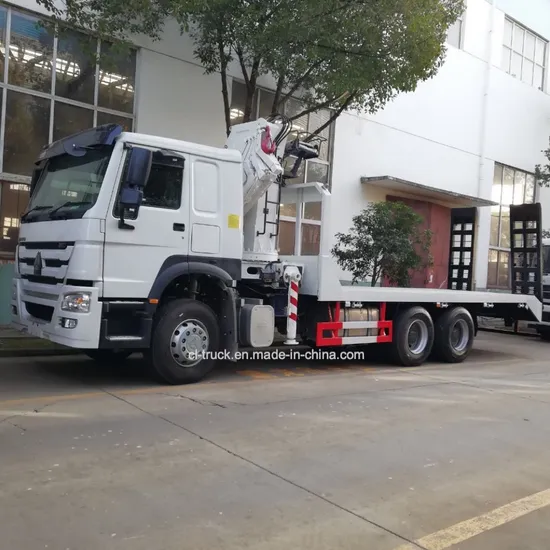
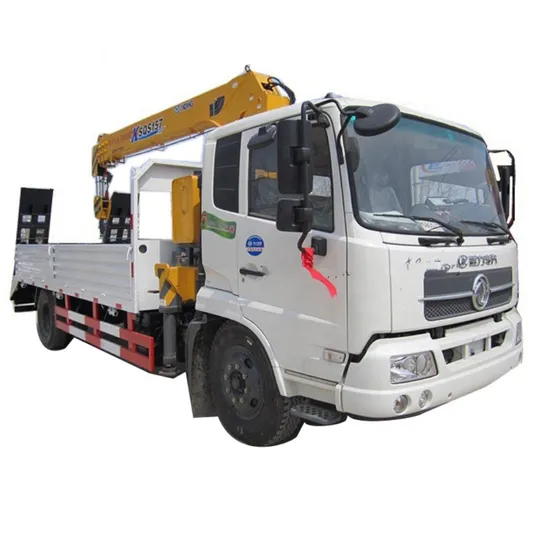
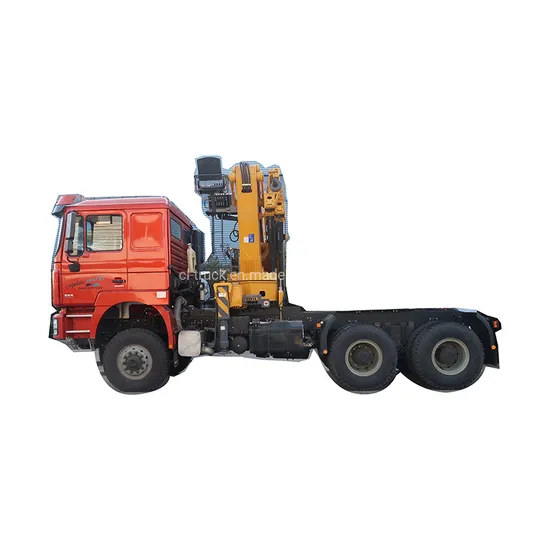
"Hiab" began as a crane maker's brand name, but in many markets buyers use it for any hydraulic loader crane mounted on a lorry. You may also hear lorry-mounted crane, truck-mounted crane, boom truck or crane lorry. The idea is the same: a flatbed or cargo lorry carries the load and a folding crane behind the cab, or at the rear, loads and unloads it without a separate machine. This guide explains what to specify.
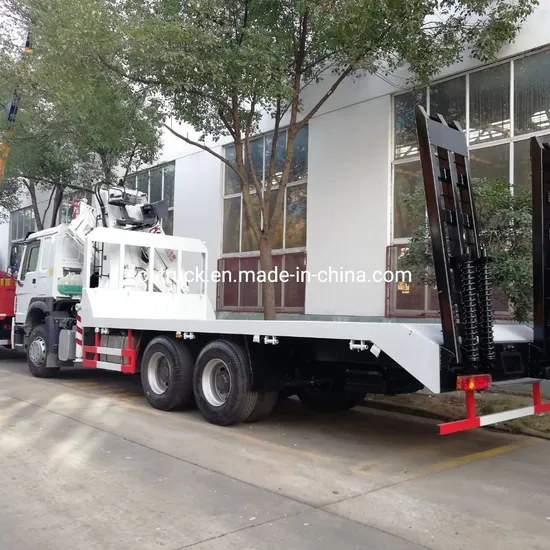
Lifting capacity in tonne-metres
Loader cranes are rated in tonne-metres (t·m), which is the lifting moment: the weight multiplied by the distance from the crane column. A crane can lift a heavy load close in or a light load at full reach, but not both. That is why a crane described as "10 tonne" can only lift 10 tonnes at a short radius.
- Small cranes, a few t·m: pallets, bagged goods, building materials and small machines on light lorries. The 4x2 Truck-Mounted Crane 3.2t 190HP Euro 5 is an example of a light truck-mounted crane.
- Medium cranes, 5 to 10 t·m: the common size for general hauliers and builders' merchants, such as the Dongfeng 4x2 Flat Bed Truck with 5-6.3t Crane.
- Heavy cranes, 10 t·m and above: pipes, steel, containers and machinery on 6x4 chassis, such as the HOWO 6x4 Flat Bed Truck with 8-10t Crane and the HOWO 6x4 Flat Bed Truck with Crane 10t 273kW.
Always ask for the crane's load chart. It shows the capacity at each reach, and it is the only reliable way to compare cranes. Write down your heaviest single item and the farthest distance you need to place it, then check the chart.
Reading a load chart: a worked example
The HOWO 6x4 flat bed page shows a four-arm crane with a maximum lifting capacity of 8,000 kg and a lifting moment of 20 t·m. Its chart gives the capacity at each working radius:
| Working radius | 2.5 m | 4.5 m | 7 m | 9 m | 11.5 m |
|---|---|---|---|---|---|
| Lifting weight | 8,000 kg | 4,400 kg | 2,500 kg | 1,750 kg | 1,100 kg |
The same page shows a hydraulic oil tank of 160 litres, a maximum system pressure of 27 MPa, a crane weight of 3,300 kg and full rotation. Notice how the capacity falls from 8,000 kg to 1,100 kg as the reach grows. This is the reason to give us the heaviest item and the distance, not just a tonnage.
Typical size ranges at a glance
| Crane class | Typical rating | Typical chassis | Typical load |
|---|---|---|---|
| Small | A few t·m | Light 4x2 | Pallets, bagged goods, small machines |
| Medium | 5 to 10 t·m | 4x2 | General haulage and builders' supplies |
| Heavy | 10 t·m and above | 6x4, or 6x6 for soft ground | Pipes, steel, containers, machinery |
Boom types
- Knuckle boom (articulated): folds close to the lorry, so it saves deck space and can reach over obstacles. It is the usual loader crane.
- Telescopic boom: extends in a straight line and gives a longer, steadier reach but folds less compactly. It is common on larger cranes.
- Extensions and fly jibs: extra hydraulic or manual sections that add reach at a lower capacity.
Ask how many hydraulic extensions the boom has, and the maximum reach in metres. A longer boom costs more and weighs more, which reduces the payload of the chassis.
Outriggers and stability
A crane must stand on its outriggers when it lifts. Check four things:
- Number of outriggers, usually two or four, and whether they are hydraulic or manual.
- Span of the outriggers when extended, which decides how much space you need beside the truck.
- Foot pads, and whether you need larger plates for soft ground.
- Whether an outrigger stability system or overload protection limits the crane if the ground moves.
Never lift on tyres alone unless the crane maker says so.
Controls and safety
- Manual levers or radio remote: a remote lets the operator stand where he sees the load.
- Overload protection: a moment limiter that stops the crane lifting beyond the chart.
- Hose burst valves on the cylinders, so the load holds if a hose fails.
- Power take-off: the crane pump is driven from the gearbox; ask for the pump flow and the PTO type.
Chassis choices
The chassis must carry the crane, the cargo and the weight of the outriggers, and it must stay stable when lifting. A 4x2 lorry suits light and medium cranes. Heavier cranes and long flatbeds need a 6x4 chassis, and soft or off-road sites may call for a 6x6 such as the Shacman F3000 6x6 Crane Truck 12-14t RHD. Ask whether the chassis frame is reinforced behind the cab and how the crane's weight changes the payload. Our standard is left-hand drive, and right-hand drive is available on request for all trucks; see drive side by country.
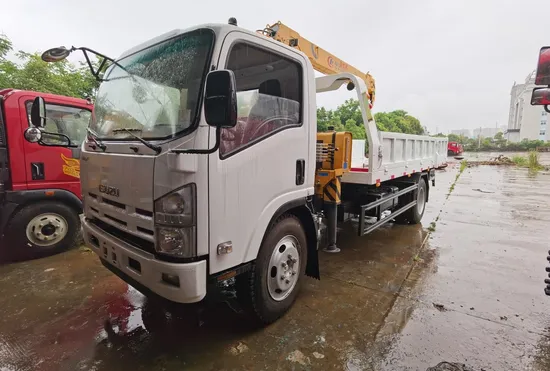
The light crane lorry above has a 3.2 tonne, two-boom crane on a flat bed of 5,500 by 2,300 mm, with a 4 tonne winch and 21 metres of wire rope on its page. It is a good example of how a small crane and a small chassis fit together.
Common mistakes when ordering
- Quoting a crane by tonnes only. Always give the heaviest load and the reach, then check the load chart.
- Ignoring chassis weight. A heavy crane and long boom reduce the payload of the lorry.
- Skipping outrigger space. Measure the space at your working sites before you choose the span.
- Forgetting overload protection. Ask for a moment limiter and burst valves as standard.
- Not planning the deck. State the deck length, side boards and tie-down points for your cargo.
What to ask in the quotation
- Crane make, model, lifting moment and the full load chart.
- Boom type, number of extensions and maximum reach.
- Outrigger number, span and foot pads.
- Controls: levers or radio remote, and safety devices.
- Chassis, axle layout, deck length and steering side.
Names buyers use
Buyers ask for a hiab, hiab truck, loader crane, lorry-mounted crane, truck-mounted crane, boom truck or crane lorry. We recognise all of them. Add the heaviest item and the reach, and the request is exact.
Next step
Browse the crane truck range and the crane trucks for sale page. Our guides on crane lorry prices and separating chassis, crane and cargo-body costs explain what drives the quotation. If your crane lorry will also carry vehicles or equipment, read self loader trucks, and for site haulage see our tipper lorry buying guide. Tell us the heaviest item, the reach you need, the deck length and your destination, and we will quote a matching crane and chassis. Use the inquiry form on this page or on any product page, or send us your requirements directly.