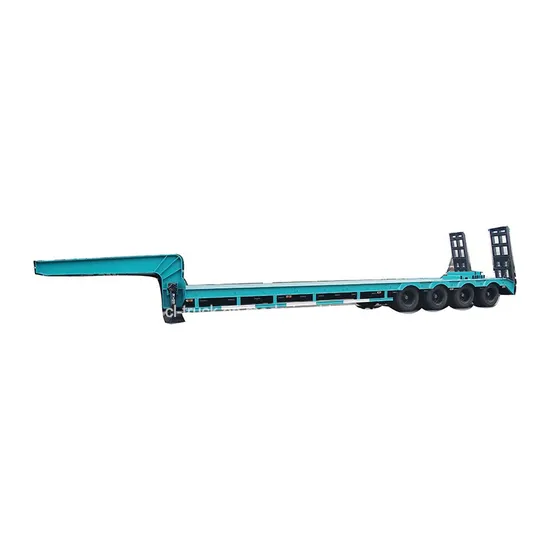
A lowbed trailer, also called a low loader or low bed semi-trailer, is a trailer with a deck that sits close to the ground so that tall or heavy machinery can be hauled under bridges and wires. Contractors use it to move excavators, bulldozers, loaders and graders between sites, and equipment hire yards use it to move their own plant. This guide explains what to specify so that the trailer you order fits your machines, your tractor head and your roads.
What a lowbed trailer is, and what it is not
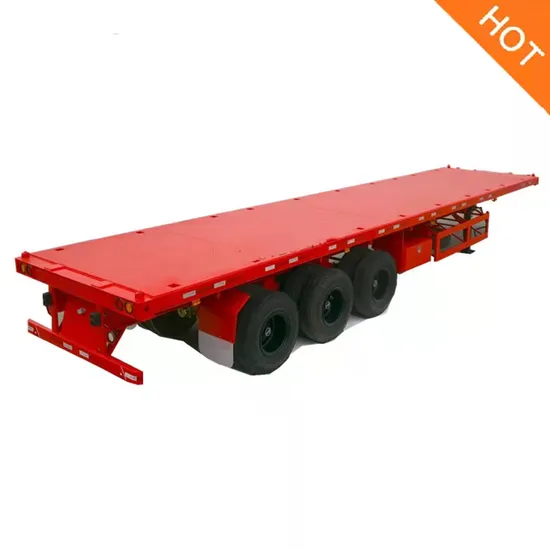
A standard flatbed has a deck at a normal trailer height, which suits containers, steel and general cargo. A lowbed has a stepped or dropped deck, so the cargo sits lower and the loaded height stays down. The trade-off is that a lowbed is built for dense, heavy loads, not for volume. It is a semi-trailer, which means it couples to a tractor head through a kingpin and fifth wheel. Read our guide to the fifth wheel coupling and check that the kingpin and the coupling height match your tractor head before you place an order.
Axles and payload: 2, 3 and 4 axles
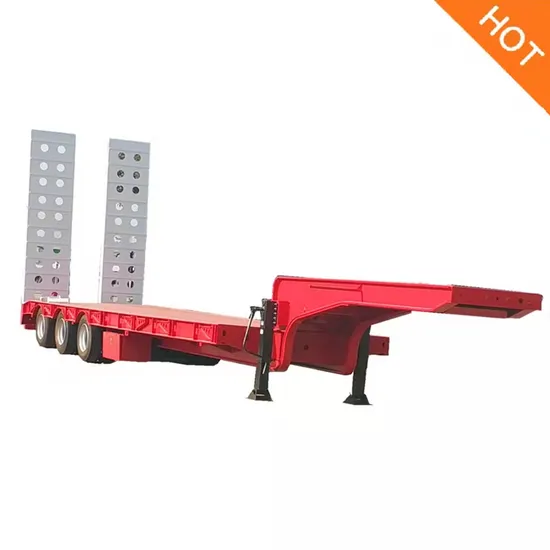
Payload is set mainly by the number of axles and the rating of each. On our product pages the low bed and flat bed trailers for machinery are shown with 2, 3 and 4 axles, and the 50 t models use axles rated at 13 t each. The Chengliwei 2-Axle Low Bed Trailer with Ladder 50t, the 3-Axle Low Flatbed Semi-Trailer for Excavator 50t and the 4-Axle Flat Bed Semi-Trailer for Excavator 50t all show a 50 t load capacity and a 12,500 mm deck length, with a tare weight of 8,800 kg on the pages.
As a general rule, more axles spread the load over more road surface, which can matter where axle limits are strict, and they usually give a steadier ride with heavy tracked machines. Fewer axles mean a lighter, cheaper trailer. Work backwards from your heaviest machine: add the machine weight, any attachments and chains, and compare the total with the payload and with what your roads allow. Our guide to reading a specification sheet explains payload, tare and gross weight.
Deck height, gooseneck and well
Ask for the loaded deck height, not only the trailer height. The lowest point is usually the well between the gooseneck and the rear axles, and it limits how long a machine can be without its tracks or bucket overhanging. The gooseneck is the raised front section that reaches over the tractor head. Some lowbeds have a fixed gooseneck, and some designs use a detachable one so that the machine can be driven on from the front. If you load from the rear, a fixed gooseneck is simpler and stronger. If your site has no ramps or loading dock, ask us whether a detachable or hydraulic design suits your machines.
Check the deck width as well. Our 12,500 mm models show a 3,000 mm overall width, which is wide enough for most mid-size excavators but needs care with machines on wide tracks. Send us the track width, not just the operating weight.
Ramps, ladders and hydraulic loading
There are three common ways to get a machine on the deck:
- Ladder or ramps. The 2-axle low bed model comes with a ladder at the rear. It is the simplest and cheapest option and works well for tracked machines that can climb a ramp under their own power. Check the ramp length and angle against your machine's ground clearance.
- Hydraulic ramps or a hydraulic gooseneck. These cost more and add parts to maintain, but they load machines that cannot climb a steep ramp and speed up work on busy sites.
- Loading from a bank or dock. If your yard has a raised bank, a plain deck may be enough and you can save on equipment.
Tyres, suspension and brakes
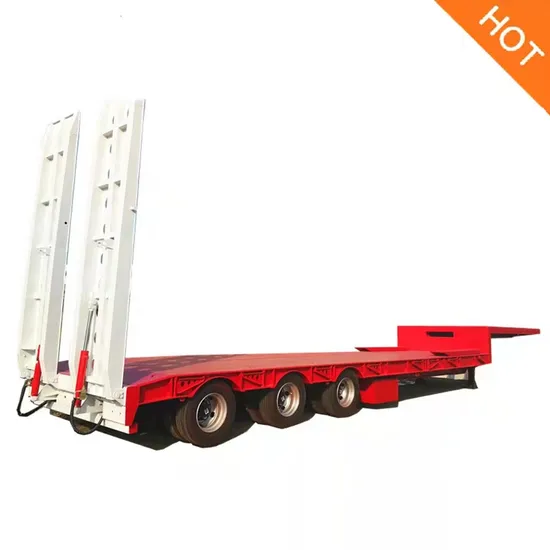
On the 3-axle model the tyre size is 12.00R22.5, with a mechanical tandem suspension and dual-line air brakes with spring brakes on all axles. When you compare trailers, ask for the tyre size and number, because tyres are the biggest running cost on a heavy trailer and the same size on your tractor head and trailer makes spares simpler. Ask also whether ABS is fitted, what the landing gear rating is, which kingpin size is used (50 or 90 on these models) and what the lighting connector is. Cheap trailers often differ from better ones in the steel thickness of the main beams and in the axle and suspension brands, so ask for these details in writing.
Permits and route checks
A loaded lowbed is often a wide, heavy or tall load, and many countries and regions require permits, escorts or limited travel hours for such loads. We do not give rules here because they differ by country and change. Before you buy, check the current requirements with your clearing agent and the road authority, measure the loaded height and width, and survey your routes for low bridges, power lines, weighbridges and tight junctions. It is cheaper to decide the deck height and axle count now than to modify the trailer later.
What to send us
To quote the right trailer, send the machine make and model, operating weight, length, width, height and track width, the number of machines per trip, details of your tractor head, the loading method you prefer, and the destination. See the full flatbed trucks and low bed trailers range and the lowbed trailers for sale page, or send us your requirements.