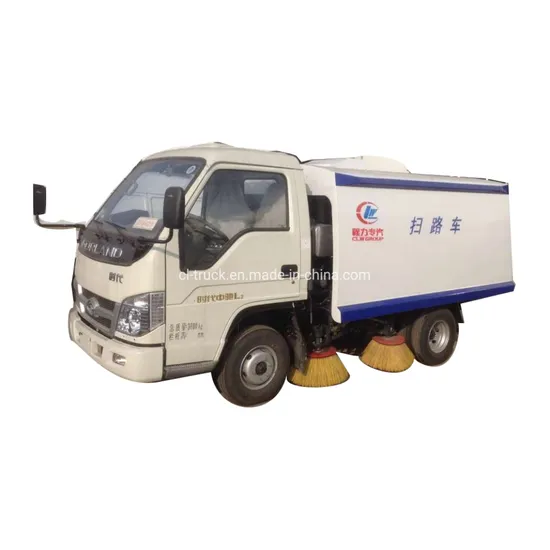
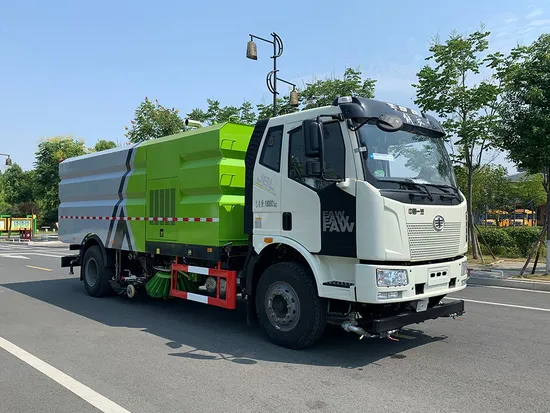
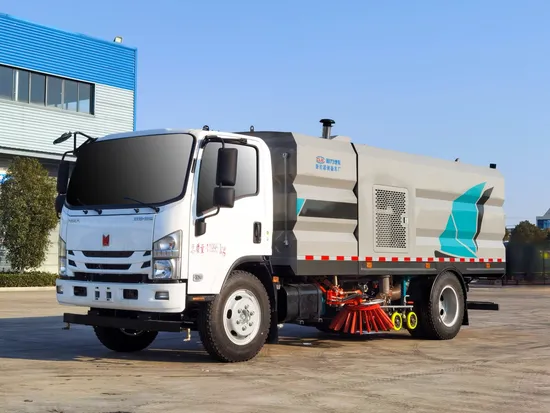
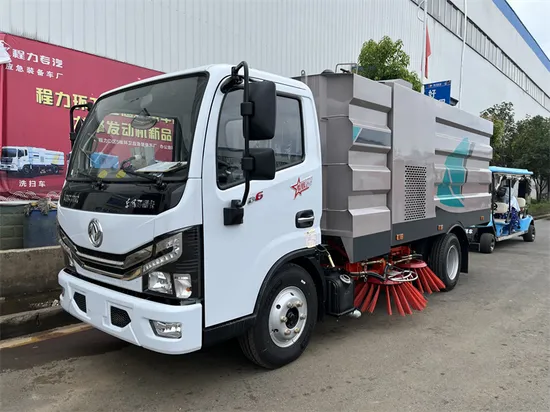
The Foton Forland Sweep-and-Suck Sweeper Truck Euro 2 is a 4×2 road sweeper built on a Foton Forland chassis with a diesel engine and a manual gearbox. It is a sweep-and-suck type, which means brushes loosen the debris and a suction system lifts it into the hopper. Left-hand and right-hand drive versions are both available.
It suits municipal cleaning departments, contractors who clean roads and car parks, and industrial sites that need dust and litter removed from paved surfaces. The vehicle is compact, with overall dimensions of 5990 × 1960 × 2400 mm, which helps it work on streets where larger sweepers are difficult to manoeuvre.
How sweep-and-suck cleaning works
Brushes at the front or sides move debris toward the suction inlet, and the suction draws it into a hopper. This combination collects both heavier litter and fine dust. A cold water cleaning process is used for this model, with water helping to settle dust so that it stays in the hopper instead of rising into the air.
Good results depend on matching the speed to the amount of debris. Drive slowly on dirty sections so that the brushes and suction have time to collect, and faster where the surface is light. Empty the hopper before it is full, as an overloaded hopper reduces suction and can spill material back onto the road.
Chassis, engine and drivetrain
The chassis has a 3360 mm wheelbase and a curb weight of 3365 kg. Power comes from the 4DW91-63 engine, a straight-4, four-stroke, water-cooled and intercooled diesel of 2.545 L producing 45 kW. It is connected to a manual gearbox with five forward gears and one reverse.
The truck rolls on 6.50-16 tyres, six in use plus a spare. The engine meets the Euro 2 emission standard. This is a simple and conventional drivetrain which is easy for drivers to learn and for workshops to service, and it suits the stop-start work pattern of a street sweeping route.
Daily operation and care
Start each shift with a walk-around. Check tyre pressures, fluid levels, the condition of the brushes and the suction hoses, and make sure the water tank is filled for dust control. Brushes wear with use and should be replaced when they stop contacting the road surface evenly.
At the end of the shift, empty the hopper completely and wash out the residue, since damp debris left inside can cause blockages and odours. Clean the suction inlet and inspect it for stuck objects. Careful daily maintenance keeps the sweeper working at full effect and avoids stoppages during the cleaning round.
What to confirm before ordering
Confirm the drive side, the emission standard, the hopper and water tank capacities and the payload figure, because these depend on the exact configuration and are confirmed in the quotation. Also confirm the colour and any lighting or warning equipment you need for working on public roads.
Tell us the kind of surfaces you sweep, the usual type of debris and the length of your routes. Customisation is available, and with those details our team can propose a suitable arrangement of brushes, suction and water system for your work.
Request a current quotation for your selected configuration, quantity and delivery terms.