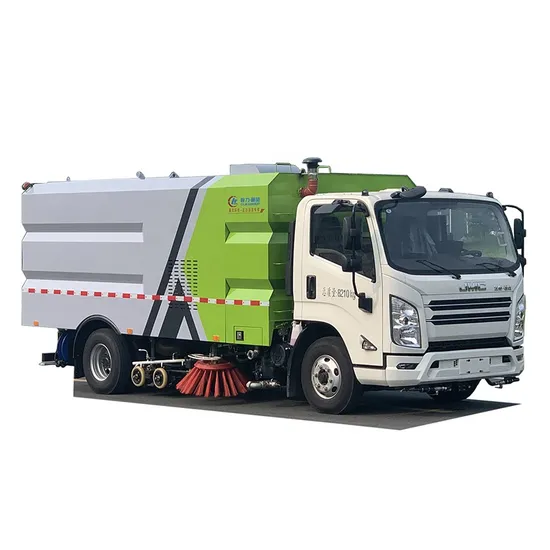
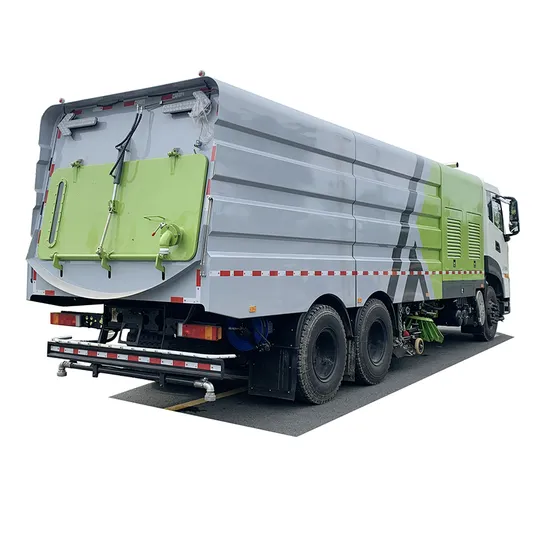
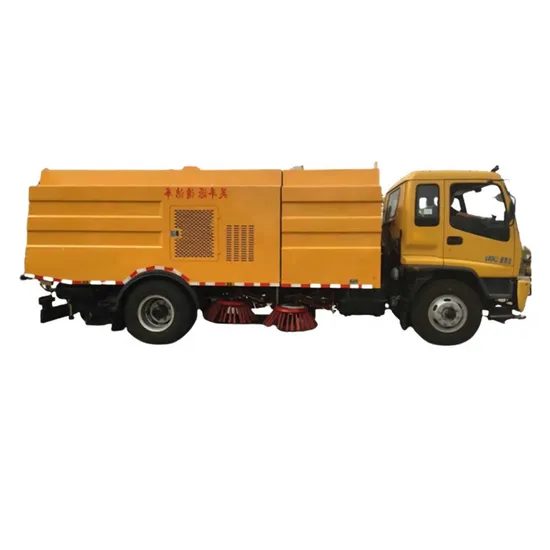
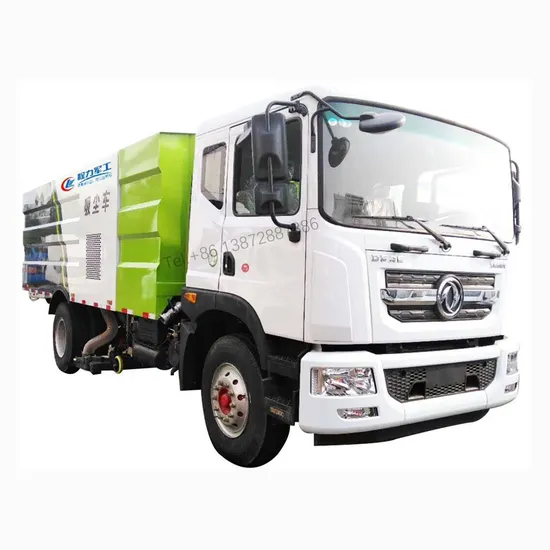
A street sweeper truck uses rotating brushes to push debris from the kerb and road into the path of a suction nozzle or main broom, which lifts it into an onboard hopper. A fan or vacuum pump provides the suction, and water sprays keep dust down. An auxiliary engine usually powers the sweeping gear.
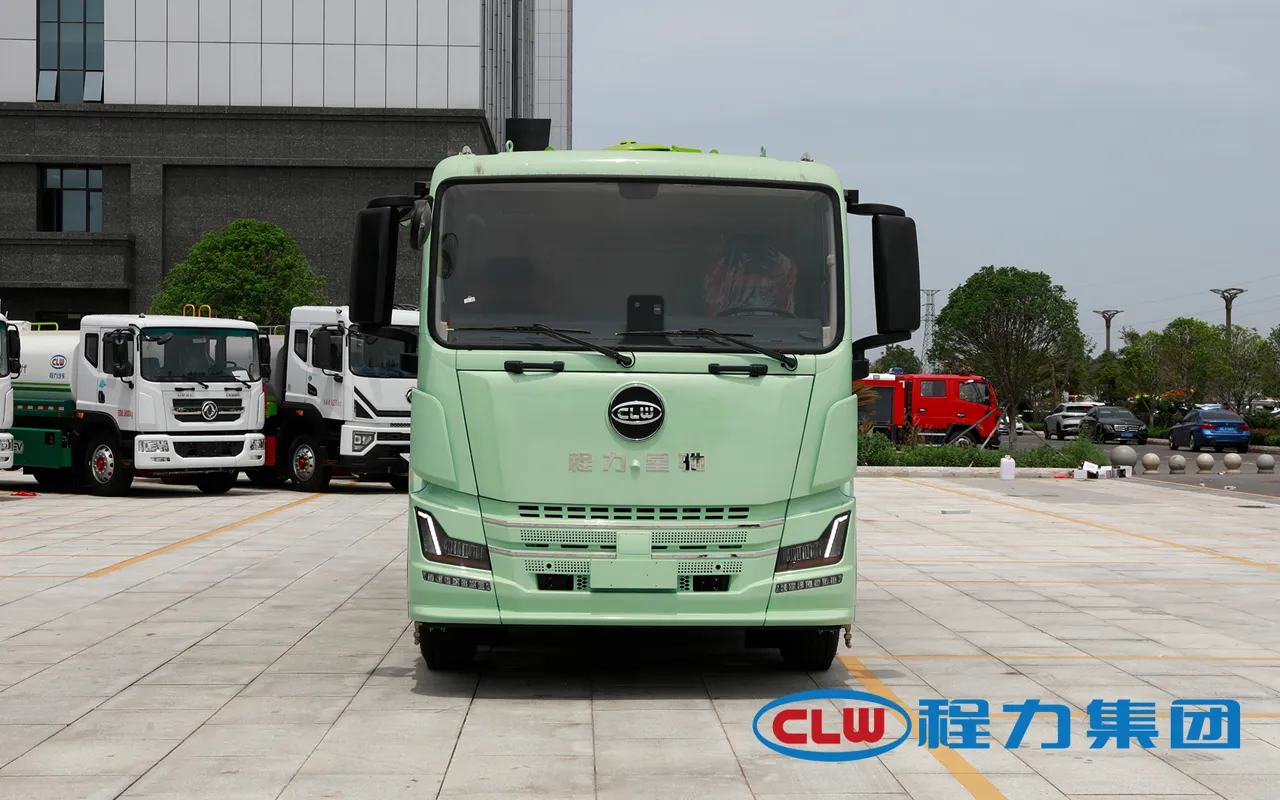
One pass, step by step
- Side brushes (gutter brooms) sweep debris out of the kerb line and towards the centre of the truck.
- Spray nozzles wet the surface ahead of the brushes, so fine dust stays on the ground instead of in the air.
- A main sweeping head or suction nozzle picks the material up from the road.
- A fan or vacuum pump pulls it through a duct into the hopper, where heavy debris drops out.
- The air is cleaned before it leaves, and the hopper is tipped out at the end of the route.
Tanks, hoppers and power on our listed models
| Model | Water tank | Hopper or debris tank |
|---|---|---|
| Dongfeng 4x2 Vacuum Road Sweeper Truck 3-5m3 Euro 5 | 1.5 m³ | 4 m³ |
| JMC Road Sweeper Truck with 2 Hydraulic Brushes | 5,000 L | 5 m³, stainless steel |
| Isuzu FTR Vacuum Sweeper Truck 8m3 Debris Tank | 2,000 L | 8,000 L |
| Dongfeng 16m3 Washing Street Sweeper Truck Euro 5 | 9,000 L | 7 m³, stainless steel |
Sweepers commonly use an auxiliary engine, separate from the chassis engine, to drive brushes, fan and hydraulics. The Dongfeng 4x2 row lists 57 kW and the JMC row 88 kW. The JMC row also lists an operational capacity of 60,000 m² per hour.
Sweep, vacuum or wash
A mechanical sweeper relies on brushes and a conveyor, and copes with bulky debris. A vacuum sweeper adds suction and handles fine dust and light litter better. A wash-and-sweep truck pairs a large clean-water tank with spray or high-pressure nozzles for sticky dirt. Match the type to what actually lies on your roads, not only the title.
Mistakes that cut performance
- Sweeping with an empty water tank, which sends dust into the air.
- Letting the hopper fill past its limit, which reduces suction.
- Running worn brushes. Bristle length decides how well the brush reaches the kerb.
- Skipping filter and duct cleaning.
Browse the full road sweeper truck range. The Dongfeng 4x2 Vacuum Road Sweeper Truck 3-5m3 Euro 5 is the compact vacuum option, while the JMC Road Sweeper Truck with 2 Hydraulic Brushes has a 5 m³ stainless steel hopper. For long routes, look at the Isuzu FTR Vacuum Sweeper Truck 8m3 Debris Tank, the Dongfeng Vacuum Sweeper Truck 8m3 Dust 2m3 Water Tank or the Dongfeng 16m3 Washing Street Sweeper Truck Euro 5. Our road sweeper trucks for sale page groups the options by use.
Frequently asked questions
What is the difference between a vacuum sweeper and a broom sweeper?
A broom sweeper moves debris mechanically with brushes and a conveyor. A vacuum sweeper adds a fan that sucks material into the hopper, which suits fine dust and light litter. Many trucks combine brushes with suction.
Why does a sweeper carry a water tank?
Water wets the surface and the brushes so dust does not rise. Larger tanks also feed washing nozzles. The rows above range from 1.5 m³ to 9,000 L, so pick a tank that lasts through your route.
What does the auxiliary engine do?
It powers the brushes, fan and hydraulic gear, so the chassis engine only has to move the truck. Our Dongfeng 4x2 row lists a 57 kW unit and the JMC row 88 kW. Confirm the power for your model.
How often must the hopper be emptied?
It depends on how much debris the route produces and how large the hopper is. The rows above run from 4 m³ to 8 m³. Estimate the load on a typical route, then pick a hopper that avoids unnecessary trips.