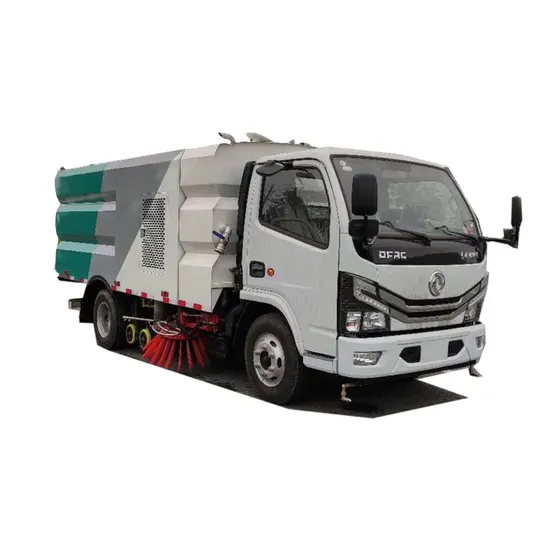
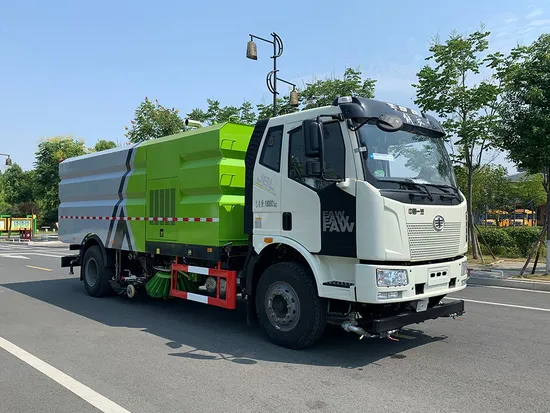
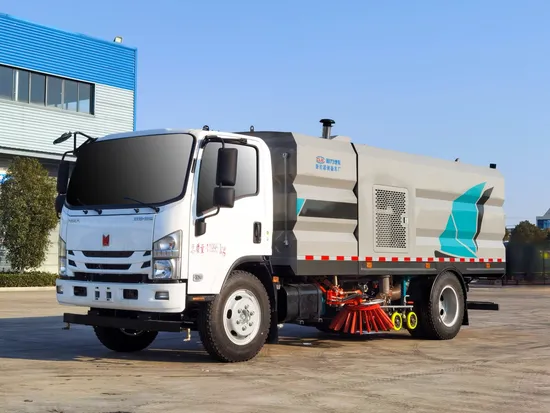
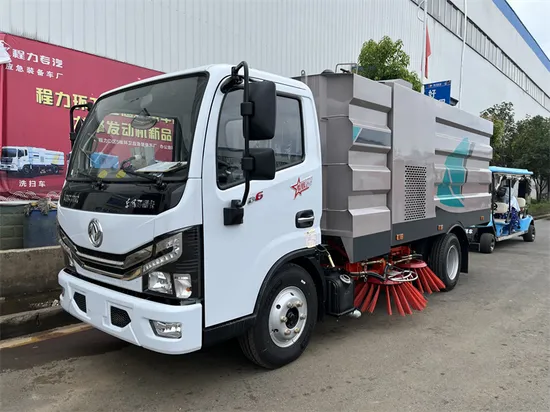
The Dongfeng 4x2 Vacuum Road Sweeper Truck 3-5m3 Euro 5 is a compact sweeper that cleans by sweeping and vacuum suction. It uses a 4x2 Dongfeng chassis, a Chaochai diesel engine, a five-speed gearbox and 7.00R16 tyres, and its overall size is 6200 × 2000 × 2550 mm with a 3308 mm wheelbase.
Its small footprint suits narrow streets, car parks, campuses and pedestrian zones where larger sweepers struggle. It carries a 4CBM trash container and a 1.5CBM fresh water tank, so the truck is aimed at routine daily sweeping, with water used for dust suppression rather than for long washing runs.
Where this truck is used
A vacuum sweeper of this size works best on short, repetitive routes such as housing estates, business parks, market areas and secondary roads. The cabinet is stainless steel, which is easier to rinse clean after wet debris, fallen leaves and the damp waste that collects at kerbs, and it can be washed out at the end of each shift.
The cleaning width is 2.8 m and the suction cup is a centre and rear full floating type, which follows ground contours as the truck moves. Cleaning speed and maximum capacity are confirmed in the quotation.
Chassis, engine and drivetrain
Gross weight is 7360 kg and kerb weight is 5300 kg, a compact weight class for a vacuum sweeper. The gearbox is a Wanliyang five-speed unit, fuel is diesel, and the emission standard is Euro 5. Tyre size is 7.00R16, a size used on many light trucks, so replacement tyres are easy to specify.
A separate auxiliary engine of 57KW drives the sweeping and suction equipment. Running two engines means two sets of oil, filters and service intervals, so plan maintenance for both. The auxiliary engine usually runs the fan and brushes while the chassis engine moves the truck, so idle and working speeds should be checked separately.
Maintenance and daily checks
Empty the trash container at the end of every shift and rinse the suction path so dust does not harden inside the pipework. Inspect the brushes for wear and the floating suction cup for cracks or trapped stones, because a damaged cup lets air leak and reduces pickup on the road surface.
Check the fresh water tank, filters and spray nozzles regularly, particularly if the truck works on dusty roads. Keep the auxiliary engine air filter clean, since sweeping stirs up fine dust. Log running hours for both engines so service intervals are tracked, and record brush replacement dates to plan your spare parts stock.
What to confirm before ordering
Container and water tank volumes are confirmed in the quotation for the exact truck. Confirm also the drive side, since left-hand drive is standard and right-hand drive is available on request, and confirm that the Euro 5 emission standard suits your registration rules.
Check the suction cup type, the sweeping width, broom count, cleaning speed and maximum capacity in the quotation. Ask about spare brushes and suction hose, the stainless steel thickness, and which optional items such as cameras or warning lights are included. Give your typical debris type so the equipment can be matched to it.
Request a current quotation for your selected configuration, quantity and delivery terms.