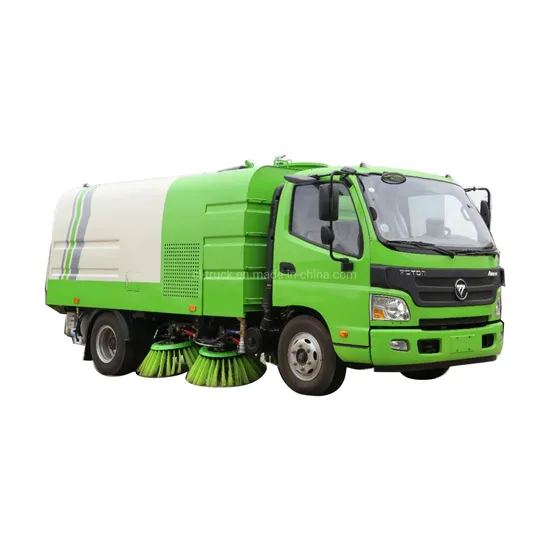
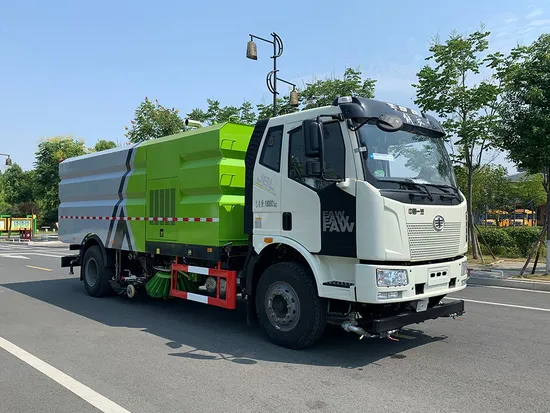
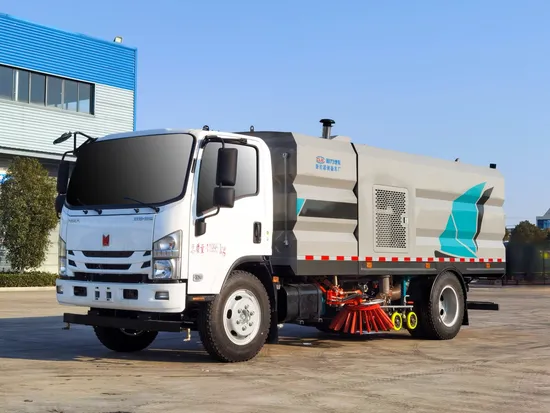
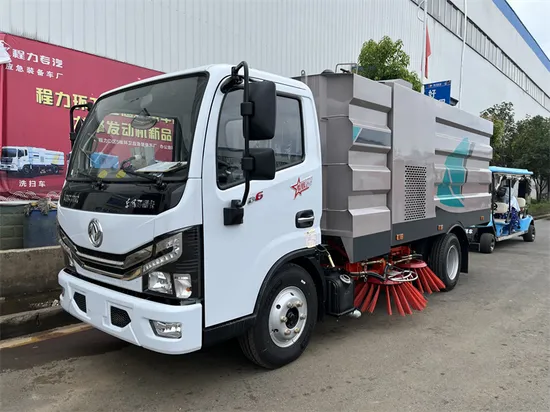
The Foton Aumark C33 Cummins RHD Runway Sweeper Truck is a vacuum sweeper built on a Foton Aumark C33 chassis with a Cummins engine and right-hand steering. It is designed for large paved surfaces such as runways, where loose debris and stones must be removed quickly so that they do not damage aircraft or vehicles.
The single-row cab seats three people, and the sweeping gear works behind it. Typical users are airport operations teams, large industrial sites and contractors who maintain wide hard surfaces and want a vehicle that combines sweeping brushes with a vacuum system in a single pass.
Chassis and drivetrain
The C33 chassis has a wheelbase of 3,360 mm and a gross vehicle weight of 6,495 kg. The engine has a displacement of 3.76 L, a rated power of 105 kW and a maximum torque of 450 N.m, and it meets Euro 3. The rear suspension uses leaf springs in a 6+7 arrangement, and the tyres are 7.00R16, six fitted plus one spare.
Braking includes a central drum parking brake and an engine exhaust brake as auxiliary braking. For a sweeper that spends the shift moving slowly, an exhaust brake reduces the load on the service brakes during long working days. Right-hand steering is built into this model and is confirmed with you in the quotation.
Sweeping and suction system
The sweeping width is 2.8 to 3.0 m and the rated operation capacity is 38,000 m2/h. Each sweeping plate carries 22 brushes, and the forward and rear plates have angle adjustment, so the operator can set how the brushes meet the surface. Cleaning efficiency is at least 96%.
A high-pressure centrifugal fan, rated at 2,700 r/min and maintenance free, creates the suction. The nozzle hangs between the rear wheels of the chassis and has a roller, and a lifting cylinder raises and lowers it. Debris goes into a garbage box that tips at 45° or more, and the tank and dash panel are stainless steel. An auxiliary engine powers the sweeping equipment.
Working routines
On a runway the sweeper normally works along lanes in overlapping passes at a steady speed, with the nozzle lowered and the brushes set to the surface. Overlap between lanes avoids stripes of missed debris. Operators watch the area ahead and avoid overfilling the garbage box so that suction stays consistent.
When the box is full, the vehicle drives to a disposal point and tips the load. Brushes, the nozzle roller and the fan are checked as part of the daily start-up, and worn brushes are replaced before they lose contact with the surface. Short, regular checks keep a runway machine reliable.
What to confirm before ordering
Please confirm the cab and steering arrangement, the emission standard required, and the wheelbase you want. Cleaning speed in working and transfer modes, hopper volume and water tank capacity depend on the configuration and are confirmed in the quotation.
Tell us the type of surface, the typical debris and the daily area to be cleaned. We use that to confirm the brush setup, the nozzle arrangement and any optional equipment, and to record the full specification in the quotation so the machine fits your sweeping routine.
Request a current quotation for your selected configuration, quantity and delivery terms.