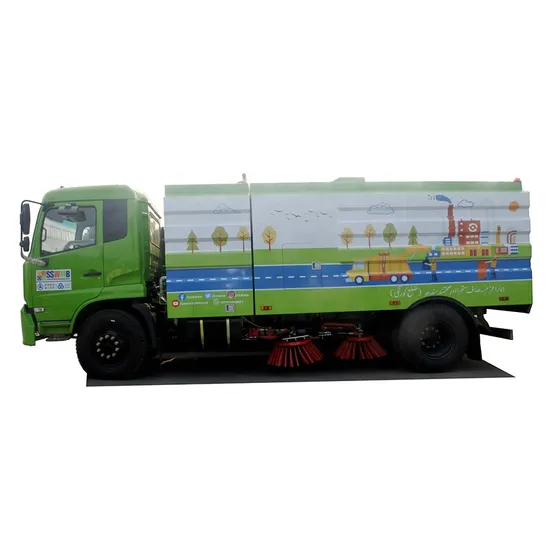
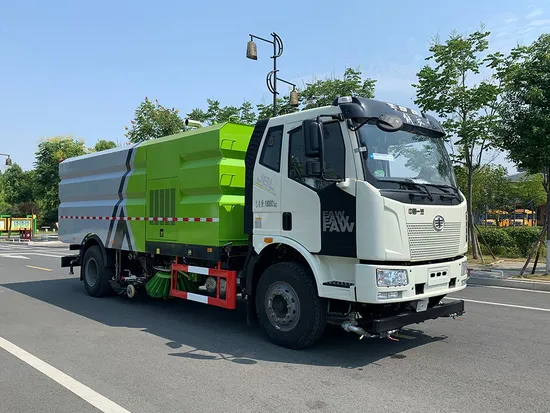
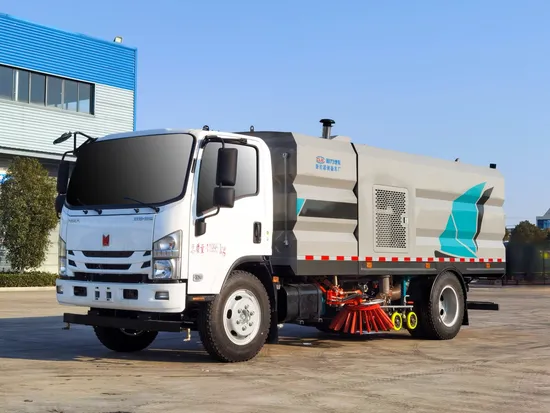
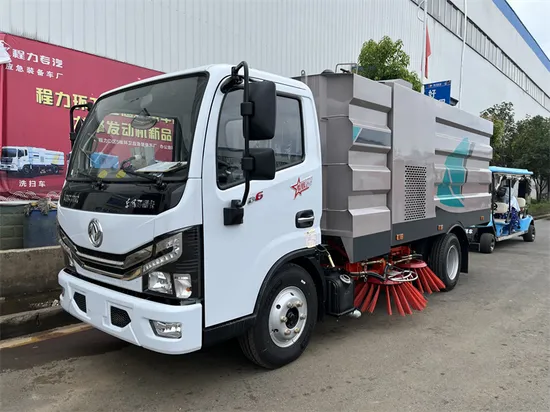
The Chengliwei 12m3 Vacuum Road Sweeper Truck with Four Brushes is a street-cleaning vehicle built on the DFH1180EX8 chassis. It combines rotating brushes with a vacuum suction system, sweeping debris loose and drawing it into a collection hopper. It suits cleaning teams and contractors who maintain urban streets and want one machine for sweeping and collection.
The listed chassis is DFH1180EX8 with a 5000 mm wheelbase and left-hand steering. Overall dimensions are given as 8550 × 2480 × 3130 mm. Power is taken from the engine, control is by PLC, and the intended application is street cleaning. Capacities such as the hopper and water tank split are confirmed in the quotation.
Where this truck is used
Street cleaning is the stated application, so the truck fits main roads, residential streets, commercial districts and service roads that collect sand, leaves and litter. A vacuum sweeper is useful where dust control matters, since material is collected rather than pushed aside or left airborne. Car parks and depot yards also suit it where the body can turn.
Typical routines are early-morning sweeps before traffic builds, scheduled cleaning of fixed routes, and clean-up after events or roadworks. Because the hopper fills as the shift goes on, crews plan routes so that the truck returns to a depot or disposal point at sensible intervals, rather than running until it is overfull.
How the sweeping system works
The sweeping gear is described as four brushes with a drum-type structure and medium hardness. Brushes loosen dirt from the road surface, and the vacuum system then draws the loosened debris into the hopper. A medium hardness setting points to general street litter and fine dust rather than heavy scraping work.
Because the machine is operated manually through a PLC-based control system, the driver should learn the sequence for lowering the brushes, starting suction and emptying the hopper. Sweeping at a steady, modest road speed gives the brushes time to lift debris. Wet or dusty streets also affect how well fine material is collected, so routes should be planned accordingly.
Chassis, engine and weights
The engine type is B6.2NS6B210 with a 6.2L displacement, rated at 154 kW or 210hp, with the emission level listed as Euro VI. The same engine supplies power to the sweeping equipment, since the power source is listed as the engine. Gross vehicle weight is shown as 18000 kg and curb weight as 11000 kg.
A load capacity of 6805 kg is listed, and this has to be shared between the water, the collected debris and anything else carried. Because curb weight is given as a theoretical figure, the completed weight is confirmed in the quotation. Operators working near weight-restricted roads or bridges should check this early.
What to confirm before ordering
Confirm the drive side first. Left-hand steering is listed, and right-hand drive can be requested in advance. Then confirm the hopper capacity, water tank size and how the 12m3 figure in the name is divided between them, because these decide how long the truck can sweep before it must empty and refill.
Ask also for the brush arrangement and bristle type, the operating controls available to the driver, and any optional equipment you need. Customisation is available, so describe your road widths, typical debris and daily route length, and agree the final equipment list and capacities in the quotation. Training drivers on the control panel before the first shift reduces mistakes.
Request a current quotation for your selected configuration, quantity and delivery terms.