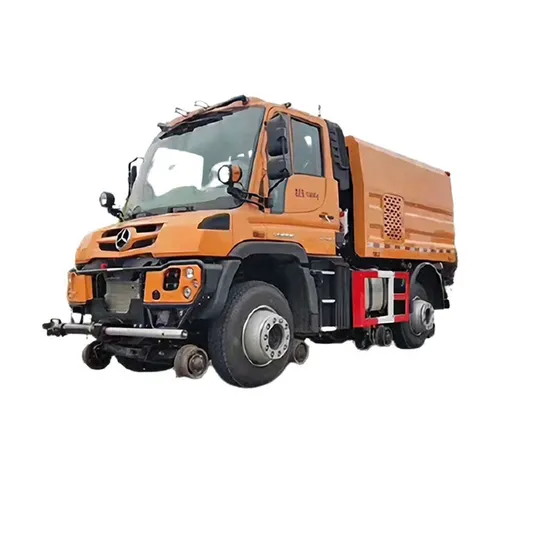
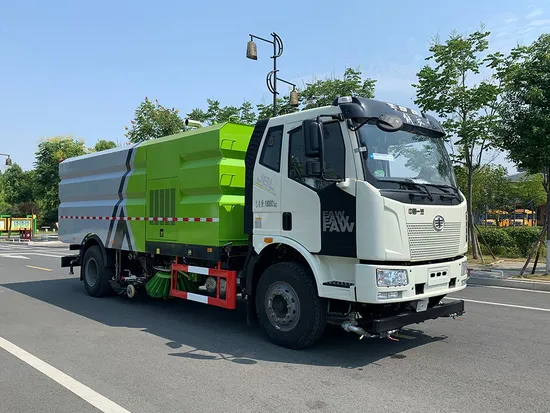
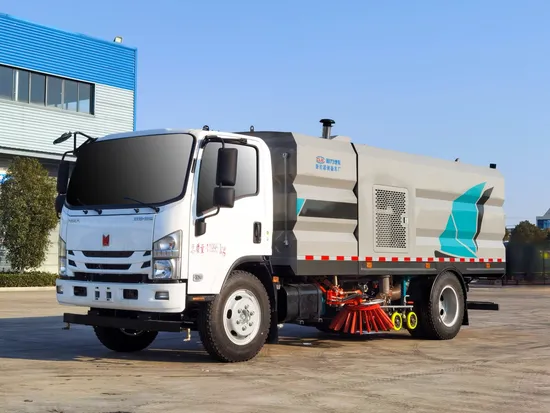
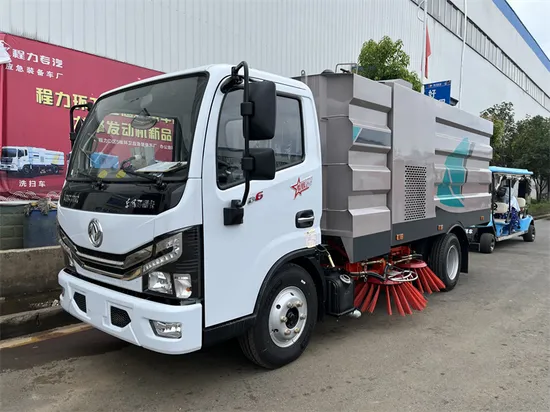
The Benz 5m3 Railway Sweeper Truck with Front Flushing is a vacuum road sweeper built for cleaning railway areas and similar paved surfaces, with a front flushing system and a rear sprayer. The overall size is 8990×2300×2900 mm and the sweep width is 3.5 m. It suits rail maintenance teams, depots and contractors who need dust and debris removed without hand sweeping.
How the sweeping system works
A vacuum sweeper uses rotating brushes to loosen debris and a suction system to lift it into an onboard hopper. This model uses drum type brushes of medium hardness, and its sweep width is 3.5 m. A PLC handles control of the sweeping functions, and the sweeping equipment takes its power from the engine.
Front flushing sprays water onto the surface to wash and settle dirt, and the rear sprayer helps keep dust down behind the machine. Water use depends on the tank fitted, so the tank and hopper capacities are confirmed in the quotation. A pressure vessel is part of the core components, so follow the pressure checks that apply to such equipment.
Chassis and drive layout
Built on a Benz chassis, the truck can be arranged as 4X2, 4X4 or 6X4, and engine options cover Euro 1 to Euro 5, so the chassis, engine and emission level are set for each order. Right-hand drive is offered, and the steering side you need is confirmed in the quotation.
The 4x4 and 6x4 layouts add traction for soft or uneven ground such as unpaved access roads beside tracks, while 4x2 is enough for hard surfaces. Choose the layout from the surface your crew actually works on, not from the highest specification available. Heavier layouts also carry more weight and use more fuel.
Where this truck is used
Railway work includes depot yards, station forecourts, level crossing approaches, sidings and access roads. A sweeper with front flushing and a rear sprayer can clear dust, leaves and loose debris from these areas, and the sweep width of 3.5 m covers a lane in one or two passes. Plan work in quiet periods.
Overall height of 2900 mm and width of 2300 mm matter for clearance under bridges, canopies and gates, so check the access route in advance. Drivers should also be trained on working near rail lines, following site safety rules, and using warning lights where fitted.
Maintenance and daily checks
Check brush wear and brush height every shift, because worn brushes leave strips of dirt behind. Empty and rinse the hopper at the end of the day and clear the suction path of stones, plastic and wet leaves. Inspect the flushing nozzles for blockage, particularly if the water is not clean.
Inspect hoses, the pressure vessel fittings and the tank for leaks, and keep a record of any safety checks needed for the pressure equipment. Check engine oil, coolant and tyre condition as with any truck, and confirm that the PLC controls respond correctly before leaving the depot. Keep spare brushes available.
What to confirm before ordering
Confirm the drive layout, the emission standard, the steering side and the capacities of the hopper and water tank. The capacities depend on the build and are fixed in the quotation. Also confirm the chassis model, because it affects overall weight and axle loading.
Ask about options for the front flushing bar, the rear sprayer, warning lights, cameras and brush types. Our team will confirm what is included and what can be customised, so the truck you order suits your tracks, yards and crew practices. Share photos or drawings of your site if possible.
Request a current quotation for your selected configuration, quantity and delivery terms.