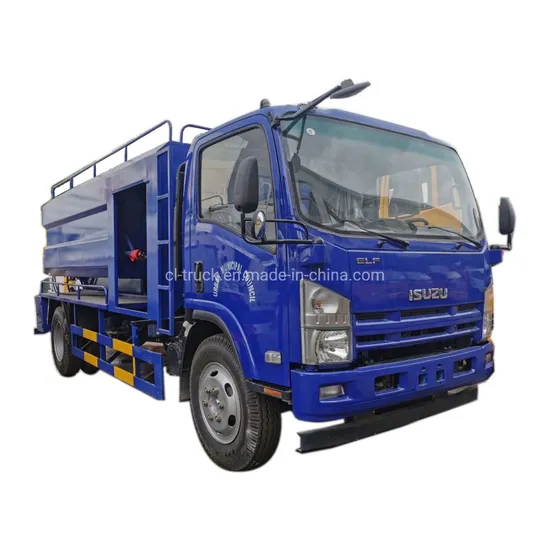
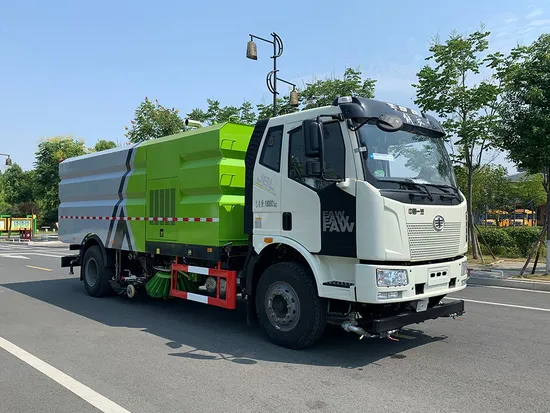
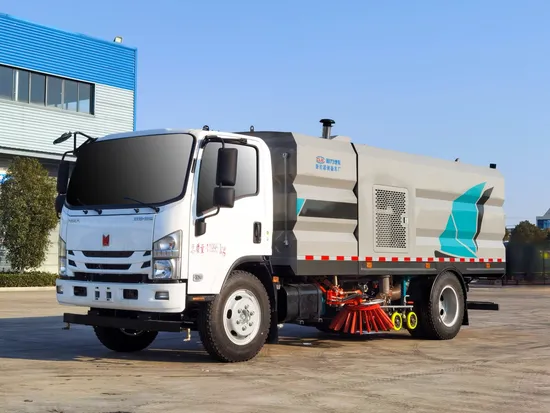
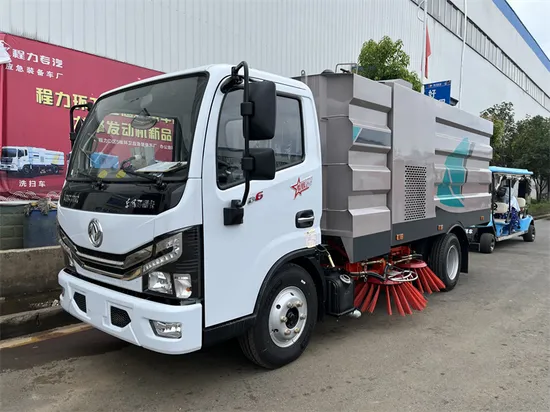
The 700P High Pressure Water Flushing Truck 5000-6000L is a tanker-based cleaning vehicle that washes road surfaces with a high pressure water jet. It is offered in 5000L and 6000L tank sizes, has a flushing pressure of 10 MPa, a cleaning width of 3.5 m and a high pressure flushing height of 21 m or more.
We offer it to municipal cleaning departments, road maintenance companies and industrial site operators who need to wash pavements, barriers, walls and similar structures rather than only sweep them. It suits teams that want a single truck able to carry its own water and apply it at high pressure.
Where this truck is used
High pressure flushing removes mud, oil film, dried deposits and stains that a brush sweeper leaves behind. Typical work includes washing carriageways and central barriers, rinsing junction areas and cleaning roadside structures. Flushing height of 21 m or more also allows work on elevated surfaces.
A flushing round is planned like a sweeping round: define the route, fill the tank, wash in a steady sequence and return to refill. Because the tank holds a limited amount of water, the distance from the water source to the work area strongly affects how much surface a crew can cover in a shift.
Equipment and operating system
Water is carried in the tank and delivered by a pump at a flushing pressure of 10 MPa. Working speed is given as 5 to 20 km/h, which lets the truck wash while it drives. The cleaning width is 3.5 m, so one pass covers a wide strip. A secondary engine, model JMC, powers the flushing system.
A separate secondary engine means the pump runs at the speed it needs, independent of the driving engine. The truck can travel at speeds of 95 km/h or more between sites. The operator should monitor pressure while working and lower it when washing delicate surfaces, as strong jets can damage them.
Tank and body configuration
The model name covers two tank sizes, 5000L and 6000L. The exact tank volume, body dimensions and weights depend on the configuration and are confirmed in the quotation. A larger tank extends the working time between refills, while a smaller one keeps the vehicle lighter and easier to handle.
When choosing a size, consider how far you travel to refill, how much water your usual job consumes and the weight limits for your roads. A full tank is heavy, so axle loads should be checked. Our team can compare both sizes against your working pattern and explain the difference in practical terms.
What to confirm before ordering
Please confirm the drive side, the emission standard needed for your registration, and your preferred tank size. Also confirm the flushing pressure and reach you need, and whether additional nozzles, hoses or spray arrangements should be included. These options affect how the truck works on your site.
Tell us about the surfaces you plan to wash, the water supply points on your routes and any limits on noise or working hours. Customisation is available, and the agreed configuration is written into the quotation so that you can check each item before the build starts.
Request a current quotation for your selected configuration, quantity and delivery terms.