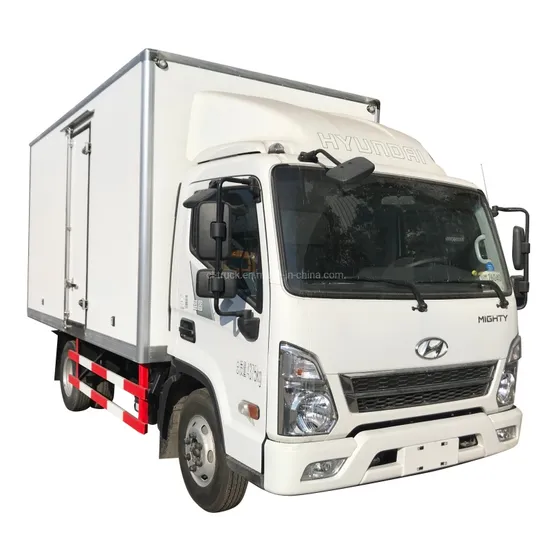
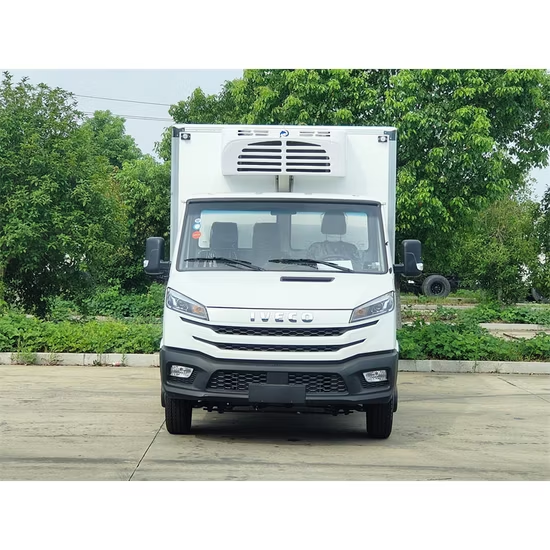
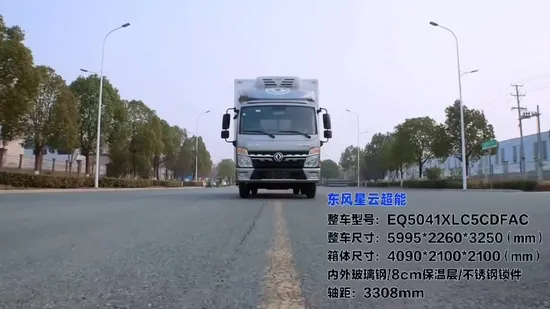
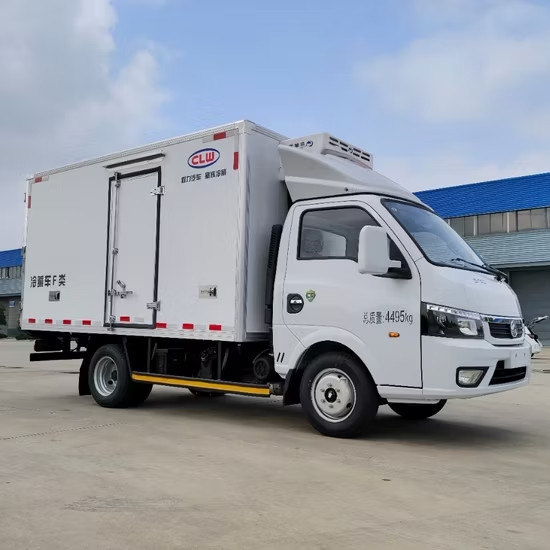
The Hyundai 4x2 Refrigerated Insulated Box Van Truck 5t is a medium-sized refrigerated truck with a 4×2 layout. It has a 4HK1-TCG40 diesel engine, a six-speed manual gearbox, left-hand drive with right-hand drive on request, and an insulated box that can cool down to -18 degrees. It is aimed at food distributors, dairy and meat handlers and caterers who run regular multi-stop routes with chilled and frozen goods.
Box construction and insulation
The box is made from glass reinforced plastic on the inside and the outside, with an 8 cm polyurethane extruded insulating layer between them. The four sides are bonded with polyurethane foam glue to form a closed section, so there are few joints through which heat can pass. If a dry van body is built instead, the box material is colour plate.
Smooth glass reinforced plastic is easy to wash and does not rust, which suits food contact areas. A bonded sandwich panel is stiff for its weight, so the box adds little extra mass to the chassis.
A refrigeration unit on the box removes heat from the cargo space and keeps the air moving around the load. The insulation slows the heat coming in from outside, so the unit mainly has to deal with heat from door openings and from goods that were loaded warm. This is why a well-built box and good loading habits matter as much as the unit itself.
Chassis, engine and drivetrain
The engine is the 4HK1-TCG40, a four-stroke, water-cooled straight-four of 5.193 L with an electronic control system. Engine output depends on the configuration and is confirmed in the quotation. The gearbox is an MSB six-speed with six forward gears and one reverse, operated manually. Tyre options include 8.25-16, 8.25R16, 8.25-20 and 8.25R20, six fitted plus one spare.
Running a refrigerated route
Start the unit and bring the box down to temperature before loading, then load product that is already cold. Chilled and frozen goods need different set points, so decide which you carry most. On multi-stop routes, every door opening lets warm air in, so plan the loading order to match the stops and keep each opening short. Keep a record of box temperature during the trip, and clean the floor and drain at the end of each shift.
Load pallets and cartons so that air can pass around them and away from the walls and the unit outlet. Blocked airflow creates warm spots even when the display reads correctly. Check the door seals and drain outlets regularly, because worn seals let warm air in and make the unit run longer for the same result.
What to confirm before ordering
Payload, gross weight and engine output are confirmed in the quotation. Also confirm the drive side, the emission standard, the inside size of the box, the make and model of the refrigeration unit and its temperature range, the door layout and the colour.
Tell our team which products you carry and how often the doors are opened on a typical route, so the box and the refrigeration unit can be matched to the work.
Request a current quotation for your selected configuration, quantity and delivery terms.