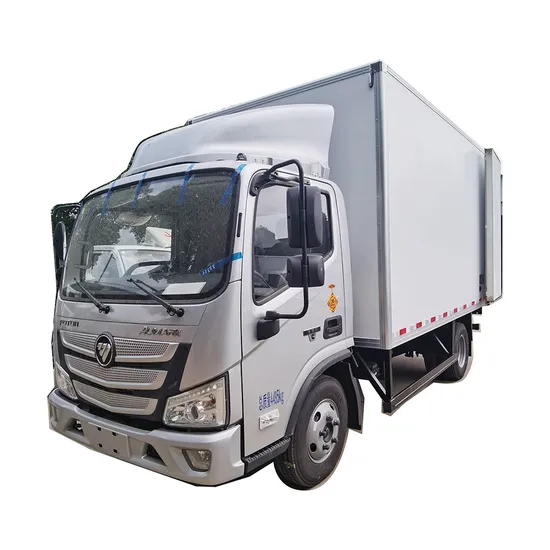
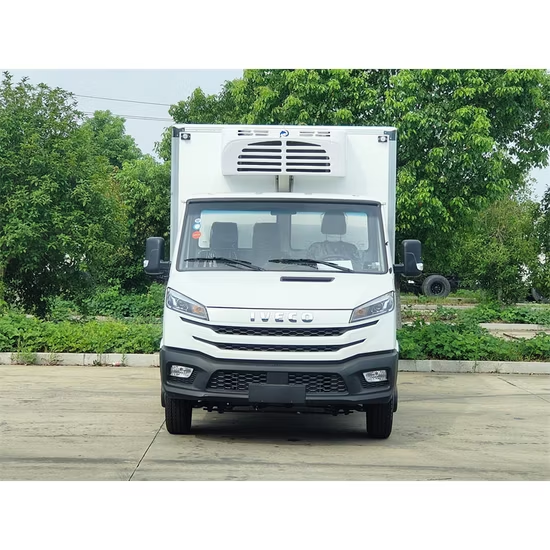
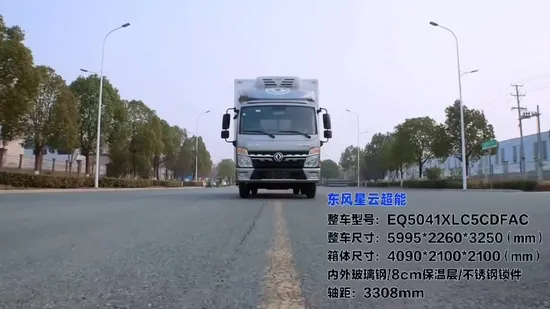
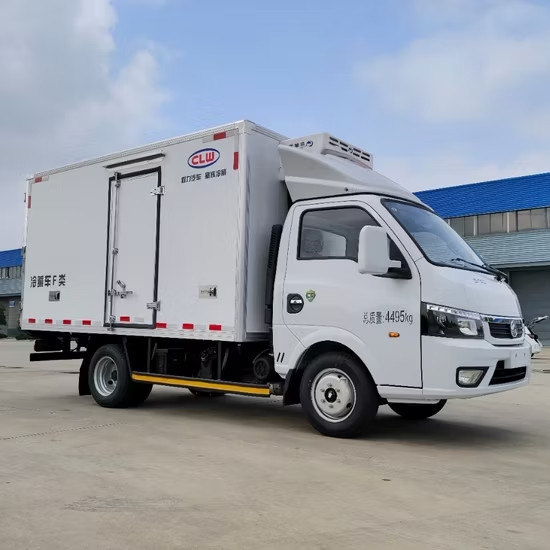
The Foton Aumark E33 Meat Seafood Refrigerated Truck 80kW is a compact cold-chain van built on the Aumark E33 chassis, with a diesel engine rated at 80 kW and a manual gearbox. The single-row cab seats three, and the glass reinforced plastic box is insulated for frozen goods at temperatures down to -15 degrees.
It is aimed at butchers, seafood wholesalers, processors and restaurant suppliers who make frequent short deliveries and need a body that is easy to clean. The cab is left-hand drive, with right-hand drive available on request. Below, we cover the engine and chassis, the box, loading practice and the points to confirm.
Chassis, engine and drivetrain
Under the cab is a diesel engine with a displacement of 2.771 L, a rated power of 80 kW and a maximum torque of 280 N·m. The gearbox is manual. Horsepower sits below 150 HP, which keeps the truck light and economical for urban delivery rounds. Emission standard is confirmed in the quotation.
The wheelbase is 3360 mm, and the cab is a single-row W1880 type for three persons. The rear leaf spring pack is 8 + 6, the parking brake is air operated, and an engine exhaust brake serves as an auxiliary brake. The truck runs on six tyres plus one spare in size 7.00R16.
Box construction for meat and seafood
The refrigerated box has glass reinforced plastic skins inside and outside with an 8 cm polyurethane extruded insulating layer between them, or XPS as an alternative. Glass reinforced plastic gives a smooth surface, which suits products where washing between loads is routine. The box is designed to reach temperatures down to -15 degrees.
The sides are bonded with glass reinforced plastic and polyurethane glue foam into a closed section, then assembled with strong adhesive and fastened with high-strength screws buried inside the panels. If you want a dry van rather than a refrigerated box, colour plate is used for the body instead.
Daily use with meat and seafood
Meat and seafood need steady cold from the first crate to the last drop. Pre-cool the empty box, load product that is already at temperature and stack cartons with gaps so air can move around them. Keep raw products separated from ready-to-eat goods and wash the interior thoroughly after each shift.
Plan rounds so that the doors stay shut between stops, and check door seals for wear every week. Record the box temperature at loading and at each drop. A small truck with a modest engine suits this pattern well, since it can reach narrow streets and loading bays that larger trucks cannot.
What to confirm before ordering
Please confirm the drive side, left-hand drive being standard and right-hand drive available on request. Confirm the emission standard you need, the payload you plan to carry and the box length and door layout. The refrigeration unit and its temperature range are also set out in the quotation.
Tell us what you will carry and how many drops a typical day involves, so we can advise on the box finish and loading arrangement. We will record every choice in the quotation, so that the finished truck is specified for your products and your route, not for a generic cold-chain job.
Request a current quotation for your selected configuration, quantity and delivery terms.