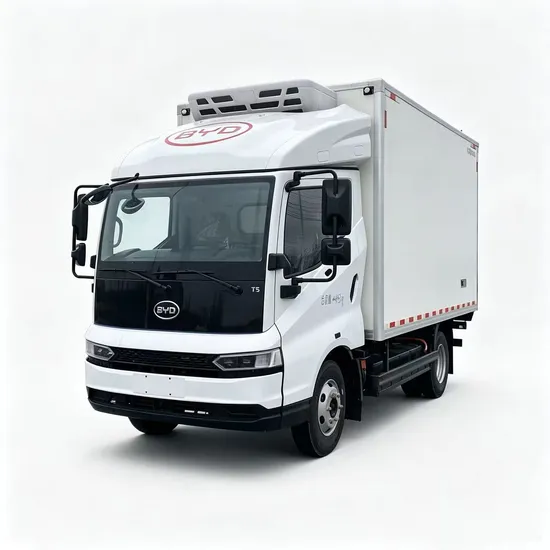
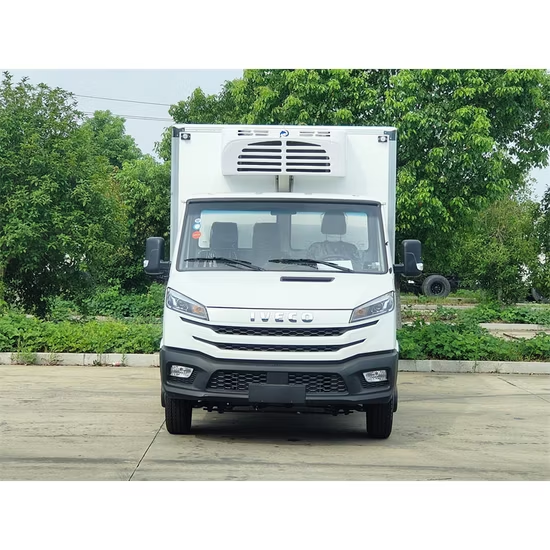
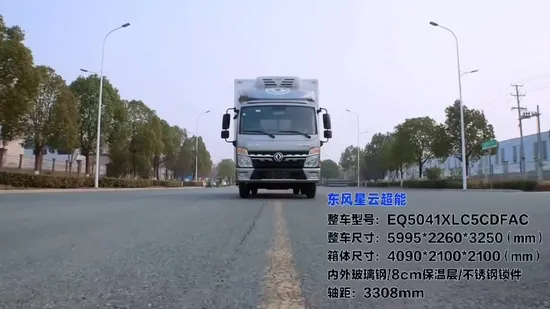
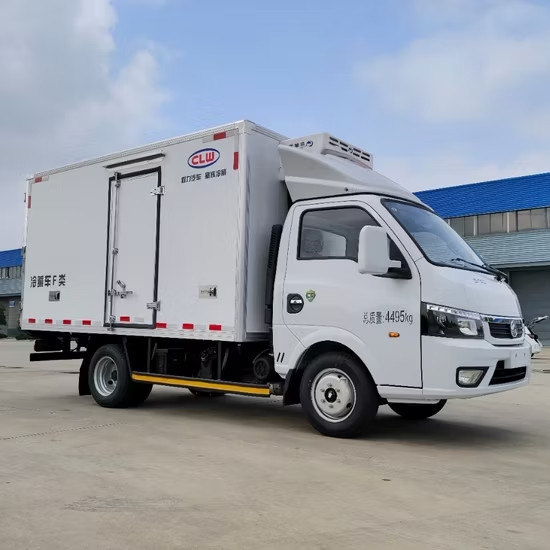
The BYD Electric Refrigerator Truck is a battery-electric refrigerated truck built on the BYD1040A3BEVC3 chassis. A 100 kWh Blade Battery powers the drive motor, and the truck carries a cargo box of 3945 × 2100 × 2100 mm for chilled and frozen goods. The cab seats three people, which suits a driver and two colleagues.
It is aimed at urban and suburban cold-chain work such as food distribution, catering supply and retail replenishment, where trucks make many short stops and then return to a charging point each night. Electric drive removes engine noise and exhaust from the delivery route, which matters on early morning rounds in built-up areas.
Where this truck is used
Typical users are food distributors, supermarket suppliers, dairy and meat handlers and catering companies. The work pattern is a planned round from a cold store to a series of customers, with the doors opened and closed many times. A vehicle that is quiet and ready to move immediately suits that stop-and-go pattern well.
The cruising range is over 230 km, which covers most daily urban rounds with a margin. Operators should still plan the route against the real load, the outside temperature and the use of the refrigeration system, because all three affect the energy used. We can talk through your daily distance when preparing the quotation.
Chassis and electric drive
The drive motor has a rated output of 70 kW and a peak output of 150 kW. The peak figure is what the driver uses when pulling away with a full box or climbing a ramp, while the rated figure covers steady running. The tyre specification is 7.00R16, and the springs are 3-leaf at the front and 3+2-leaf at the rear.
The wheelbase is 3360 mm and the chassis dimensions are 5955 × 2260 × 2465 mm. Gross vehicle weight is 4495 kg and curb weight is 3250 kg. These weights matter because the battery, the box and the refrigeration equipment all take a share of the permitted mass, and your payload is what remains.
Operating the refrigerated box
A refrigerated box works best when the cargo is already at the right temperature before loading. Pre-cool the box before the first load, keep door openings short and stack goods so air can move around them. These habits protect the cargo and also reduce the energy drawn from the battery during a round.
Charging should be planned around the working day. Park the truck at a charging point overnight, check the battery level before leaving and plan any top-up around the longest legs of the route. Drivers who treat range as a daily planning figure, not an average, avoid most problems.
What to confirm before ordering
Please confirm the payload you need, because it depends on the box and equipment fitted to the chassis, and the quotation will state the figure for your configuration. Confirm the box dimensions, the temperature range you need to hold, the refrigeration unit and the steering side for your roads.
Also confirm the charging arrangements at your depot, the connector type and the colour. Tell us the typical daily distance, the number of stops and the type of goods you carry. With that information our team can check the battery, motor and box against your duty and set the details out in the quotation.
Request a current quotation for your selected configuration, quantity and delivery terms.