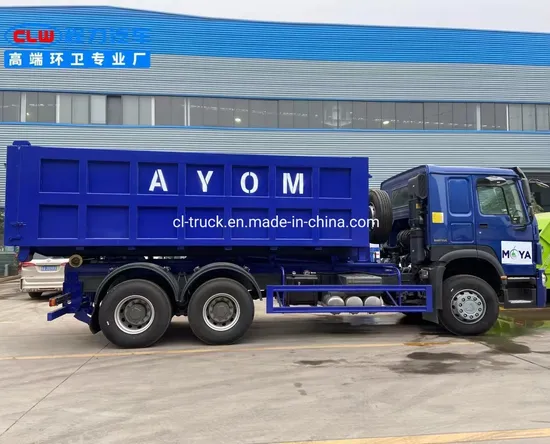
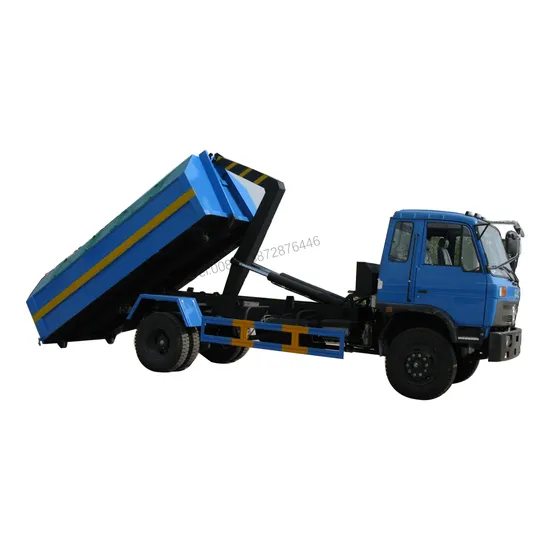
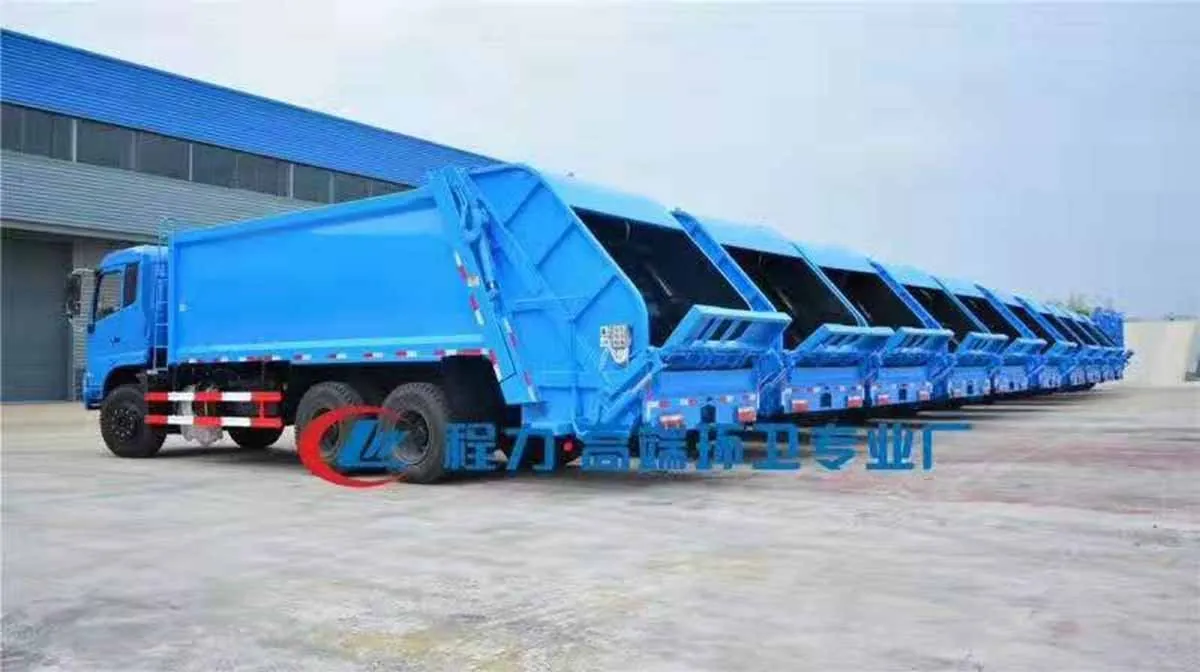
Chengli Group exported its first batch of sanitation trucks to Cambodia. The batch was made up of all-blue compactor garbage trucks and hook lift (hook arm) trucks.
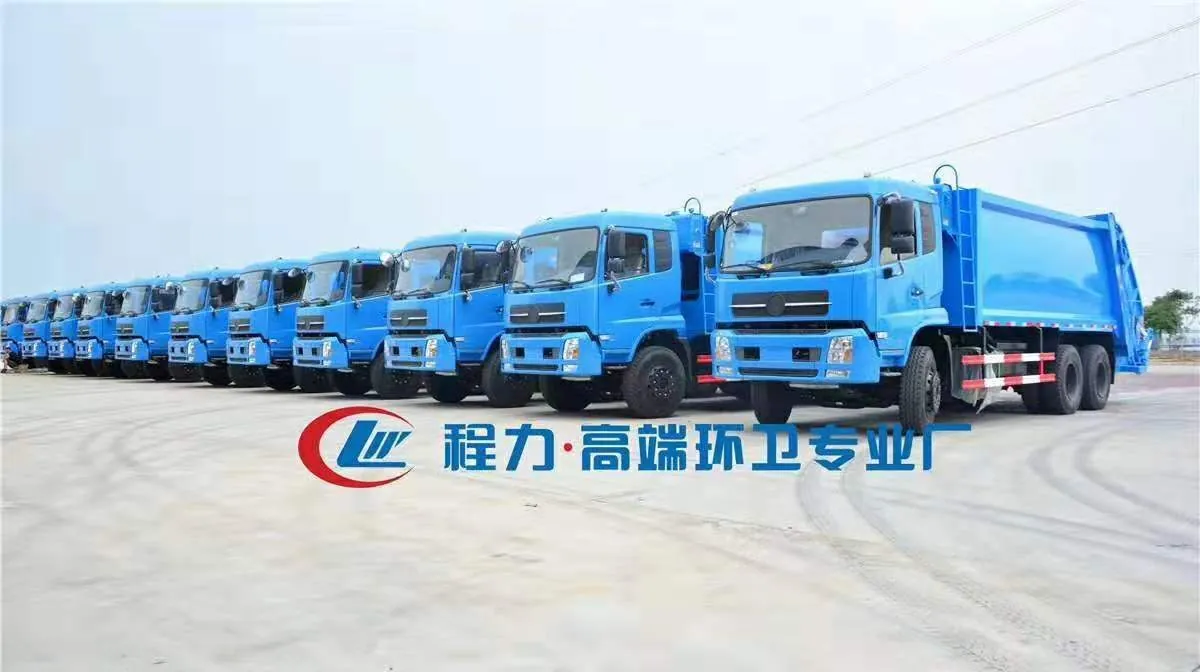
What was supplied
All trucks in the photos are painted blue, with cabs and bodies in the same colour. The compactor trucks have an enclosed body with a rear loading section. The hook lift trucks carry an open container body that is loaded and unloaded by a hook arm. The trucks shown have two rear axles.
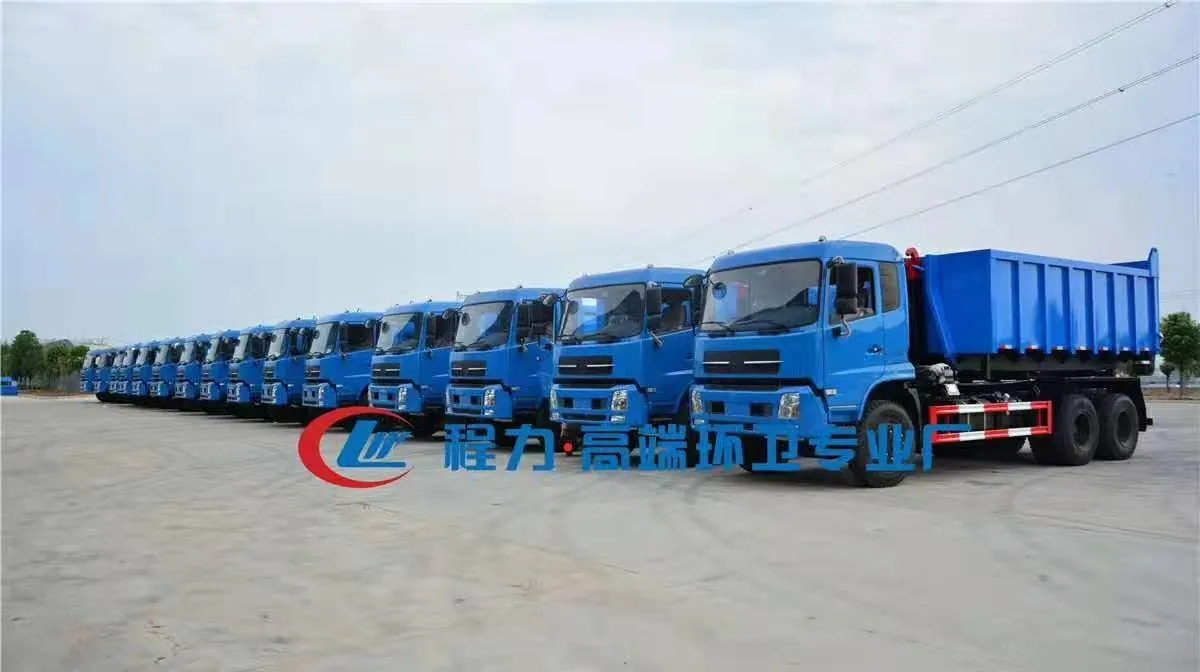
About this vehicle type
Compactor trucks collect and compress household waste for regular routes. Hook lift trucks lift and carry detachable containers, which suits skips and bulk waste points. Many cities use both types together.
How compactor and hook lift trucks work
A compactor truck is loaded through a rear hopper. Waste is tipped or lifted into the hopper, and a hydraulic packing plate sweeps it into the body and presses it against the existing load. Compression lets the truck carry far more waste than an open body of the same size, so it can finish a longer collection route before a trip to the disposal site. At the site, the body is tipped or an ejector plate pushes the load out.
A hook lift truck works differently. A hydraulic hook arm pulls a detachable container onto the chassis rails, carries it to the disposal point, tips or slides it out, and sets it down again. One truck can serve several containers, which suits construction waste, market waste and other bulky loads.
Both types rely on the truck hydraulic system, driven from the engine through a power take-off.
Main components
- Chassis: carries the body and the waste load, and sets the engine class and axle layout.
- Compactor body: holds the compressed waste and must be sealed to keep liquid from leaking on the road.
- Packing mechanism: the hydraulic plate that pushes waste into the body and compresses it.
- Hook arm: lifts, carries and unloads the container on a hook lift truck.
- Detachable container: the open box that is filled on site, and it must match the hook height and the arm.
- Hydraulic pump and cylinders: power every movement of the packing plate, the arm and the body.
- Controls: let the operator work the system from the rear or from the cab.
What to check when you order a similar unit
- Chassis and engine class: choose a brand with local parts support and an emission level your fuel can run.
- Body or container volume: compare it with the waste volume per route and the legal load.
- Axle layout: two rear axles are usual for heavier bodies, but confirm road and bridge limits.
- Drive side: left-hand drive is standard, and right-hand drive is available on request.
- Bin and container interface: for a hook lift truck, check that your existing containers fit the hook.
- Climate and road conditions: heat, rain and rough roads affect hydraulic oil, paint and suspension choices.
- Spare parts and handover documents: ask for a wear-parts list, manuals and the papers needed for registration.
For more detail, read how a garbage compactor truck works and hook lift versus skip loader trucks. You can also browse our garbage trucks.
Similar models you can order
You can specify chassis, body volume and body colour for a similar unit. Left-hand drive is standard and right-hand drive is available on request. Related models include Dongfeng 4x2 Roll-off Compressed Garbage Truck 12m3, Chengliwei HOWO 6x4 Hook Lift Garbage Truck 16m3 and Dongfeng 145 153 Hook Arm Garbage Truck 10-12m3 RHD.
To ask for a quotation, please contact us.