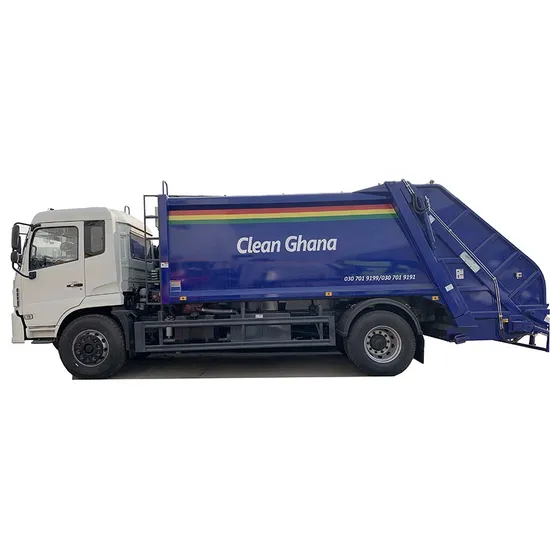
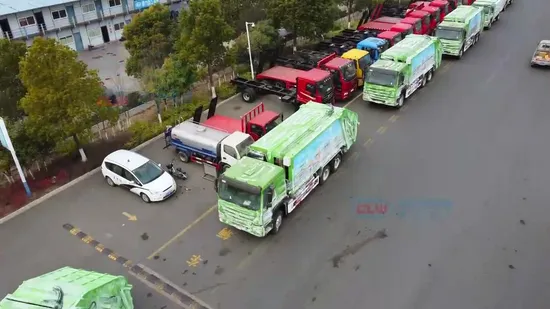
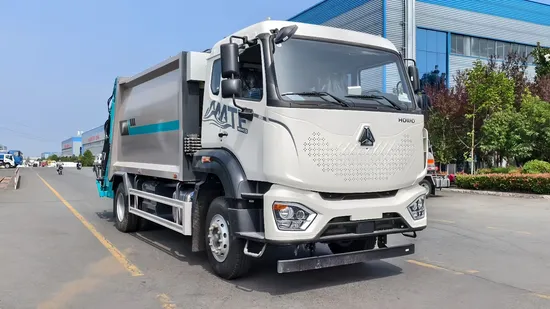
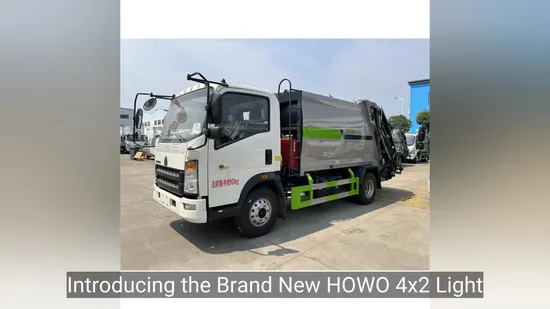
The Dongfeng 4x2 Roll-off Compressed Garbage Truck 12m3 is a refuse vehicle on a Dongfeng 4×2 diesel chassis, fitted with an ISB 180 engine and a manual gearbox. It pairs a compression-type body with a roll-off arrangement. It is aimed at city cleaning fleets that want a larger body than a small collector while keeping a two-axle chassis.
Municipal cleaning departments, property managers and contractors serving busy streets, markets or transfer points are the likely users. A body in the 12m3 class allows several collection stops to be combined into one trip, which cuts the number of runs to the disposal site. The sections below describe the configuration and the points to settle with our team first.
Typical working routines
A compressed refuse truck is loaded with household or commercial waste, and a hydraulic mechanism then squeezes it so that more material fits in the same volume. It is a compression type, so the working day is a repeated cycle of loading, compressing and moving to the next stop. The cycle continues until the body is full.
A roll-off layout generally lets the body or container be lifted, moved or emptied as a unit. How this particular model is loaded and discharged is confirmed in the quotation drawing. Ask our team for a short operating description before you plan crew sizes and unloading sites.
Chassis, engine and drivetrain
The engine is an ISB 180, with 132 kW (180 hp) and a displacement of 5900 ml, running on diesel. Power goes through an eight-speed manual transmission to the rear axle. The wheelbase is 5000 mm and the tyre size is 10.00R20. Air brakes and power steering are fitted, which suits a loaded vehicle that makes frequent stops.
The overall size is 8650 × 2480 × 3150 mm, with a tare weight of 9840 kg and a gross weight of 18000 kg. Those numbers help when you check bridge limits, gate heights and depot space. Keep in mind that the final figures depend on the body and equipment selected, and they are confirmed in the quotation drawing.
Matching the truck to your job
This is a 12m3 class body, so the working capacity depends on the configuration. Choose the body size from the weight of waste you expect, not just its volume, because compressed waste can be dense. A two-axle chassis is easy to turn in tight depots and city streets.
Consider the route first. Short, frequent stops favour a quick compression cycle, while long hauls to a disposal point place more weight on engine power and gearing. With an eight-speed gearbox and 180 hp, hill climbing and stop-start driving should be discussed with our team if your routes are steep or the disposal site is far away.
What to confirm before ordering
Ask which emission standard the engine meets and have it written into the quotation. Also confirm the body volume, the rated payload, and the permitted axle loads. Request the drive side you need: left-hand drive is standard and right-hand drive is available on request, and the cab and steering parts differ between them.
Ask how the roll-off mechanism is operated, which hydraulic controls the operator uses, and whether any warning devices or cameras are included. Confirm the paint colour and any extra equipment before production starts. A written configuration sheet signed by both sides prevents later disagreements about what is fitted.
Request a current quotation for your selected configuration, quantity and delivery terms.