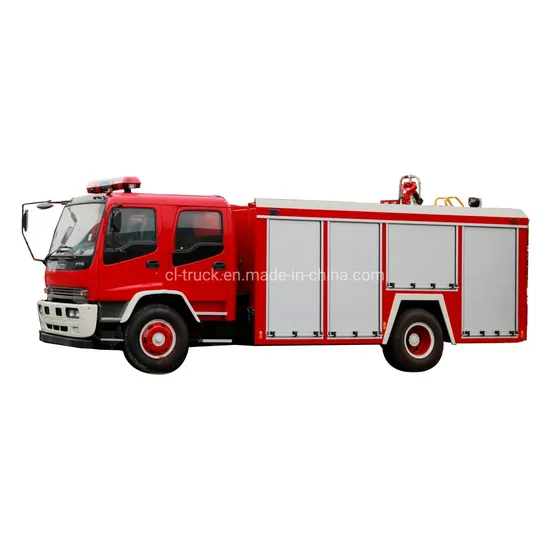
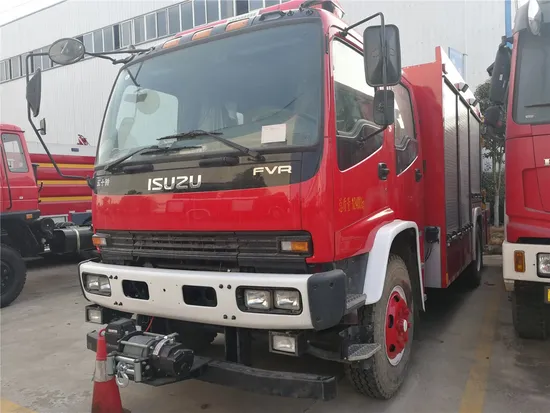
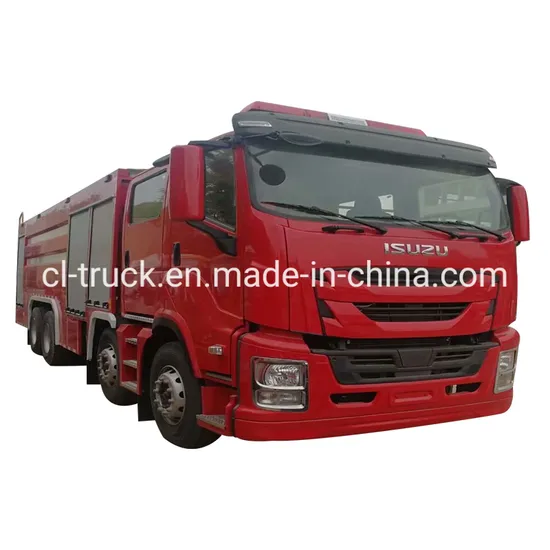
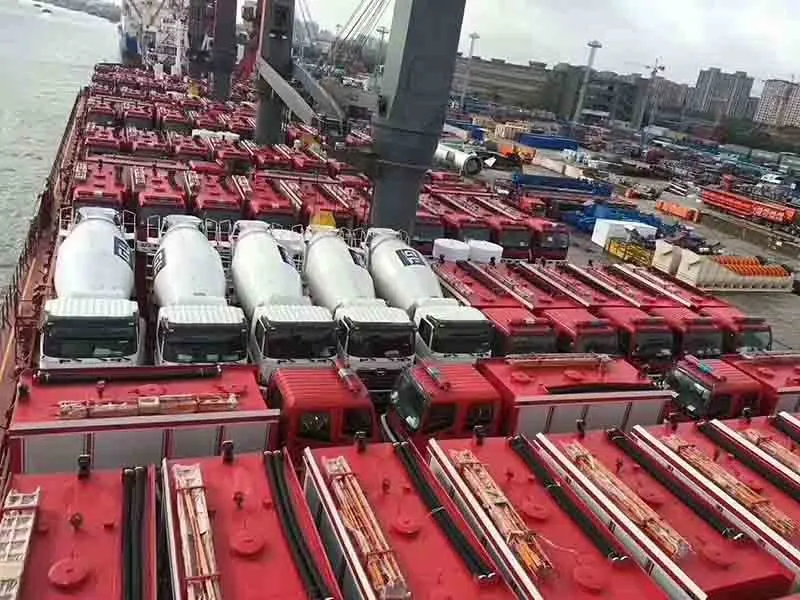
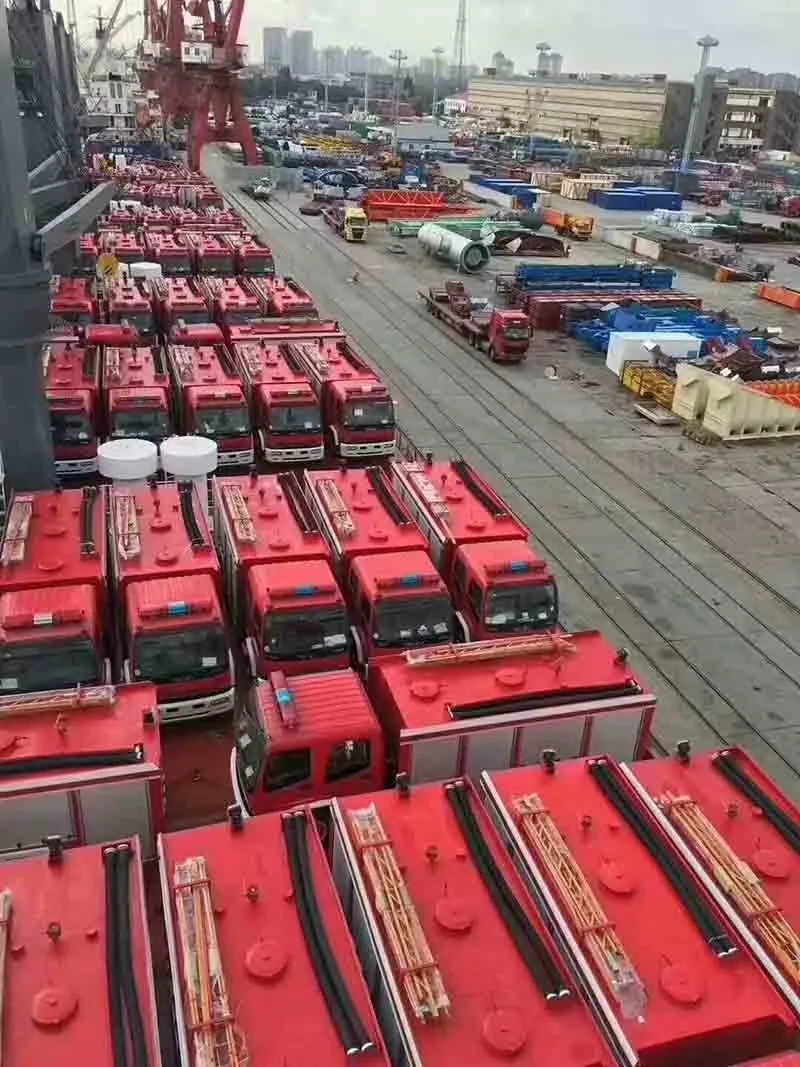
Chengli Group exported 86 Isuzu fire trucks in one order. The trucks were loaded onto a ship at the port and were ready to sail.
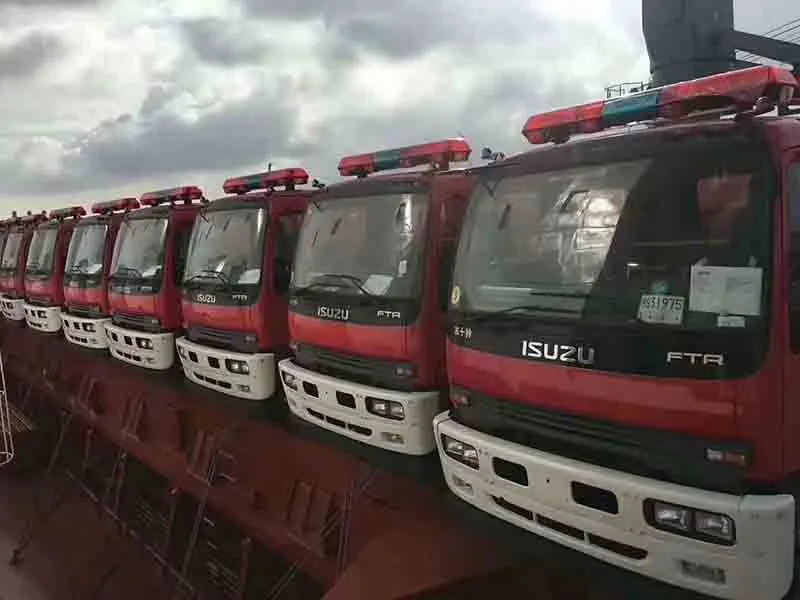
What was supplied
All 86 vehicles are fire trucks on Isuzu chassis. The badges on the cabs read Isuzu FTR, and each cab has a roof light bar. The trucks are red with white bumpers.
The aerial photos show the trucks parked in tight rows on the deck. Some have white tanks at the rear. Others have a red body with equipment compartments and hose reels on top. The port with its cranes and container yard is visible behind the ship.
About this vehicle type
A fire truck carries water, foam or both, along with a pump and rescue tools. Municipal brigades, airports, factories and industrial sites use them. Isuzu chassis are common for this work, and spare parts for them are available in many export markets.
How a water and foam fire truck works
A fire truck is a mobile water supply with a pump. Water is stored in the tank, and foam concentrate, where fitted, is kept in a separate smaller tank. When the crew arrives, the engine power is switched to the fire pump, which raises the pressure of the water and sends it through hoses to a monitor on the roof or to hand-held branches.
If foam is needed, a proportioner mixes a small share of foam concentrate into the water stream before it reaches the nozzle. This is useful on fuel and oil fires, where plain water is less effective. When the tank is empty, the pump can also draw from a hydrant or an open water source and keep the supply going.
The working cycle is: drive to the scene, position the truck, engage the pump, lay hoses, fight the fire, then refill and restock the equipment.
Main components
- Chassis and cab: carry the full weight of water and equipment and bring the crew to the scene.
- Water tank: stores the first supply of water; its size decides how long the crew can work before a refill.
- Fire pump: raises water pressure and sets the flow available at the nozzles.
- Foam system: where fitted, mixes foam concentrate into the water for fuel and oil fires.
- Roof monitor and hose reels: deliver water or foam from the truck at once, without laying a long hose.
- Equipment compartments: store hoses, branches, ladders and rescue tools in a fixed, quick-access place.
- Lights and siren: warn other road users and mark the scene.
What to check when you order a similar unit
- Chassis and engine class: confirm the brand and emission level that match your fuel and parts support.
- Tank and foam volume: decide how much water and foam the truck must hold for your typical fire.
- Pump flow and pressure: match them to your hose lengths and the hydrants in your area.
- Drive side: left-hand drive is standard, and right-hand drive is available on request.
- Access: measure the gates, bridges and streets the truck must pass.
- Equipment list: confirm which hoses, ladders and tools are included.
- Spare parts and handover documents: ask for manuals, a parts list and the papers needed for registration.
You may find how a fire truck pump works and how a fire truck foam system works useful. See also our range of fire trucks.
Similar models you can order
Buyers can specify the chassis, tank volume, pump and equipment. Left-hand drive is standard. Right-hand drive is available on request. Related fire trucks on this site include Isuzu FTR 4x2 Fire Fighting Truck 8000L Euro 4, Isuzu FTR FVR 6-Wheel Fire Truck 8000L 4x2 and Isuzu FVR Water Foam Fire Truck Euro 5.
For a quotation on a fire truck, please contact us.