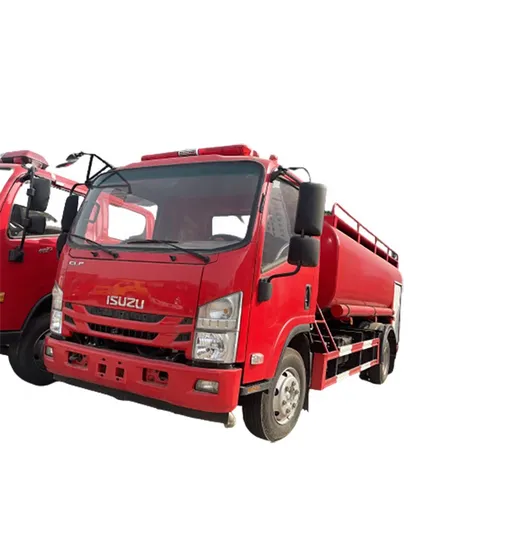
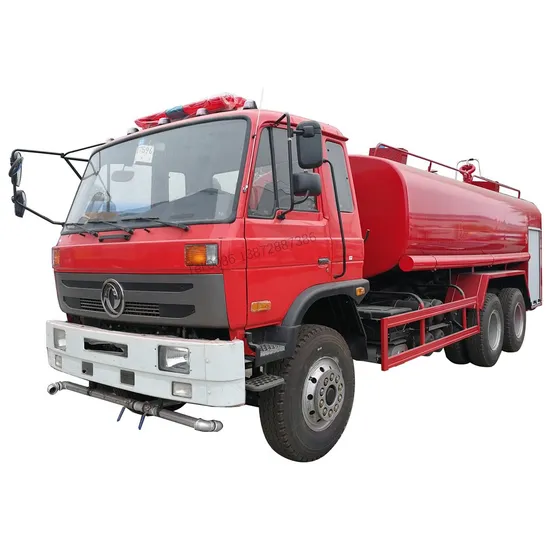
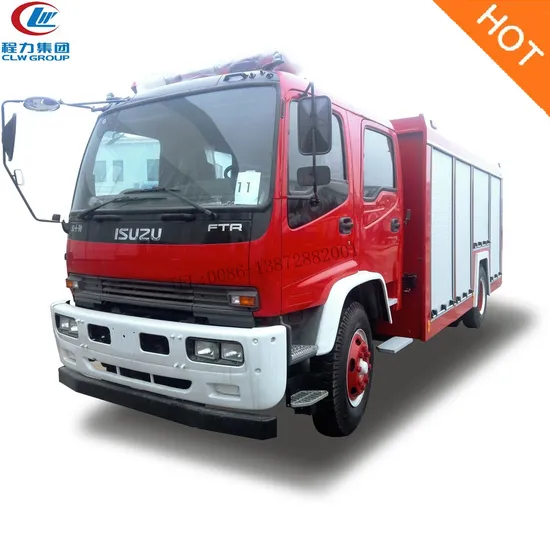
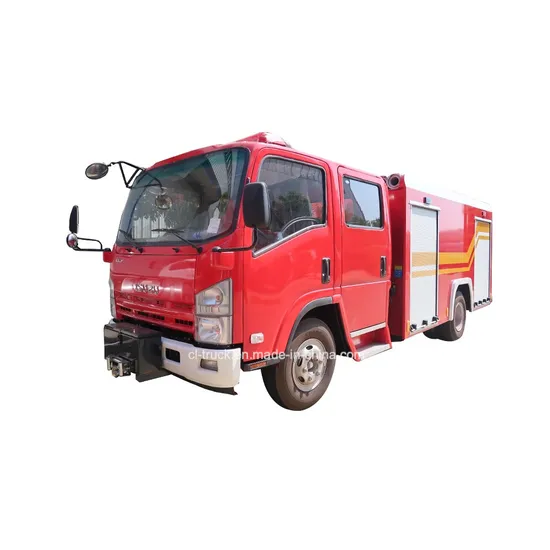
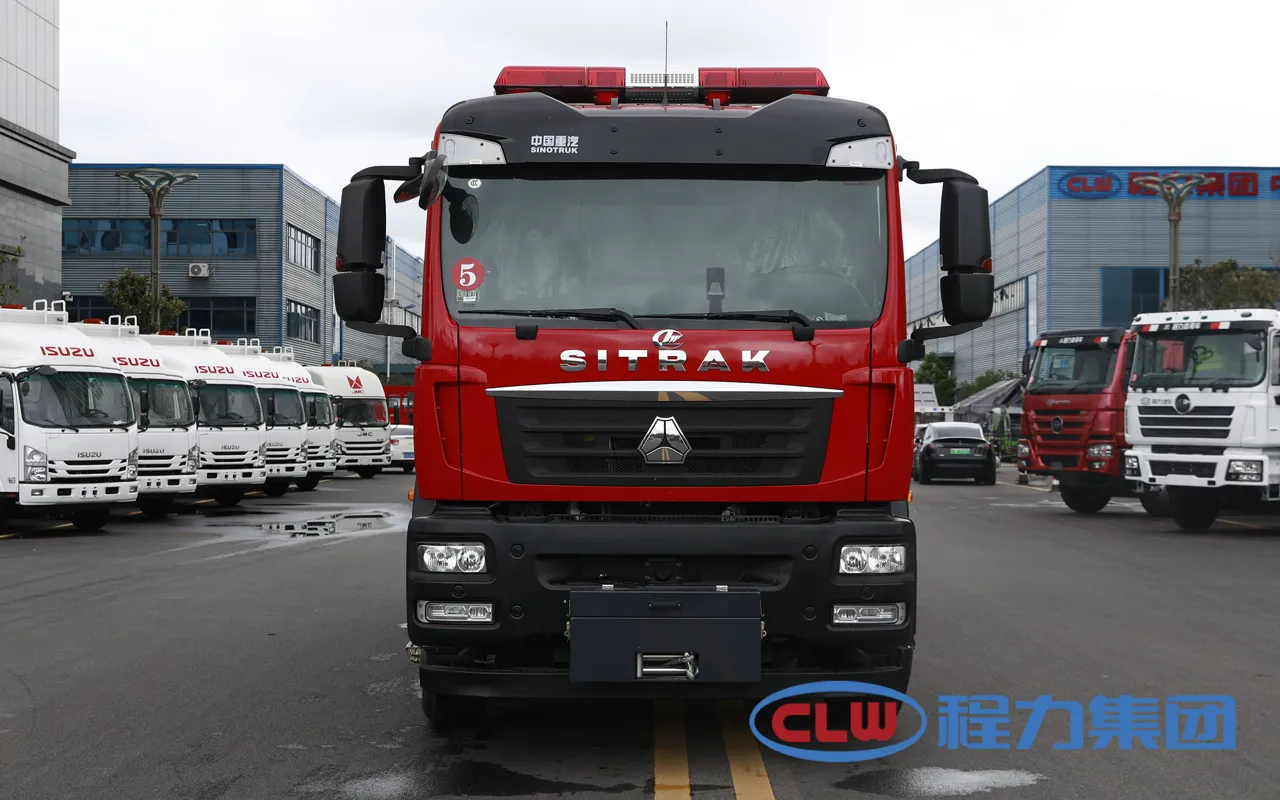
A fire truck pump is usually a centrifugal pump driven by the truck's engine through a power take-off. It draws water from the onboard tank or an external source, spins it with an impeller to raise pressure, and sends it through valves to hose outlets and monitors at a controlled flow.
What happens inside the pump
Water enters at the centre of a spinning impeller. The vanes throw it outwards into a curved housing, where speed turns into pressure, and the pressurised water leaves through the discharge valves. Because the engine drives the pump through the gearbox or a split-shaft arrangement, the truck normally stands still while pumping.
A centrifugal pump cannot lift water while it is full of air. A priming device first removes the air so that atmospheric pressure pushes water up the suction hose. The Isuzu 700P forest truck lists a suction depth of more than 7 m and a suction time under 35 s, which are the two figures to compare when you plan to draft from a pond or river.
Reading the flow figures on a listing
Our listings give the pump code and flow in litres per second at 1.0 MPa. In every listing we checked, the number after the slash in the code matches the listed flow.
| Model | Pump | Listed flow |
|---|---|---|
| Isuzu 700P Double Row Water Fire Fighting Truck Euro 5 | CB10/30 | 30 L/s |
| Isuzu FTR 4x2 Fire Fighting Truck 8000L 190HP | CB10/40 | 40 L/s |
| Dongfeng 6x4 Water Tank Fire Truck Euro 3 | CB10/50 | 50 L/s |
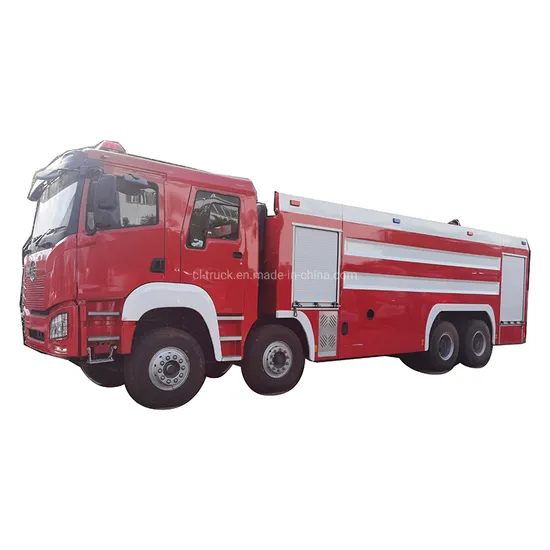
| FAW 8x4 Water Foam Fire Fighting Truck 16000L | CB10/60 | 60 L/s |
Why pump flow and tank size go together
Flow decides how fast the tank empties. At the full 60 L/s of the FAW model, a 16,000 L tank would last about four and a half minutes, so large tanks only pay off when the pump can also be fed from a hydrant or open water. A small pump on a large tank lasts longer but delivers less water at the nozzle. Pressure and flow requirements for fire appliances vary, so follow the rules that apply where the truck will operate.
Pump mistakes to avoid
- Running the pump dry, which damages the seals within moments.
- Comparing pumps by flow alone without the pressure that flow is rated at.
- Ignoring suction hose condition. A leaking joint on the suction side prevents priming.
The fire truck range includes all the models above. Look at the FAW 8x4 Water Foam Fire Fighting Truck 16000L, the Isuzu 700P 4x2 LHD Forest Fire Water Tank Truck 12000L with its centrifugal pump, or the Dongfeng 6x4 Water Tank Fire Truck Euro 3. To compare more configurations, see our fire trucks for sale page.
Frequently asked questions
Why can't a fire pump suck water on its own?
A centrifugal pump moves water well but cannot pull it up while full of air. A priming device evacuates the air first, letting atmospheric pressure push water into the pump. Without priming, the impeller just spins in air.
What does a code like CB10/60 mean?
In our listings the number after the slash matches the listed flow in litres per second, rated at 1.0 MPa. We do not publish a full decoding of the code, so ask us for the pump specification with your quotation.
How does the pump get its power?
Usually from the truck engine through a power take-off or a split-shaft drive. Some small units use a separate engine-driven portable pump instead. Check which drive the model you choose uses, because it affects how you operate it.
Does a bigger tank need a bigger pump?
Not necessarily. A larger pump simply empties the tank faster. Choose flow to suit the nozzles and tasks you expect, then size the tank for how long you must work before a refill or hydrant supply is available.