A fire truck foam system stores foam concentrate in its own tank and mixes a small, set share of it into the water stream with a proportioner. The foam solution then passes through an air-aspirating nozzle or monitor that adds air and forms foam, which blankets a fuel surface and cuts off its oxygen.
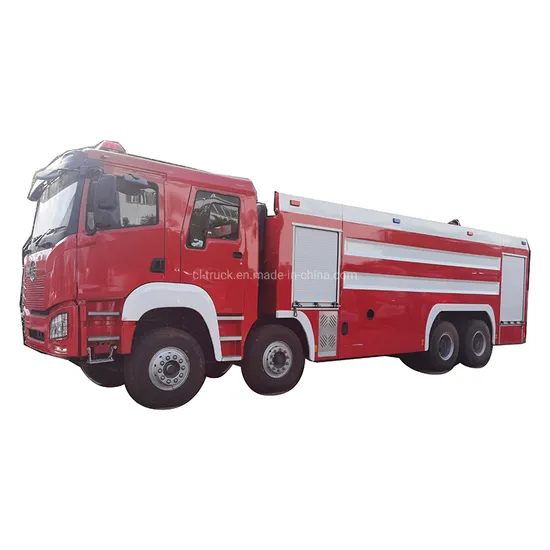
From concentrate to finished foam
- Concentrate sits in a foam tank that is separate from the water tank.
- The pump delivers water to the discharge line as it would for plain water.
- A proportioner (also called an inductor) meters concentrate into that stream at the ratio the concentrate maker specifies.
- The foam solution travels through hose or pipework to a foam nozzle or monitor.
- At the nozzle, air is drawn in and the solution expands into a layer of bubbles that floats on the burning liquid.
The proportioner and the concentrate must be matched. A unit set for one ratio gives poor foam, or wastes concentrate, if you load a different type.
Foam tanks on our listed trucks
| Model | Water tank | Foam tank | Pump flow |
|---|---|---|---|
| FAW 8x4 Water Foam Fire Fighting Truck 16000L | 16,000 L | 4,000 L | 60 L/s |
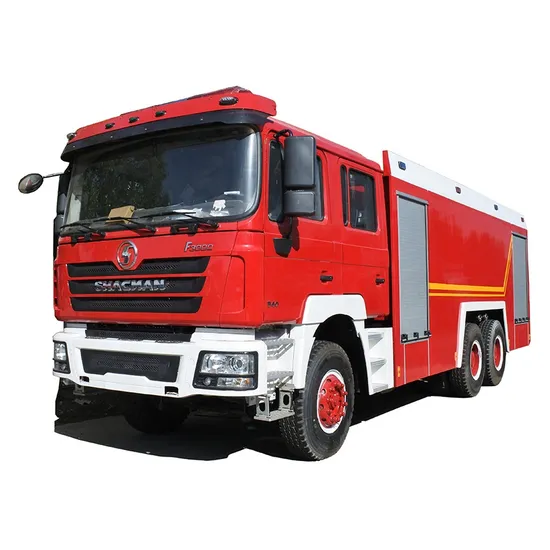
| Shacman F3000 4x2 Rescue Fire Fighting Truck Euro 2 | 6,000 L | 2,000 L | 40 L/s |
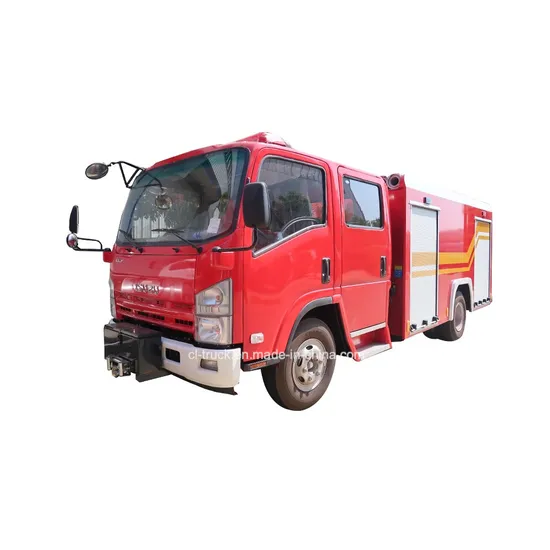
| Isuzu 700P Double Row Water Fire Fighting Truck Euro 5 | 3,000 L | 1,000 L | 30 L/s |
Foam is a quarter to a third of the water volume in these examples. Only a small share of concentrate goes into each litre of solution, so the concentrate normally outlasts the water supply by a wide margin. Ask the concentrate maker for the ratio to plan how many water loads a foam tank covers.
Foam, dry powder and water
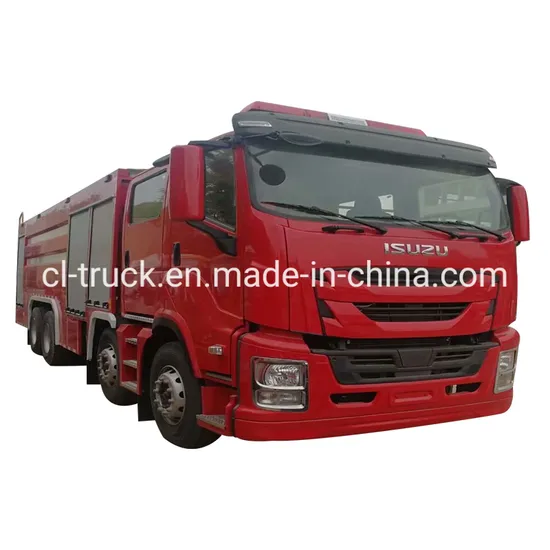
Foam suits flammable liquid fires, where it seals the surface and slows vapour. Water is the usual agent for ordinary combustibles, and dry powder knocks down flames quickly but leaves no cooling effect. Some trucks combine agents: the Isuzu 8x4 Foam and Dry Powder Fire Truck 460HP pairs foam with a powder system. Which agent is correct depends on the fuel, so follow the rules and concentrate guidance that apply where the truck will operate.
Foam system mistakes
- Mixing different concentrate types in one tank.
- Skipping the flush after use. Residue can clog the proportioner and lines.
- Leaving concentrate in the tank beyond its storage life. Check the maker's guidance.
- Assuming one concentrate suits every fuel.
Browse the fire truck range. The FAW 8x4 Water Foam Fire Fighting Truck 16000L lists the largest foam tank above. The Shacman 16t Water Tanker Fire Truck Euro 4 lists a foam tank in carbon steel with stainless steel optional, and the Isuzu 8x4 Foam and Dry Powder Fire Truck 460HP is a Euro 4 8x4. For a lighter chassis, see the Isuzu 700P Double Row Water Fire Fighting Truck Euro 5. More options are on the fire trucks for sale page, and how a fire truck pump works covers the water side.
Frequently asked questions
Does a foam truck need a separate foam tank?
Yes. Concentrate is stored apart from water so it can be metered into the stream. The rows above list water and foam volumes separately, so ask for both figures in the quotation rather than relying on a combined title.
What does a foam proportioner do?
It draws a set amount of concentrate into the water flow so the solution has the right strength. The ratio comes from the concentrate maker, so check that the proportioner and the concentrate you plan to use are compatible.
Can one foam fight every type of fire?
No. Concentrate types are chosen for particular fuels, and foam is not the right agent for every fire. Ask your supplier and follow the rules that apply where the truck will operate before you choose.
How big should the foam tank be?
There is no fixed rule. Our examples carry foam at a quarter to a third of the water volume. Size it from the concentrate ratio and the number of water loads you expect to run before a refill.