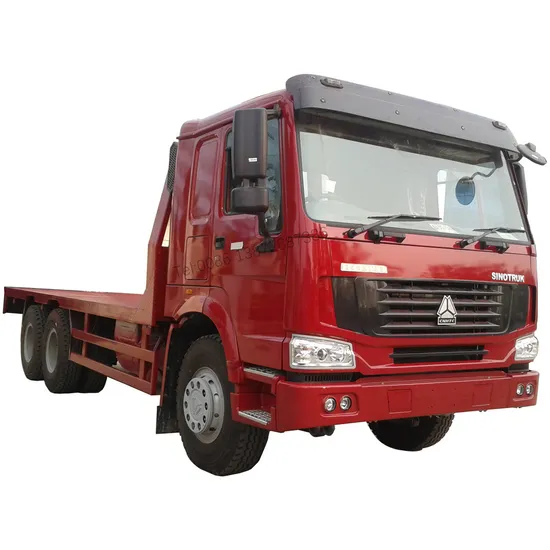
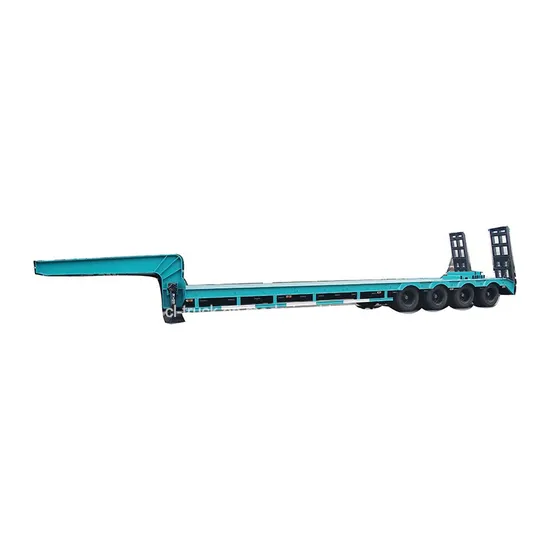
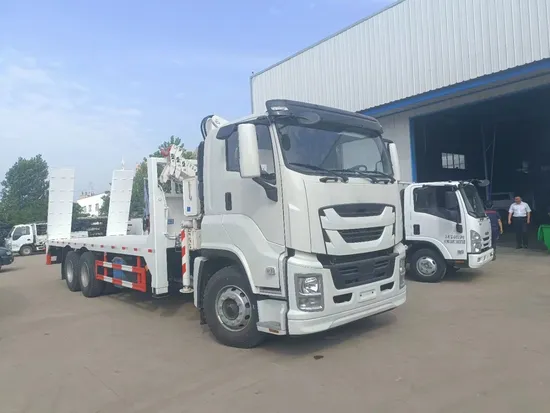
A car carrier truck is a vehicle built to move other vehicles on an open deck. Dealers, auction yards, recovery companies and shipping agents use them to move new and used cars, vans and light trucks between yards, ports and customers. The name covers two quite different machines: a single-deck carrier on one truck chassis that takes one or two vehicles, and a double-deck car transporter, usually a truck-and-trailer or semi-trailer combination, that takes six or more. The right choice depends on how many vehicles you move on each trip and how far.
Single-deck carriers: rollback and flatbed trucks
The single-deck carrier is a flat deck on a rigid truck. In many markets a tilting deck that slides back and lowers to the ground is called a rollback, a slide-back or a flatbed tow truck. The car is winched up the inclined deck and then secured with straps or chains. This design suits recovery work, short city moves and dealers who move one or two vehicles at a time, because it needs little space to load and one operator can handle it.
Our HOWO 4x2 10t Rollback Wrecker Towing Truck for Buses is an example of a heavy rollback with two winches, built to recover larger vehicles such as buses. For a bigger chassis with a long deck, see the HOWO 6x4 Flatbed Towing Truck 7m 21-30t. Browse the whole tow trucks and wreckers category and our tow trucks for sale page to compare winch capacity, deck length and chassis.
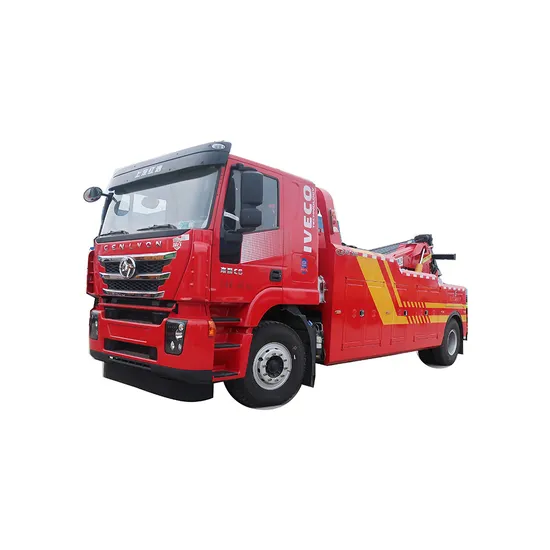
Double-deck carriers: more cars per trip
A double-deck car transporter has an upper and a lower deck, often with a ramp section that tilts or lifts so that the cars can be driven on. Because several cars share one tractor head, the cost per vehicle on long routes is much lower than with single-deck trucks. Typical figures depend on the size of the vehicles and on the legal height and length limits in your country, so we do not quote a fixed number. What matters is the mix of vehicles: a deck set up for small hatchbacks will not carry tall vans or pickups with the same count.
Double-deck carriers are built either as a rigid truck with a drawbar trailer or as a semi-trailer behind a tractor head. They are not part of our standard range as stock models, so please send us the number and type of vehicles and we will tell you what can be built. A semi-trailer version needs a suitable tractor head and the right fifth wheel coupling.
Single deck or double deck: how to decide
- Vehicles per trip. One or two cars points to a single-deck rollback. Five or more, regularly, points to a double-deck transporter.
- Route. Short urban routes with tight streets favour a rigid rollback. Long highway or port-to-yard routes favour the double-deck.
- Height. A loaded double-deck combination is tall. Measure bridges, depots and gates on your routes.
- Loading space. Double-deck loading needs a flat yard and room to manoeuvre. Rollbacks can load at the roadside.
- Vehicle type. Light cars, vans, pickups and buses have different weights and heights, so list all of them.
Using a flatbed truck as a car carrier
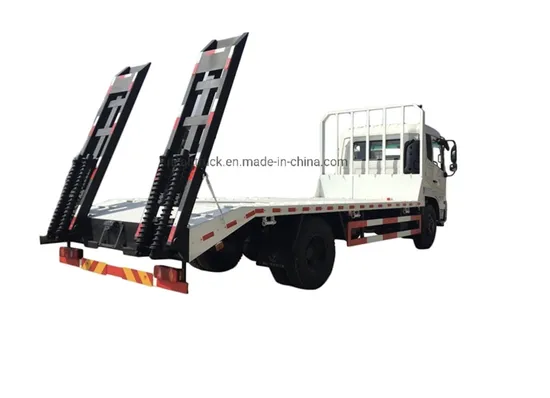
Some buyers start with a plain flatbed and add ramps. The Dongfeng 8x4 Flat Bed Truck 7.5m shows a 7.5 m deck, a 30,000 kg rated payload and a ladder, but it has no winch or tilting deck, so loading a car needs separate ramps and a winch or a driver who can drive on. A flat deck can carry a car, but it is not the same as a purpose-built car carrier. For long decks on a trailer, the 12,500 mm deck of a semi-trailer such as the 4-Axle Flat Bed Semi-Trailer for Excavator 50t can hold several cars in a row, but it has no second deck.
Securing the vehicles and protecting the deck
Whatever carrier you choose, the way the car is held matters as much as the deck itself. Wheel straps that go over the tyres put less stress on the suspension than chains on the axle, and a car should be tied at four points with the handbrake on and the gearbox in gear or park. Ask whether the deck has built-in strap rings, a non-slip surface and side rails, and whether the winch has an overload stop and a clean free-spool setting. A short training session for drivers on loading angles, ramp length and winch use prevents most damage claims. Also check the rear overhang: a long car on a short deck can hang over the end and change the weight on the steering axle.
What to specify before you order
- Deck length and width, checked against the longest vehicle and its track width.
- Loading method: winch, ramps, tilting deck or hydraulic lift, and the winch capacity.
- Tie-down points: wheel chocks, strap rings or wheel straps, and a deck that does not slip when wet.
- Axle rating and gross weight, so that a full load stays inside your road limits. Our guide on reading a specification sheet shows how.
- Steering side: left-hand drive is standard and right-hand drive is available on request. See drive side by country.
- Lights, number plate bracket and rear guard to match local road rules. Check the current requirements with your clearing agent and the national standards body.
Next step
Tell us how many vehicles you move, which models, how far, and where you load. We will confirm which configuration is available and quote it. You can also look through the flatbed trucks and trailers range, the lowbed trailers and flatbed trucks page, or send us your requirements.