A refuse truck spends its life under heavy load. Long shifts, constant stop-start collection and full bodies put stress on parts that rarely complain on lighter duties. After a long period in service, some faults become much more likely, and most of them announce themselves through a change in sound, temperature, smell or fuel use.
This guide covers six typical symptoms, what usually causes them and what to do next. If your truck shows any of them, book a proper workshop inspection soon rather than waiting, so a small problem does not turn into an unplanned stoppage.
Hard starting, weak pickup and higher fuel use
If the truck accelerates sluggishly, burns more fuel than usual and starts badly when cold, poor fuel is a prime suspect. Fuel that has been stored for a long time, or that is simply of poor quality, can leave gum deposits around the intake valves. The valves then move less freely and may stick when the engine is cold, which makes starting difficult.
Light deposits can often be removed with a cleaning treatment. Heavy deposits are more serious: the cylinder head has to come off for cleaning, and the fuel passages need to be cleaned as well. Ask the workshop which case you have before agreeing to the work.
Noises from tyres and wheel bearings
Two different sounds point to two different faults. A rhythmic hum at low speed that fades as speed rises usually means uneven tyre wear, caused by wheel alignment that has drifted after many kilometres. Run a hand over the tread: if the inner or outer edge feels uneven, that is your answer. Correct the alignment first and only then replace the tyres, otherwise the new tyres will wear unevenly in the same way.
A hum that is hardly noticeable at low speed but steady and even at higher speed points to a worn wheel bearing. Long running at speed tires out bearings that are poor quality or already old. Have the workshop find out which wheel is responsible and replace that bearing.
Oil leaks under the vehicle
Leaks after long running have several common origins:
- Underbody knocks. On bumpy roads the truck may scrape its underside, and a light blow to the oil pan can go unnoticed until a leak appears later.
- High load on components. Long periods of heavy work can make parts such as the power steering pump or the gearbox start to weep.
- Crankcase ventilation. This part is often skipped at service time. If it is neglected, pressure can build up inside the engine at higher speed and push oil past the seals.
At every service, have the underbody inspected and damaged parts replaced, have leaking points tightened or resealed, and make sure the crankcase ventilation parts are included in the job.
High temperature at low speed, unstable idle after a long run
If the temperature gauge climbs when the truck crawls or idles but settles at road speed, look at the front of the vehicle. The radiator and the air-conditioning condenser sit right at the front, and over long distances they clog with insects and dust. At speed the oncoming air masks the problem; at low speed and idle the cooling has to rely on the radiator alone, and the temperature rises. The fix is to remove the front grille, blow the debris out with compressed air and then wash the core with water.
A different case is a slightly high or uneven idle after a long, fast run. Prolonged high-speed running burns off part of the carbon inside the engine, and the control unit may need some time to learn the changed condition. In most cases the idle returns to normal by itself, so simply keep driving. If it is still unstable after a few days, have the truck checked for other causes.
Working conditions in Africa
Several local factors can speed up these faults. Fuel quality may vary from one filling point to another, so keep fuel filters in good order and avoid filling from doubtful sources when you have a choice. Dust and heat often clog radiator cores faster than operators expect, so make cleaning the front of the truck part of the daily routine. Unsurfaced roads and rainy-season mud can cause underbody knocks and uneven tyre wear, which makes regular alignment checks worth the time.
Because a workshop can be far away and spare parts may take time to arrive, report small symptoms early and keep a written fault history for each truck. Our guide on building a clear fault report shows how to do this. For background on how the body works, see how a garbage compactor truck works.
Related models
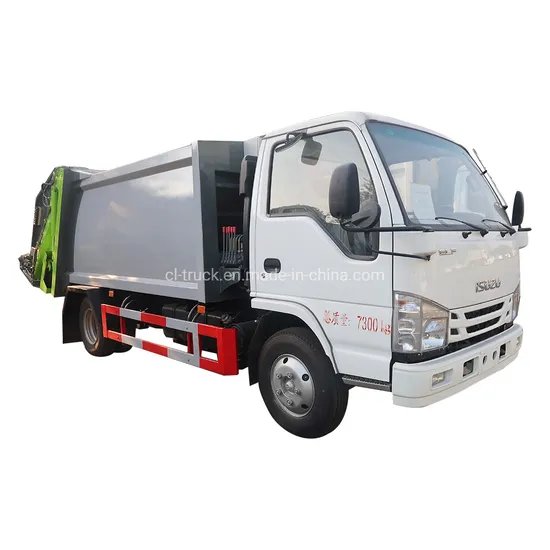
Browse our full range of compactor garbage trucks. Popular examples include the 100P 4x2 small compactor bin truck, the 6m3 refuse compactor upper body and the Dongfeng 145 153 4x2 compactor truck.
To ask for a quotation, please contact us or message us on WhatsApp.