Every breath an engine takes passes through the air filter first. The air carries dust, fine debris and soot particles, and without a working filter these go straight into the cylinders, where they wear the engine quickly. A filter that is looked after keeps that wear low and lets the engine breathe freely.
The opposite problem is just as real. A filter packed with dust starves the engine of air, fuel burns incompletely, the engine runs unevenly, power drops and fuel use climbs. This guide explains how to inspect, clean and replace the filter, and how to adjust your routine for the dusty sites and roads that many African fleets work on.
Why the filter needs regular attention
The filter has two jobs: stop contaminants and still pass enough air. A clean element does the first job well. As it collects dust, it can actually trap finer particles more effectively, but there is a limit. Once too much dust has built up, airflow is restricted and the engine starts to lose power and economy.
That is why mileage and calendar time are only a guide. The real test is whether enough air can still get through, and how much dust the truck breathes in depends entirely on where it works.
Extra care in hot, dusty conditions
A truck running steadily on a surfaced highway sees far less dust than one working on a construction site, a quarry haul road or an unsurfaced track. In dusty areas the filter must be checked and replaced more often than the standard schedule suggests. Our guidance for dump trucks and concrete mixer trucks is the same: let the working environment, not the odometer, set the inspection rhythm.
In practice, dry-season haul roads can throw up heavy dust clouds, especially when trucks follow one another closely. Heat can age rubber seals and hoses around the intake, and long distances to a workshop mean a clogged filter can strand a truck far from help. Keeping a spare element on board or at the depot is sensible. Wetting haul roads helps too, as discussed in our guide to dust suppression and road washing.

How to inspect the filter
Inspection is quick and needs no special tools in most cases. Use this checklist at each service and more often in heavy dust:
- Locate the air filter housing and release the clips or fasteners without forcing them. Note the order in which parts come off so they go back the same way.
- Lift the cover and remove the element. If something does not fit on reassembly, find out why rather than using force.
- Look at the outer face for heavy dust, and the inner face for any dust that has got past the element.
- Check the housing and sealing surfaces for dirt, damage or poor contact.
- Make sure the element and the housing are free of water before refitting.
Cleaning a dry paper element
A dry element with light dust can be cleaned. Take it outdoors and blow compressed air through it from the inside outwards, turning the element and moving the nozzle along the pleats. Keep the nozzle at a sensible distance so the paper is not torn. Do not wash the element with petrol or water, and do not beat it hard, as this can crack or distort it. Wipe the outside of the housing and the sealing faces with a clean cloth.
Then judge the result. The outer face of a used element is grey or black from dust, while the inner face should still show the natural colour of the paper. If the natural colour comes back once the outer dust is removed, the element can go back in. If the paper no longer shows its natural colour, or the inner face looks dark, replace it.
When to replace the element
There is no single interval that suits every truck. Follow the interval in the operator's manual as a starting point, then shorten it when the truck works in dust. Replace the element earlier if power, fuel economy or smoke behaviour gets worse, or if cleaning no longer restores the paper's colour.
Use the element type and grade specified for your engine, bought from a supplier you trust, and check that it is genuine. A poor or wrong element can let dust through or restrict airflow. Operators who move between vehicle types should note that housings and elements differ, so record the correct part number for each truck. Good service notes also help when a fault occurs, as shown in our article on building a clear fault report.
Related models
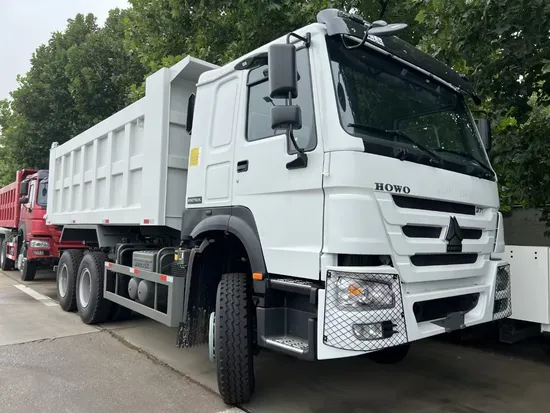
If you are planning a fleet for dusty work, these models are worth a look: the Shacman 6x4 tipper truck, the HOWO 6x4 dump truck with 25t payload and the Shacman F3000 6x4 concrete mixer.

To ask for a quotation, please contact us or message us on WhatsApp.