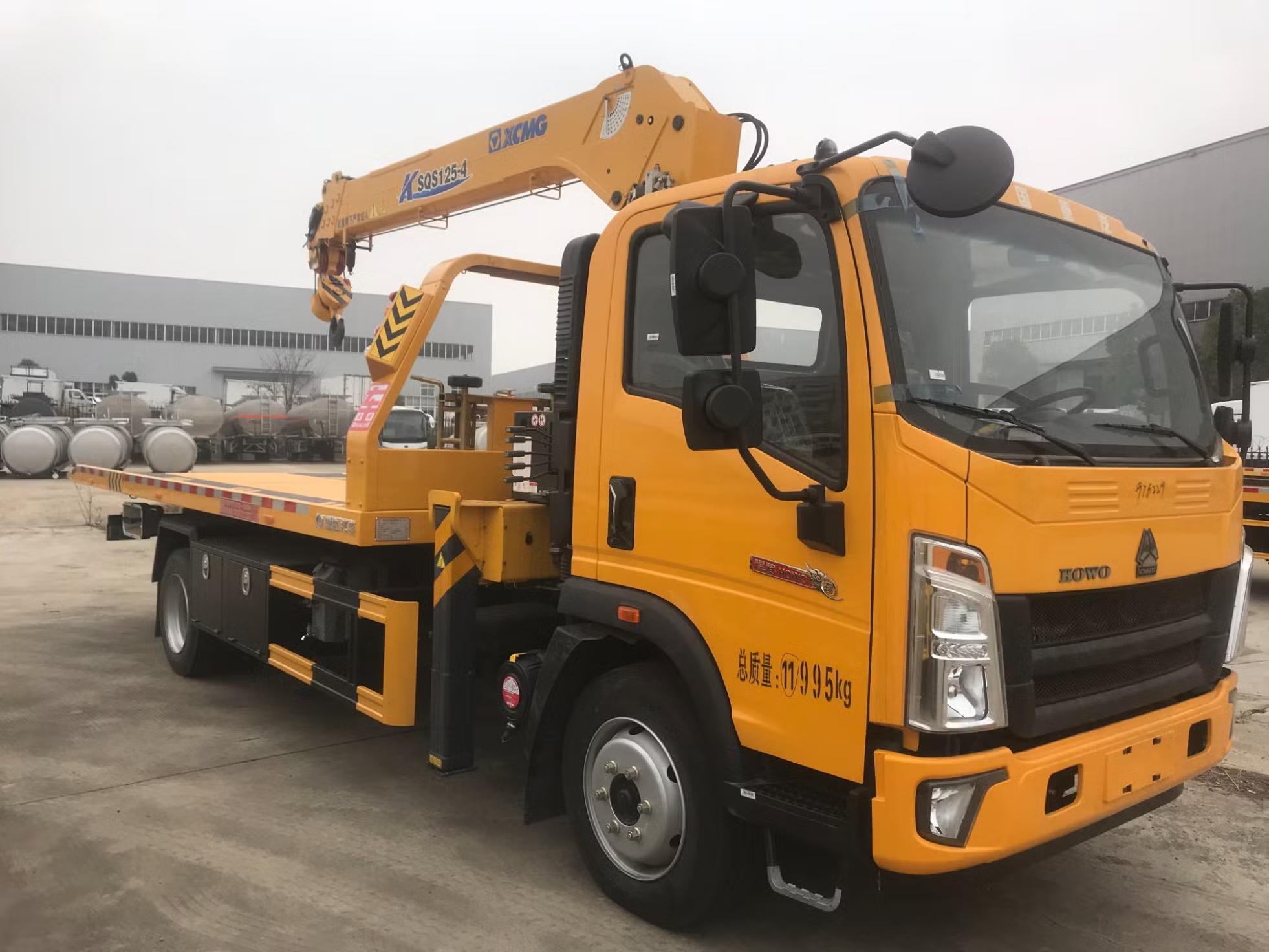
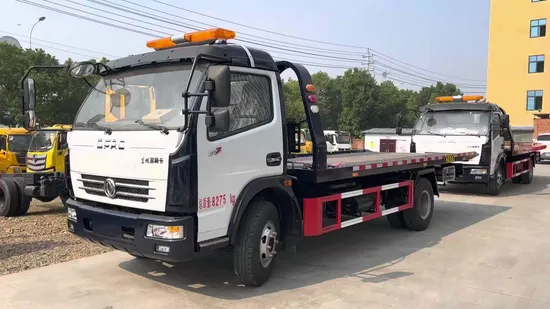
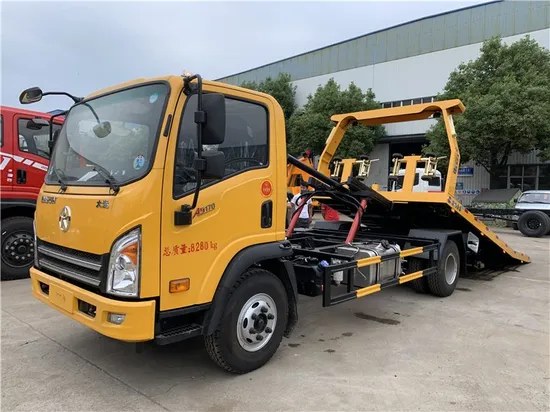
The Tilt Tray Sliding Wrecker Body 4-6t Euro 2 is a flatbed recovery body that tilts and slides back to the ground, so a disabled vehicle can be winched on and carried rather than dragged. Our version is built on a Dongfeng chassis with a manual gearbox and a diesel engine.
It suits towing operators, roadside rescue teams and workshops that move cars and light commercial vehicles. The flat bed is 5600 × 2300 mm and the overall vehicle is 7420 × 2300 × 2540 mm, so it carries a full-size vehicle without overhang problems on the tray.
Where this truck is used
A tilt tray wrecker earns its place wherever a vehicle cannot be driven away: after a breakdown on a highway shoulder, in a car park, at the scene of a minor collision or outside a repair shop. Because the load rides on the bed, the damaged wheels and axles are not stressed during transport.
Fleet owners also use this type for planned moves, such as taking vehicles to dealers, auctions or service centres. Low-clearance cars, vehicles with locked brakes and units with damaged steering are easier to handle on a tray than with a hook-and-chain tow, and the driver can work from the kerb side.
Loading equipment and body configuration
The recovery winch is a 4 ton unit fitted with 21 m of steel wire rope. The rope pulls the casualty up the tilted tray, and the operator controls the pull while watching the vehicle align with the bed. The hydraulic valve on this body is an imported component.
The rear drag arm lift is rated at 2.5 tons, which supports the lifting and pulling work done at the tail of the body. A tool box is fitted for chains, hooks and hand tools, and an alarm lamp warns passing traffic while the truck is stopped on the road.
Chassis and drivetrain
The chassis carries a diesel engine and a manual transmission, and the emission standard is Euro 2. This is a straightforward combination that mechanics in most workshops already know, and it keeps day-to-day servicing simple for a recovery fleet that cannot afford long downtime.
The towing tonnage of the vehicle is 5 tons, and the body is offered in a 4-6 ton class. Paint colour follows the customer requirement, and customisation is available, so a fleet can match its livery, add extra tie-down points or ask for changes to the equipment package.
Operating routine and daily checks
Before each shift, the operator should check the winch rope for broken strands, test the tilt and slide movements with the tray empty, and look over hydraulic hoses and fittings for leaks. Keeping the alarm lamp working and the tool box stocked saves time at the roadside.
When loading, position the truck straight in line with the casualty, set the parking brake, slide and tilt the tray to the ground, hook on, and winch slowly while a second person watches the alignment. Secure the vehicle fully before raising and returning the bed to travel position.
What to confirm before ordering
Please confirm the drive side, the emission standard you need and the exact load class you want to carry, since the body is offered across a 4-6 ton range. Tell us the heaviest vehicle you expect to recover so that the winch and drag arm can be matched to it.
Also confirm paint colour, any extra lighting or tool storage you want, and whether the hydraulic and electrical details suit your operation. Our team will write these points into the quotation so that the finished truck matches your recovery work.
Request a current quotation for your selected configuration, quantity and delivery terms.