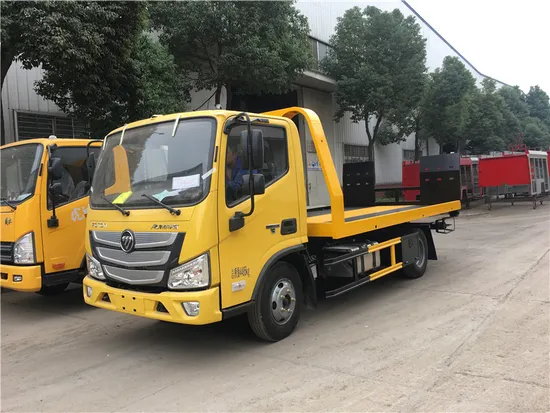
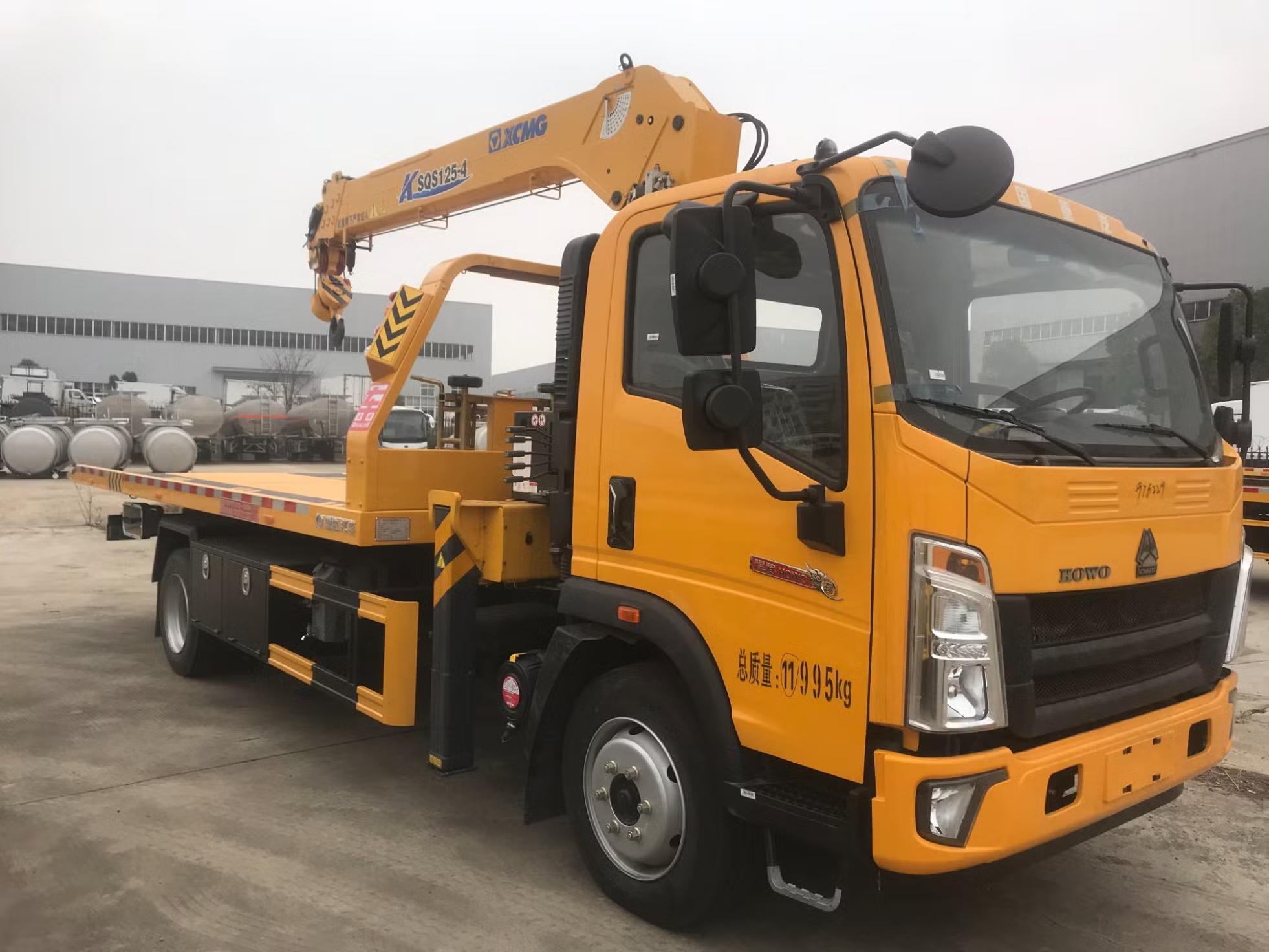
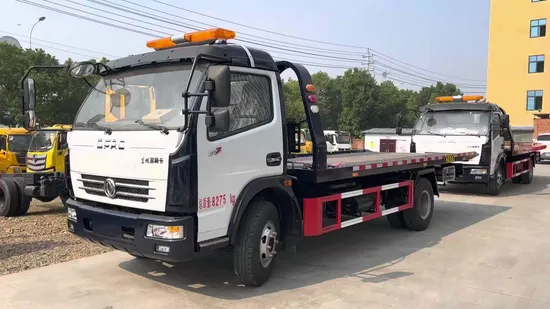
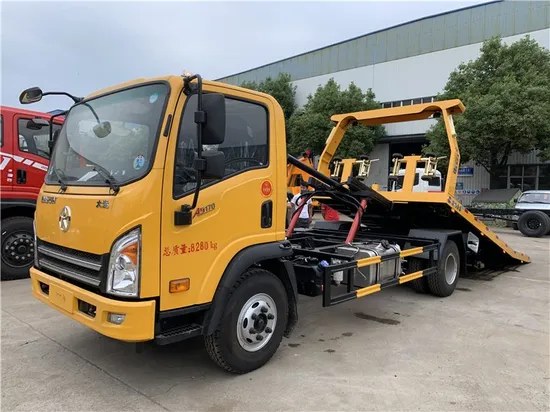
The Light Duty 4x2 Flatbed Wrecker Tow Truck Diesel 96kW is a compact recovery truck with a flatbed for carrying disabled vehicles. It is a 4×2 truck with a diesel engine rated at 96 kW, the ISF2.8s5129T, and it meets the Euro V emission standard. The cab seats three people.
It is meant for towing and recovery operators, garages, roadside assistance teams and fleet owners who handle cars and light vehicles. With an overall size of 5995 × 2300 × 2350 mm, it can work in city streets and car parks where a larger wrecker would be awkward to position.
Typical working routines
The usual job is to reach a broken-down or crashed vehicle, move the flatbed into position, load the casualty and carry it to a workshop or yard. Carrying a vehicle on the bed avoids dragging its wheels, which is helpful when the car has damaged steering, a locked gearbox or flat tyres.
Recovery crews also use light flatbeds for moving vehicles between dealers, auction yards and garages, and for removing illegally parked cars. The rated mass of 2000 kg and the cargo size of 5200 × 2300 × 1500 mm help you judge which vehicles the truck can handle.
Chassis, engine and drivetrain
Total mass is 4495 kg. The wheelbase is 3360 mm, there are two axles and the truck runs on 700R16 tyres, six in total. The ISF2.8s5129T engine delivers 96 kW, and the maximum speed is 110 km/h, which allows the truck to keep up with traffic between jobs.
A light chassis is easier to drive and cheaper to run than a heavy wrecker, but it also limits what can be loaded. Weigh the vehicles you expect to carry before ordering, and remember that fitted equipment reduces the weight left for the casualty.
Operating the flatbed
On a flatbed wrecker the driver positions the truck in line with the casualty, then draws or drives the vehicle on to the bed. Secure it with straps or chains at proper anchor points before moving off, and check the lashings again after the first few hundred metres of travel.
Keep the load centred so the front axle keeps enough weight for steering and braking. Take bends and junctions more gently than with an empty truck. Stand clear when vehicles are moved, and use warning lights and cones when working beside traffic so that other drivers see the scene early.
What to confirm before ordering
Please confirm the drive side, the emission standard you require, the vehicles you plan to carry and the maximum weight of the heaviest one. The rated load depends on the configuration and is confirmed in the quotation, together with the cargo size and any extra equipment such as winch or lighting.
Tell us also the colour you want and the markings for the cab and bed, and whether you want to add warning lamps or work lights. Our team will then write one clear configuration into the quotation, so that you know the truck matches your recovery work before it is built.
Request a current quotation for your selected configuration, quantity and delivery terms.