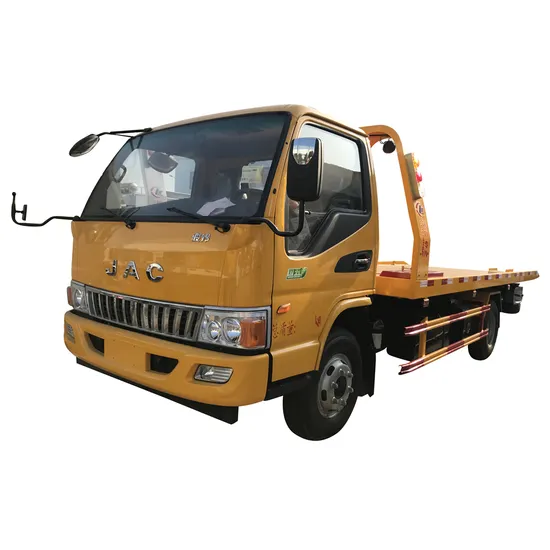
Model CLW5080TQZH5 is a JAC 4x2 flatbed wrecker towing truck in the 120-140HP class, with left-hand drive as standard and right-hand drive available on request. It carries a 4-ton hydraulic capstan and a steel wire rope of 21 m. It is aimed at workshops and towing operators who handle cars and light commercial vehicles.
A flatbed recovery truck is the right tool when a vehicle cannot be towed on its own wheels, for example after a collision or when a drivetrain is damaged. The casualty is pulled onto the bed and carried, which avoids further damage. This model is compact enough for city streets and for narrow service bays.
Matching the truck to your job
Think about the vehicles you recover most. Sedans, vans and small trucks suit a light platform with a 4-ton capstan, while heavy lorries do not. The gross vehicle weight of this truck is 8280 kg and the curb weight is 5260 kg, which tells you how much the chassis carries and how much load a recovered vehicle may add.
Think too about where you work. The overall size is 7480 × 2350 × 2370 mm and the wheelbase is 3815 mm, so check yard gates, car park heights and the narrow lanes you must reach. Maximum speed is 90 km/h, which suits a recovery run on open roads. Share these site conditions with us when you request a quotation.
Engine, gearbox and axles
The engine is the WP3Q130E50, a four-stroke water-cooled straight-four with a displacement of 2.97 L and a maximum output of 96 kW, meeting Euro 2. A manual gearbox with six forward gears and one reverse passes the power on, and power steering helps the driver in tight manoeuvres at a recovery scene.
ABS and an air brake system control stopping, and the rear axle is rated at 6 tons. Tyres are 7.50R16, with six fitted and one spare. The cab is a JAC single-row cab. These are conventional parts that most truck mechanics know, which keeps routine servicing straightforward for your workshop.
Recovery equipment
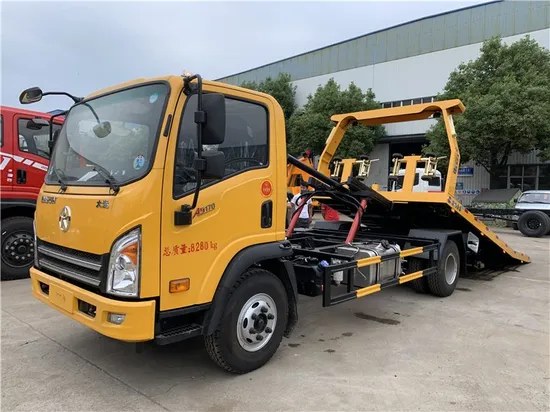
The recovery kit includes one 4-ton hydraulic capstan, one winch, a steel wire rope of 21 m, a winch speed of 8 m per minute, one tool box and one alarm lamp. Two auxiliary small rounds and four bandages complete the set. Operating gear is bilateral linkage. Read the operating instructions before the first job.
A slow winch speed is a benefit on a recovery scene, because the casualty vehicle comes onto the bed under control. Keep bystanders clear of the rope line, use the alarm lamp whenever you work beside traffic, and inspect the bandages for wear after every few jobs. Replace any worn part before it fails under load.
What to confirm before ordering
Please confirm the drive side, the emission standard required on your roads and the exact engine rating, because the final figure depends on the configuration and is confirmed in the quotation. Also tell us the heaviest vehicle you plan to recover so we can check the capstan and bed against it.
If you need a different body colour, extra lighting or additional tool storage, mention it in your enquiry. Customisation is available, and the full equipment list, dimensions and weights are set out in the quotation so that you can compare them with the work your crews do every day.
Request a current quotation for your selected configuration, quantity and delivery terms.