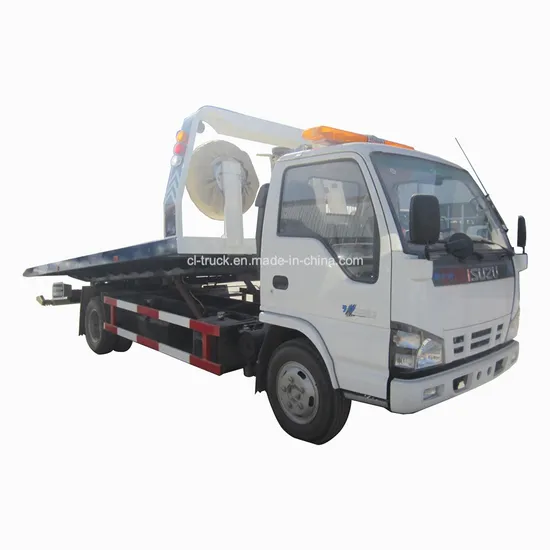
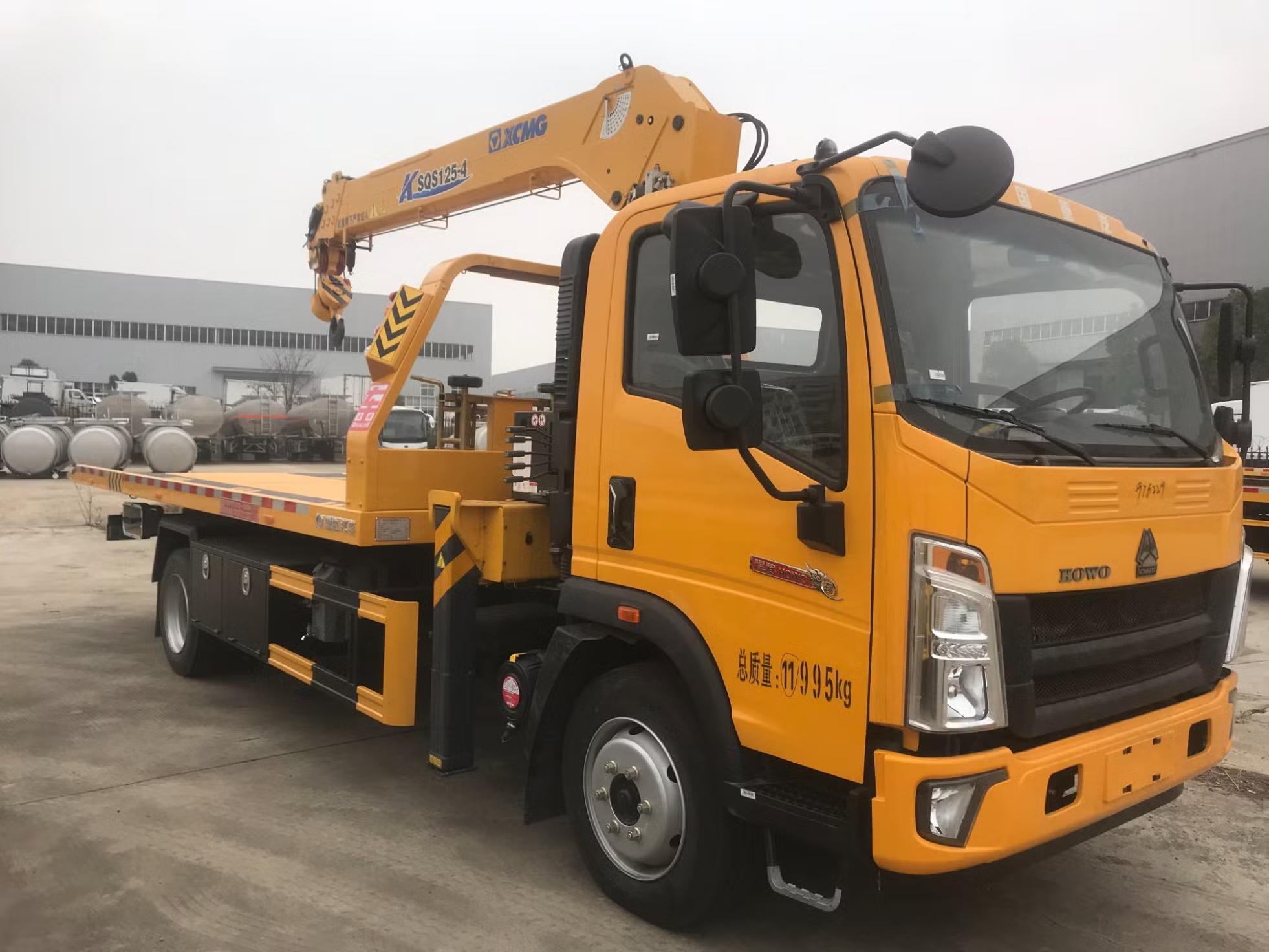
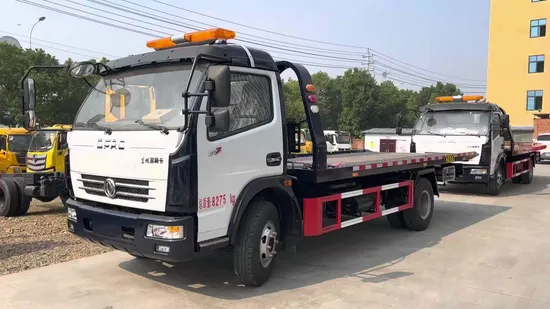
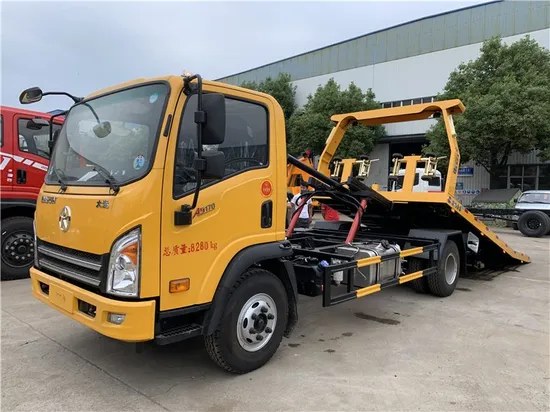
The Isuzu 600P 4x2 Tilt Tray Wrecker Truck 120HP 4-5t puts a tilt tray recovery body with a 5600 × 2300 mm deck on an Isuzu 600P 4×2 chassis. The engine is the Isuzu 4KH1CN5HS, a 2.999 litre four-cylinder diesel, and the cab is the single-row Isuzu cab with air conditioning. Left-hand drive is standard, with right-hand drive available on request, and the gearbox is a five-speed manual.
It is aimed at recovery businesses and fleet operators who already know and trust the Isuzu 600P as a light truck and want a flatbed recovery body on that platform, so that drivers, mechanics and parts suppliers work with a familiar base vehicle.
Matching the truck to your job
A tilt tray built on a light truck chassis is for the most common recoveries: passenger cars, pick-ups, vans and small commercial vehicles that cannot be driven. The deck takes the whole casualty off the road, which makes the truck a good fit for accident recovery, breakdown service on busy roads, vehicle dealer transfers and workshop shuttle work.
The chassis is compact. With an overall length of 7420 mm, width of 2300 mm and height of 2540 mm, the truck is short enough for crowded streets and workshop yards where a longer recovery vehicle would struggle to turn, although you should always check the clearance height against a loaded deck before entering a covered area.
Chassis, engine and drivetrain
The wheelbase is 3815 mm, the gross vehicle weight is 7460 kg and the curb weight is 5495 kg. The 4KH1CN5HS engine is water-cooled and inter-cooled, with four cylinders in line, and produces a maximum of 96 kW. The final power rating is confirmed in the quotation. The emission standard is Euro 2.
The five-speed gearbox is operated by hand, steering is power assisted and braking is by air. The axles are rated at 2.5 tons at the front and 4.8 tons at the rear, and the truck rolls on 7.00R16 tyres, six on the road plus a spare. The top speed is 90 km/h.
Tilt tray and recovery equipment
The deck is operated through bilateral linkage controls, so the operator can work from either side. A 4-ton winch with 21 m of steel wire rope pulls the casualty up the tilted deck. A rear drag arm lift of 2.5 tons allows a vehicle to be lifted at one end and towed when it cannot be loaded. The truck also carries a tool box, an alarm lamp, two auxiliary small round items and four bandages, and the hydraulic valve is imported.
Think about the casualty when you plan a pull: heavier vehicles need a lower deck angle and slower winching, and a vehicle with a seized wheel needs extra care when it is pulled. Ask our team to explain how the auxiliary items are used on this model.
Maintenance and daily checks
Because the base vehicle is a standard light truck platform, routine service of the engine, gearbox and axles follows the chassis maker schedule. The recovery body adds its own checks. Look at the hydraulic oil level and the hoses every morning, grease the sliding surfaces of the deck, and wind the winch rope out fully once in a while to inspect it for broken wires and to relay it evenly on the drum.
Check the alarm lamp and the bandages before leaving the depot, and make sure the air brake system reaches working pressure. A light truck that is loaded with a casualty on every trip will wear its rear tyres and suspension faster than an empty one, so keep tyre pressures correct.
What to confirm before ordering
Confirm the engine power rating for the 120HP model and the load limit of the finished truck. The 4-5t class depends on the configuration, with a 4-ton winch fitted, so the final rating is confirmed in the quotation.
Also confirm the drive side, the final engine power, the capacity you can legally and safely load, the colour, and whether the tool box and the auxiliary items match your recovery routine.
Request a current quotation for your selected configuration, quantity and delivery terms.